Tag: Uzbekistan

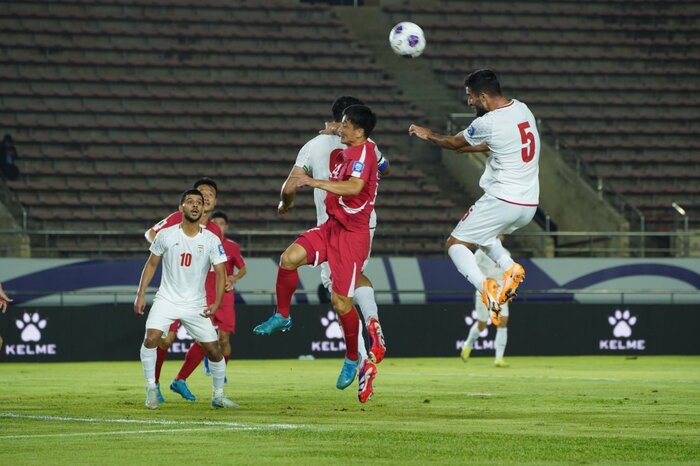
Alireza Jahanbaksh heading against Hunt of UAE

Iran v. Uzbekistan: Match Review

Team Melli needs only a draw against Uzbekistan at the Azadi Stadium in Tehran on Tuesday to secure a spot at the 2026 World Cup, joining Japan as confirmed qualifiers.

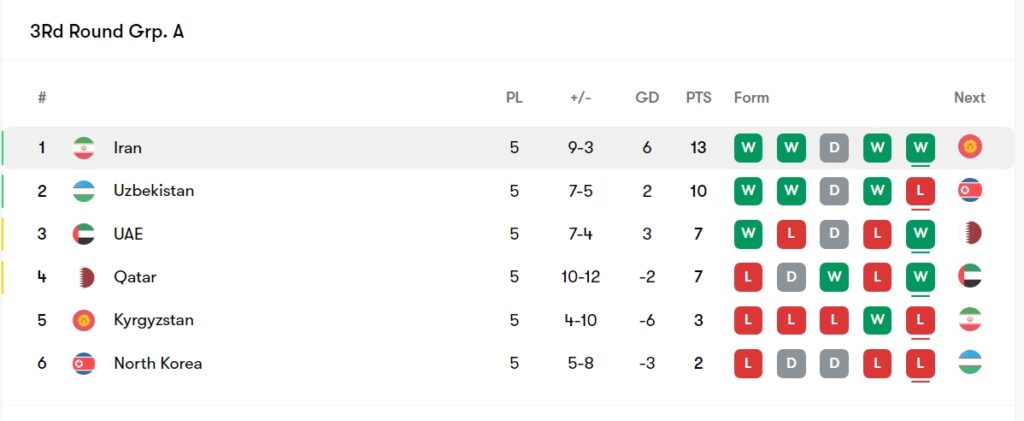
Iran, aiming for their fourth consecutive World Cup appearance, leads Uzbekistan by three points in Group A and holds a nine-point advantage over the United Arab Emirates with three matches remaining.

In what is arguably the toughest test of their qualification campaign, Iran appears to be the slight favorite in this top-of-the-table clash. With a convincing win against the UAE and a stable squad with minimal changes to the lineup, Ghalenoei’s men are confident. Barring any major lapses in concentration or individual errors, Team Melli should secure their ticket to North America next year.

Meanwhile, Uzbekistan endured a challenging match in the previous round, narrowly defeating Kyrgyzstan. The team also suffered the departure of long-time head coach Srečko Katanec, who resigned due to health issues. His replacement, Timur Kapadze, is no stranger to Iranian football, having played multiple matches against Team Melli during his career.

Iran’s head coach Amir Ghalenoei expressed pride in his team’s performance following their 2-0 victory over the UAE and urged his players to complete their qualification mission ahead of schedule.

Even in the event of a loss, Iran could still qualify if the UAE and Qatar drop points in their respective matches.

For Uzbekistan, this match presents a significant opportunity. If they win and both the UAE and Qatar fail to secure victories, they will qualify for the World Cup. A draw could also be enough if both the UAE and Qatar lose their matches.

Team News

Uzbekistan faces squad challenges, with three players potentially missing the match:

  • Husniddin Alikulov (Rizespor, Turkey) is sidelined due to injury and also missed the match against Kyrgyzstan.
  • Jaloliddin Masharipov (Esteghlal) is suspended due to yellow card accumulation.
  • Oston Orunov, who missed the previous match, remains doubtful but could return to the lineup.

On the Iranian side, Saeid Ezzatollahi has returned to training after missing the UAE match due to injury. With his replacement, Cheshmi, now injured, the Shabab Al-Ahli midfielder may see playing time against Uzbekistan. Additionally, 32-year-old striker Mehdi Taremi remains a doubt for the game.

Pre-Match Insights

At a pre-match press conference, Uzbekistan head coach Timur Kapadze acknowledged the challenge ahead, stating:

“An exciting match awaits us. We know Iran’s strength and understand our own capabilities. We have prepared well, and everyone is ready for the game. We have met Iran several times in recent years and have gathered the necessary information to prepare accordingly.”

Kapadze refrained from comparing past and present Uzbek teams, emphasizing that the current squad represents the strongest generation available.

Regarding missing players, he commented:

“Both Masharipov and Orunov are important, but this is football. Others will step up in their place. Orunov had an injury, and we will assess his readiness. The rest of the squad is fit.”

Uzbek midfielder Abbosbek Fayzullayev (CSKA Moscow) echoed the team’s ambition:

“We are here to win and will give everything to achieve that result.”

Iranian head coach Amir Ghalenoei reflected on his experience in Tashkent, where he received medical assistance from Uzbekistan’s staff, expressing gratitude for their support.

“Uzbekistan has invested heavily in its youth development over the past decade, yielding excellent results. We recognize the challenge ahead.”

Regarding Uzbekistan’s tactical approach, he noted:

“They operate in a 3-4-3 formation and are result-oriented. We have analyzed their system and prepared accordingly. Our match against the UAE was one of our best statistically, and we hope to carry that momentum forward.”

Ghalenoei dismissed suggestions that Iran’s qualification is already assured:

“We have two more finals after this match. Every game is a final because it becomes part of history. Our motivation remains high for all upcoming fixtures.”

On Mehdi Taremi’s availability, he stated:

“His health is our priority. The medical team is assessing him, and we will decide on his participation closer to match time.”

Road to the World Cup

The top two teams from each of Asia’s three groups in the third phase of qualifying advance directly to the World Cup in the United States, Canada, and Mexico. Teams finishing third and fourth will enter a fourth-round playoff in October.

Japan was the first nation to secure qualification last Thursday.

Iran and Uzbekistan have faced each other three times in the 2026 qualifiers, with all encounters ending in draws. This match will be pivotal in determining the fate of both teams in their journey to the World Cup.

Team Melli players Injury list against Uzbekistan.

Rozbeh Cheshmi, is the latest player on the injury list of Team Melli joining his teammates Saeid Ezatollahie and Mehdi Taremi. The Esteghlal midfielder suffered the injury in the last match against the UAE.

With Mohammad Mohebbi suspended from the match, Iran is short of key players in a match that is quite crucial in the early qualification for the World Cup. Uzbekistan is the main rival of Iran in this group but trailing Iran by three points.
Team Melli requires a draw to qualify for the FIFA World Cup 2026.

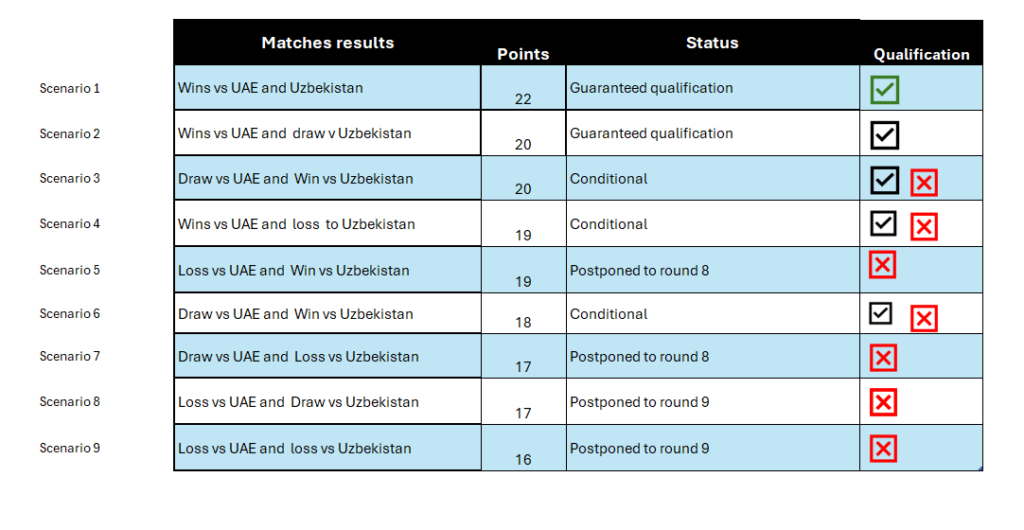
Team Melli’s qualifications scenarios

The chances of Team Melli qualification on March 25th after the end of the match against Uzbekistan are quite high. Iran is just about on the threshold of qualification with the two next matches could see Team Melli qualify for the FIFA World Cup for the seventh time with a few two matches to spare.

In here we will review the various scenarios in which Iran can seal its qualification in the next two matches vs. UAE on the 20th and then against Uzbekistan on the 25th and both matches are held at home in Azadi Stadium.

Eight Team Melli Players at Risk of Suspension Ahead of Uzbekistan ClashTeam Melli players under the threat of suspension

Eight key Team Melli players face the risk of suspension for Iran’s crucial match against Uzbekistan on March 25 if they receive yellow cards in Thursday’s game against the UAE.

Iran will host the UAE at Azadi Stadium on the final day of the Iranian calendar year 1403 as part of the FIFA World Cup 2026 qualifiers. Head coach Amir Ghalenoei will send his team onto the field under the looming threat of potential suspensions, with eight players carrying yellow cards from previous matches.

The players at risk are Alireza Jahanbakhsh, Hossein Kananizadegan, Milad Mohammadi, Sardar Azmoun, Mehdi Ghayedi, Mohammad Mohebi, Aria Yousefi, and Saeed Ezzatollahi—all just one booking away from missing the showdown with Uzbekistan.

If any of these players receive a yellow card against the UAE, they will be ruled out of the Uzbekistan match. Additionally, should any of them receive a caution against Uzbekistan, they risk suspension for Iran’s final two qualifiers.

Disciplinary issues have historically been a weak spot for Team Melli, and this trend has persisted under Ghalenoei’s tenure. Managing player discipline will be crucial in ensuring Iran fields its strongest squad for the decisive matches ahead.


More players invited to Team Melli camp.

Following the latest Persian Gulf League matches, Team Melli selectors have added seven more players to the current 21-man squad in camp.

According to the coaching staff, the newly invited players are as follows:

  • Goalkeepers: Alireza Beiranvand (Tractor), Seyed Hossein Hosseini (Esteghlal)
  • Defenders: Shoja Khalilzadeh (Tractor), Saleh Hardani (Esteghlal), Roozbeh Cheshmi (Esteghlal)
  • Midfielders: Amir Mohammad Razaghnia (Gol Gohar Sirjan)
  • Forwards: Amir Hossein Hosseinzadeh (Tractor)

The newly selected players will join the rest of the squad on Monday as preparations begin for the upcoming double-header against the UAE and Uzbekistan.

Perhaps the most notable inclusion among the new call-ups is 18-year-old Amir Mohammad Razaghnia. The talented midfielder has already made a name for himself at the youth level, having won the MVP award in a tournament held in Belarus. His selection signals a potential shift in head coach Amir Ghalenoei’s approach, showing a greater willingness to incorporate young talent into the national team setup.

However, the continued presence of Shoja Khalilzadeh in the squad suggests that Ghalenoei is not yet ready to part ways with his experienced core. While his selection brings valuable leadership and experience, it also highlights the ongoing balance between youth development and reliance on seasoned veterans within Team Melli.

Daniyal Eiri

Daniyal Eiri and Mohammad Khalifa Earn First National Team Call-Ups

Amir Ghalenoei has announced a 21-man squad for Iran’s upcoming Nowrooz 1404 matches against the UAE and Uzbekistan in the third round of the 2026 World Cup qualifiers. Among the call-ups, two 20-year-old talents—Daniyal Eiri and Mohammad Khalifa—have been invited to the national team camp for the first time.

Daniyal Eiri, a promising young defender, emerged from the Zob Ahan academy and played for the Isfahan-based club in the first half of the season. However, due to military service obligations, he transferred to Malavan Bandar Anzali for the second half of the campaign. His departure from Zob Ahan was controversial, as his strong performances led to public criticism from head coach Mohammad Rabiei and then-CEO Nima Nakisa. Despite their objections, Iri ultimately joined Malavan, where he has since become a key player under head coach Maziar Zare.

Eiri Reflects on His Journey and Team Melli Call-Up

In an interview with Mehr, Eiri shared his thoughts on his journey to the national team and his ambitions moving forward.

“I am very happy. From the start of pre-season training, I gave my all to improve and stay on the path to progress. When I officially heard about my national team invitation, I was overjoyed because I felt like I had achieved part of my goal. But I know that staying in the national team is even more important than being invited.”

He also expressed gratitude to those who have supported his development.

“First, I want to thank Zob Ahan for the opportunities they provided me. I also appreciate Coach Rabiei, who introduced me to professional football in Iran. Due to my circumstances, I moved to Malavan, where Coach Maziar Zare placed his trust in me. His support has played a major role in my journey, and I owe a lot to him.”

Eiri also acknowledged the national team staff for their confidence in him.

“I am grateful to Coach Ghalenoei and the entire coaching staff. It is a great honor to be in the same camp as some of Iran’s greatest footballers. But from today, my focus is on proving myself and earning my place in the squad so I can serve the national team and the people of Iran.”

On Malavan’s Performance and the loss against Persepolis.

Eiri also reflected on Malavan’s recent 2-0 loss to Persepolis.

“It was a tough match. We went in with the mindset of getting a result, and we played bravely. Persepolis is the reigning champion and a strong contender again this season, with high-quality players. If we had taken our chances better, we could have achieved a different outcome. Now, we must turn our attention to the next matches and continue Malavan’s strong performances this season.”

With his first national team call-up, Iri now has the opportunity to showcase his talent on a bigger stage. His determination and rapid development suggest he could play a crucial role in Iran’s future defensive lineup.
It is noted that along with Amin Hezbavi and Arya Yousefi, Iri competes a trio of young talented defenders that is going to taken over the aging and vulnerable Team Melli defensive line.

Team Melli’s Mini-Training Camp Canceled Amid Speculations Over Player Selection

Team Melli’s proposed mini-training camp has been canceled at the request of league coaches, according to head coach Amir Ghalenoei. Speaking briefly to reporters during the Persepolis vs. Havadar match, Ghalenoei expressed regret for not elaborating further, citing illness due to the flu. He assured the media that a comprehensive press conference would be held soon to provide updates on Team Melli’s preparations for the FIFA World Cup 2026 Qualifiers in March, where they are set to face the UAE and Uzbekistan.

In the meantime, Iranian football circles are abuzz with rumors surrounding a potential new addition to the national team—a 27-year-old Iranian-German striker, Yerai Eckert Ayensa, currently playing for the Belgian side Standard Liège. Reports suggest that Eckert is on the brink of receiving a call-up for Team Melli’s upcoming matches.

However, Eckert’s performance this season has raised questions about the merit of his potential inclusion. In 13 appearances for Standard Liège—12 starts and one substitute appearance—he has accumulated 1,060 minutes of playing time, registering just one goal against Charleroi and one assist against Saint-Truiden. Such modest statistics hardly make a compelling case for a national team selection, especially for a squad boasting one of the strongest attacking lineups in Asia, led by Sardar Azmoun and Mehdi Taremi.

Sayyadmanesh vs. Eckert: A Tale of Contrasting Performances

The speculation over Eckert’s call-up becomes even more puzzling when compared to the standout performances of Allahyar Sayyadmanesh, another Iranian player excelling in the same Belgian Pro League. The 22-year-old forward, who previously represented Team Melli, has been a consistent performer for Westerlo this season. By the 20th week of the league, Sayyadmanesh had featured in all 20 matches, contributing six goals and five assists—far surpassing Eckert’s output.

Despite his superior form and younger age, Sayyadmanesh appears to be overlooked by Ghalenoei, sparking debate about the rationale behind the rumored interest in Eckert. Both players are versatile, capable of playing as center forwards or wingers. However, at 27, Eckert is four years older than Sayyadmanesh, making the argument for youth and potential less convincing.

Transfer Value and Player Caliber

Another point of comparison is their market value. On Transfermarkt, Eckert is valued at €2.5 million, while Sayyadmanesh’s valuation stands at €4 million—a reflection of the latter’s higher standing in international football. While transfer value isn’t the sole determinant of a player’s worth to the national team, it offers an indicator of their performance and potential.

Given these considerations, the idea of inviting Eckert—whose current form is far from ideal—over Sayyadmanesh raises eyebrows. If there is no place for a proven, younger talent in Team Melli’s camp, what justifies the attention toward a player with less impressive statistics?

As Team Melli gears up for crucial World Cup qualifiers, such decisions will inevitably come under scrutiny. Fans and analysts alike will await Amir Ghalenoei’s forthcoming press conference for clarity on the direction and priorities of the national team.


The Tale of Two Halves: Team Melli’s Victory Over North Korea

Team Melli triumphed over North Korea on Thursday, solidifying its position at the top of the group. With this 3-2 win, the Iranian team opened a three-point lead over Uzbekistan and a six-point cushion over third-place UAE. However, the victory was a tale of two contrasting halves—one showcasing Team Melli’s dominance and another marred by a collapse in discipline and defensive frailty.

A Dominant First Half

Despite the challenges posed by a rough and uneven pitch, Team Melli began with a commanding display. Within the first ten minutes, Iran launched six attempts on goal, keeping the North Koreans on the back foot. Mehdi Ghayedi opened the scoring, and Mohammad Mohebbi added two more goals, assisted brilliantly by Mehdi Taremi, who seemed unstoppable. By halftime, Iran held a comfortable 3-0 lead, and fans expected more of the same in the second half.

Second-Half Collapse: A Familiar Story

The second half painted a different picture as Iran’s perennial struggle with discipline and defensive coordination resurfaced. The self-inflicted wounds began early, leading to a near-collapse that could have cost them the match.

Shojaa Khalilzadeh’s Red Card
Shojaa Khalilzadeh, the oldest player in the squad at nearly 35, proved to be a liability. His lack of pace was exposed once again, reminiscent of his costly foul against Qatar’s Akram Afif in the 2019 Asian Cup semifinal. Against North Korea, Khalilzadeh’s inability to keep up with a faster opponent resulted in another red card. This selection error raised serious questions about head coach Amir Ghalenoei’s tactical analysis. Despite claims of thorough preparation, the coaching staff failed to anticipate the Koreans’ speed and agility, leaving the Iranian defense vulnerable.

Taremi’s Nightmare Half
While Taremi shone in the first half with three assists, his second half was disastrous. It began with an own goal, as he deflected the ball into Iran’s net from an ill-advised position. Minutes later, Sardar Azmoun’s botched clearance ricocheted off a Korean forward, leading to North Korea’s second goal. Adding to the defensive woes, Mohammad Hossein Kananizadegan’s error—failing to clear a simple ball—further destabilized the backline.

At 3-2, the threat of a North Korean equalizer loomed large with half an hour to go and one man down. The Koreans pressed relentlessly, hitting the woodwork twice and missing numerous chances. Iran’s fragile defense was exposed repeatedly, leaving fans on edge.

Penalty Drama
Iran was awarded a penalty after a VAR review, offering a chance to regain control. Azmoun, not known for his penalty-taking prowess, handed the responsibility to Taremi. However, Taremi’s weak attempt was easily saved, capping off his miserable second half.

What Did We Learn?

The match underscored familiar issues with Team Melli. While they are capable of brilliance, moments of indiscipline and defensive lapses continue to plague the team. Ghalenoei faces significant challenges in addressing these weaknesses:

  1. Defensive Fragility
    The defense’s inability to handle pacey opponents remains a glaring issue. Khalilzadeh’s inclusion despite his age and lack of speed highlights the need for better player selection and tactical adjustments.
  2. Midfield Shortcomings
    Iran’s midfield lacks cohesion and fails to bridge the gap between attack and defense. This imbalance often leaves the defense exposed and contributes to second-half collapses.
  3. Player Discipline
    Taremi’s erratic performance and Azmoun’s unconvincing display emphasize the need for psychological coaching and tactical discipline, especially in high-pressure moments.

Moving Forward

While Team Melli managed to secure a victory, the match exposed vulnerabilities that could be exploited by stronger teams. Ghalenoei must instill discipline and address defensive frailties if Iran hopes to succeed against tougher opponents. Additionally, players like Taremi and Azmoun need to be more consistent and composed to avoid costly errors.

As for Taremi, his performance against North Korea was a mixed bag. While his first-half brilliance was crucial to Iran’s lead, his second-half errors could have undone all the good work. Counseling and support may help him regain confidence, especially with high expectations from both fans and his club, Inter Milan.

In the end, Team Melli survived a scare and held on to their lead. However, this match serves as a reminder of the need for better preparation, discipline, and adaptability to sustain success on the international stage.

Analyzing Ghalenoei’s Tactics for Team Melli’s Success

Team Melli’s Commanding Position in World Cup Qualifiers

Iran’s national football team, Team Melli, currently sits at the top of Group A in the FIFA World Cup 2026 third-round qualifiers, with 10 points from 4 matches. While Uzbekistan also holds 10 points, Iran maintains an edge through superior goal difference. The upcoming match against North Korea is crucial in solidifying Iran’s lead in the group and moving closer to securing a spot in the Canada/Mexico/USA World Cup. This fixture marks the end of the first round of qualifiers, with each team poised to complete their initial schedule before starting the return leg just five days later.

While five matches remain, a victory against North Korea, coupled with a Qatar defeat by Uzbekistan and a UAE loss to Kyrgyzstan, would put Team Melli in a strong qualifying position. An anticipated win over Kyrgyzstan in Bishkek would provide even greater confidence as Iran heads into a break, with qualifiers resuming next year.

Beyond qualifying mathematics, Team Melli’s recent performance against Qatar marked a turning point. Their impressive 4-1 win against the AFC Asian Cup champions showed a surge in form after three prior matches saw only two goals scored in total. Against Qatar, Team Melli displayed tactical sharpness, capitalizing on both skill and strategy. Now, Iran aims to replicate that cohesive performance against North Korea, who have historically posed a physical and tenacious challenge.

Ghalenoei’s Strategy and Selections: A Consistent Approach

Much debate surrounds Head Coach Amir Ghalenoei’s tactics and player selections, but it appears he is committed to his game plan. Ghalenoei, who values stability and consistency, continues to rely on a familiar roster and strategy. While he has faced criticism, he maintains that as long as results meet the team’s objectives, Team Melli should be exempt from critique. This strategy, though conservative, has proven effective, as evidenced by Iran’s undefeated standing so far.

In Vientiane, Ghalenoei is expected to retain much of the lineup that excelled against Qatar. The defense held firm, save for a single lapse that led to a conceded goal, and successfully contained two of Asia’s top forwards, Akram Afif and AlMoez Ali. In attack, Sardar Azmoun delivered a standout performance, while Mohammad Mohebbi filled Mehdi Taremi’s typically prolific role, showcasing his ability to step up under pressure.

However, Iran’s midfield continues to present challenges. Lacking creative playmaking and efficient distribution to the forward line, this area remains a potential vulnerability. Despite a more assured defensive role, the midfield has struggled to effectively support the attack. Hopes are high that Alireza Jahanbakhsh will remain on the bench in favor of a trio of Mohammad Karimi, Saman Ghoddos, and Saeid Ezatollahi in the center, with Ali Gholizadeh adding an offensive edge from the wing. This combination may provide the balance and dynamism Iran needs to unlock North Korea’s compact defense.

PLAYERS PERFORMANCE


Facing North Korea: Physicality and Discipline

North Korea, known for its tenacity and physical style, has had a mixed record in this qualifier stage. While their defense remains tightly organized, a lack of clinical finishing has hampered their results. Despite these limitations, they are a resilient side that has given Iran tough matches in the past, rarely backing down from challenges and often engaging in a physical style of play.

To succeed, Team Melli must avoid unnecessary physical confrontations, maintain composure, and remain disciplined—especially with a view to avoiding yellow and red cards that could weaken the squad in critical moments. Staying focused and maintaining an 11-man team on the field will be essential to handling North Korea’s aggressive tactics.

This encounter will be pivotal not only for Team Melli’s qualifying aspirations but also for maintaining their momentum and confidence as they progress in the World Cup qualifiers. With an opportunity to lock in a commanding lead, Iran heads into this clash with determination and focus, aiming to take a definitive step toward the 2026 World Cup.

Sardar Azmoun Injured During UAE Cup Match, Faces Possible Team Melli Absence.

Sardar Azmoun, the star center forward of Team Melli and Shabab Al-Ahli, sustained an injury during his club’s UAE Cup match against Diba Al-Hisn.

Azmoun, who recently impressed by scoring twice and assisting Mohebi in Iran’s victory over Qatar, continued his fine form with an early goal in the 9th minute of the match. However, his night was cut short when he was forced to leave the field in the 32nd minute due to injury.

In the dressing room, medical staff conducted an initial evaluation, quickly assessing the severity of his condition. Fortunately, after further examinations, it was confirmed that Azmoun had not sustained damage to his cruciate ligament. His injury, though requiring treatment, is not expected to sideline him for an extended period. The estimated recovery time is less than a month.

Despite the relatively short recovery period, Azmoun is at risk of missing Iran’s next two World Cup qualifying matches in November — away games against North Korea, which are likely to take place in Laos and Kyrgyzstan.

Team Melli currently tops Group A in the third round of FIFA World Cup qualifiers with 10 points, closely followed by Uzbekistan. The top two teams from the group will qualify directly for the finals, while the third-placed team will have to navigate a playoff to secure their spot in the tournament.