Tag: Omid Ravankhah

Jalali “Our football is in a downward trajectory”

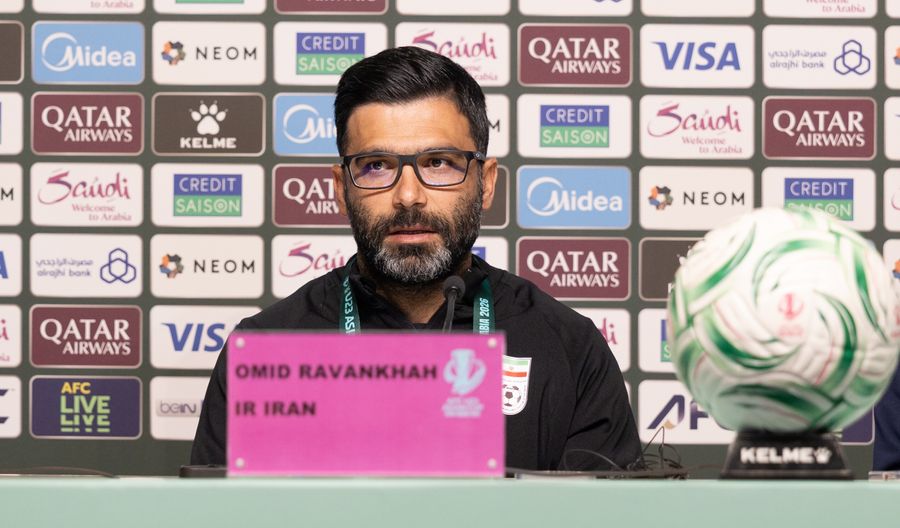
After Omid Ravankhah was dismissed as head coach of Iran’s U-23 national team, veteran coach Majid Jalali offered a sharp critique of the short-term decision-making that continues to hinder Iranian football. Jalali stressed that the root issue with the Omid team is not who serves as head coach, but rather the lack of long-term planning and managerial stability—problems he believes have persisted for nearly half a century and now extend to the senior national team.
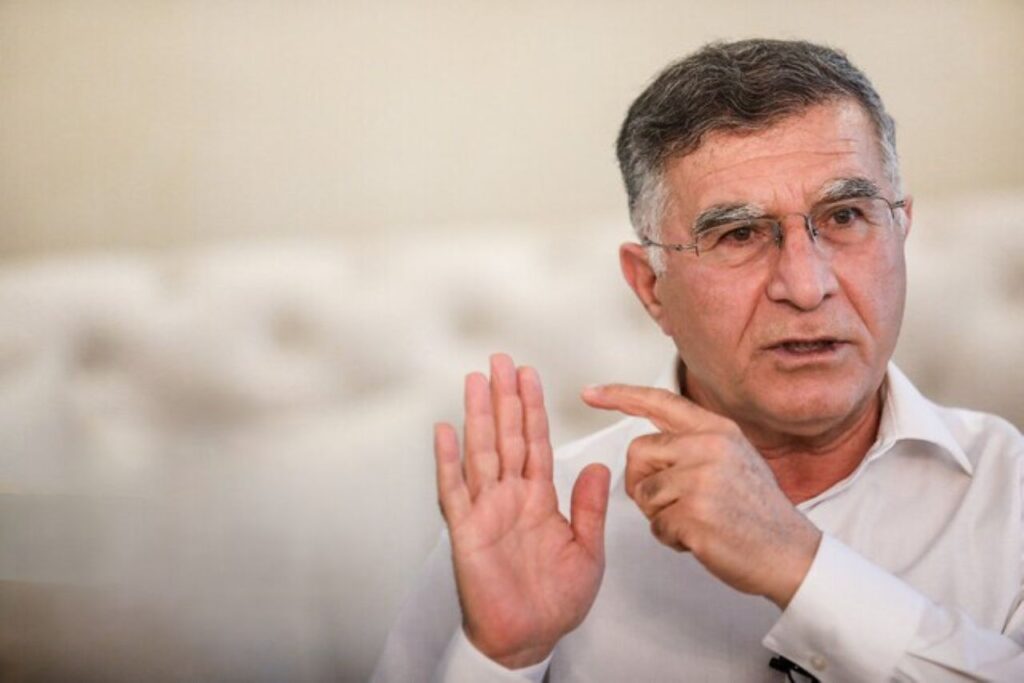
Majid Jalali

Ravankhah was removed from his position following Iran’s early exit from the 2026 AFC U-23 Asian Cup. A review of the team’s performance is set to take place during an upcoming technical committee meeting, where potential replacements will also be discussed.

In an interview with ISNA, Jalali reflected on the persistent struggles of the Omid team: “Unfortunately, we keep repeating the same mistakes when it comes to the U-23 side. For about 50 years, we haven’t managed to progress past a certain stage—despite trying more than 30 coaches. Foreign coaches, domestic coaches, and recently even young, inexperienced coaches like Ravankhah have been given opportunities. We always have a four-year cycle to plan, yet we leave decisions to the last three months and then complain about a lack of time!”
Jalali continued, emphasizing that the recurring issues run deeper than coaching choices: “There must be other significant reasons behind these failures. Believing that replacing a coach with a high-profile foreign name will solve everything is a strategic mistake we’ve made over and over—and apparently, we’re about to make it again. If we truly want the Omid team to succeed, we have four years to prepare. But when we only start thinking about it in the final three months, failure is inevitable. We need to change how we see and plan for this team.”

He also pointed out the counterproductive habit of changing coaches mid-cycle: “Often, we’ve acted a year before a tournament and replaced the coach midway through. That means we lose time there, too. I believe we need a solid, long-term plan—looking ahead a full four years—if we want this team to qualify for the Olympics. If we fail again despite proper planning, that’s just part of the game. But if we succeed without a plan, it’s mere coincidence. And the truth is, we’ve never really had a long-term plan for the Omid team.”

Jalali further stressed the importance of preparation and exposure: “There have been times when we had talented players, but because they lacked international friendlies and competitive experience—and because coaches often lacked international exposure themselves—we’ve been hurt in crucial moments. That’s part of the problem, but the real issue is the absence of a long-term vision. This weakness in the Omid team has directly affected the senior squad. Team Melli is now one of the oldest in the world because the youth and U-23 teams haven’t produced enough quality players to refresh the national team.”

When asked whether long-term planning and infrastructure should come before selecting a head coach, Jalali replied: “Maybe even before that! First, we need a plan. Our Omid teams have consistently underperformed, and as a result, the senior team has aged without viable replacements. If our youth and U-23 teams were successful, we’d see more young players in international competitions and eventually in the senior squad.”

Jalali also criticized the lack of continuity in grassroots development: “The few promising players who emerge often leave their clubs because they don’t get enough playing time at clubs that are focused on results and have little inclination to youth development.”

“Our rivals plan for years. While we struggle to do any such long-term planning. It is the same story with other youth and age group teams. These are failed experiments we keep repeating. Our football is on a downward trajectory.”

Asked about the recent elimination of Iranian clubs Esteghlal and Sepahan from Asian competitions, Jalali saw it as further evidence of decline: “Our football is sliding backward. I once said we were on the right track, but that’s no longer the case. There are many reasons for this. When I was at the federation, we diagnosed these issues and laid them out in a comprehensive plan, why we’ve reached this point. I said then that the future would be harder, and I’ll say it again. The further we go, the tougher it gets. Years ago, we were upset about not winning trophies. Now, we’re satisfied just to see our teams advance a round or two.”

“Over time, we’ll face stronger competition from second-tier nations, and soon maybe even third-tier teams. Right now, we’re struggling to get past the group stage in the Asian League Two, while we once lamented not being champions of Asia. Our wealthy, big-spending clubs can’t progress in second-tier competitions. It’s clear we’re in decline, and we still haven’t found a way out.”
Omid Team failure. a result of chronic failures.

The failure to qualify from the group stages of the AFC U23 Asian Cup 2026 came as little surprise to most observers. From the outset, South Korea and Uzbekistan were the clear favorites—footballing nations that have established themselves as formidable rivals to Iran.
What proved truly shocking, however, was Iran U23 finishing bottom of their group and failing to score a single goal across three matches.

The irony is heightened by the Sports Minister’s prior prediction that this very team would qualify for the Los Angeles Olympics. One need not be an expert to recognize why this squad struggled to compete, yet progressing beyond the group stage was the minimum expectation held by supporters. It is worth recalling that this Omid Team effectively serves as the “B” side of Team Melli. These are not untested youngsters; there are no U15 or U19 players here learning their trade. All are active in domestic leagues, with several—such as Javad Hosseinnezhad, Reza Ghandipour, and Mohammadmahdi Zare—playing abroad as legionnaires. These are grown professionals expected to compete at football’s higher levels.

The U23 team’s performance reflects the broader decline of Iranian football. It mirrors systemic issues: a lack of quality, chronic mismanagement, inadequate coaching, and poor fundamentals and professionalism. The system that produces these players is inept, chaotic, and fundamentally broken. Iranian football has long relied on individual talent to produce moments of brilliance, but even that seems to be fading within the complexities of modern football. Tellingly, one of Iran’s most promising talents in recent years, captain Javad Hosseinnezhad, was left on the bench during a critical match. Whether due to injury or other reasons, his absence extinguished any hope that individual skill might turn the tide.

Lebanon, beaten by both South Korea and Uzbekistan, managed to defeat Iran U23 1-0 via a solitary penalty. Omid needed to win at least 2-0 to assure qualification after two goal-less draws with Korea Rep and Uzbekistan. There was ample time for the coach to adjust, to shift tactics, alter formations, and inject energy into the side following Lebanon’s goal. Yet Omidreza Ravankhah, arguably one of the least experienced coaches ever to lead the Omid Team, appeared out of his depth and devoid of solutions. While Ravankhah’s appointment warrants scrutiny, placing blame solely on him is misguided. The failure began many years ago within a system and an organization too dysfunctional to appoint qualified, competent leadership.

Little can be expected from figures such as FFIRI head Mehdi Taj, whose leadership is unlikely to steer Iranian football toward success. Wielding influence with backing from entities like the IRGC, he remains entrenched in power, presiding over Iranian football’s descent into a deeper crisis. If fans despair over the Omid Team’s repeated failures, the prospect of watching Team Melli at the 2026 World Cup offers little solace; the underlying issues remain unchanged.

While Iranian football has endured many shocks in recent years, one stark revelation stands out: the exposure of grassroots coaches, some of whom have never played the sport yet are tasked with training children. This unsettling fact, highlighted by an Iranian FIFA coaching instructor during a televised analysis of the Iran-Lebanon match, may well be the epitome of a failed footballing system.

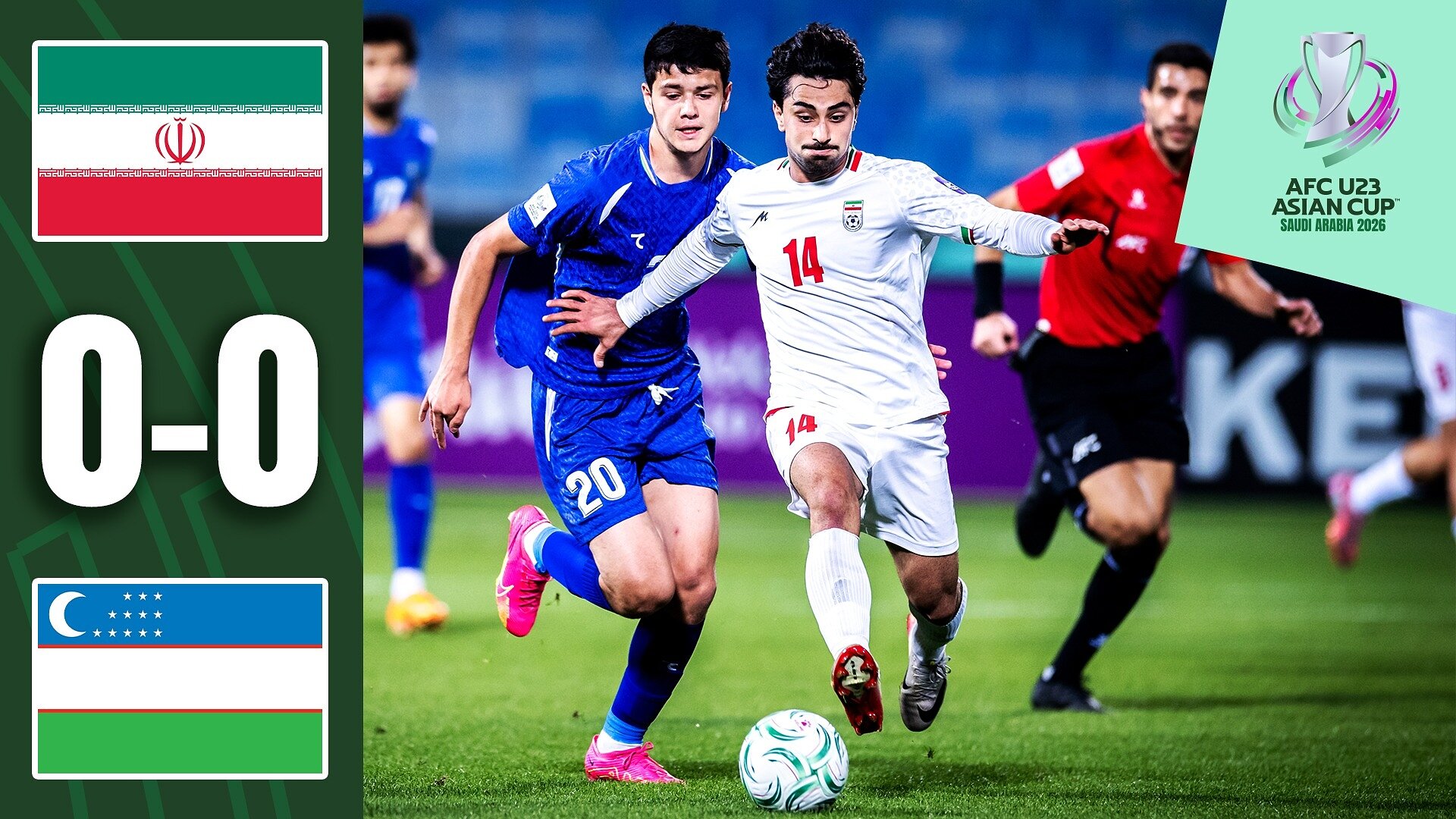
Omid Team second goal-less draw. Qualificatio is in peril.

Riyadh: Head coach Ravshan Khaydarov was happy that his Uzbekistan side were able to stand their own in an intense AFC U23 Asian Cup Saudi Arabia 2026™ Group C encounter with Iran on Saturday.

The goalless result favoured Uzbekistan – having defeated Lebanon 3-2 in their opening match – and set up a clash with leaders Korea Republic on Tuesday with both teams on four points.

#AFCU23 | Group C: IR Iran 0-0 Uzbekistan

“It was a very intense, exciting match,” said Khaydarov. “We know of Iran’s strength and how smart and confident they are from previous encounters, and we played with discipline and according to our game plan.”

image content

“Our intention was to stick to our tactics and attack, test and fight on the field,” said Khaydarov, whose side can expect another bumper ride against Korea Republic.

Iran head coach Omid Ravankhah  said he had expected to pick up three points after having settled for a goalless draw with Korea Republic in their opening match.

“We came here to win, but I’m happy our players gave their best and tried hard, and thank them for their effort and dedication.”

image content

“We couldn’t make the most of our chancess today, and so we need to be more focused during our attacks to maximise our chances,” said Ravankhah, whose side will qualify if they win against Lebanon and either Korea Republic or Uzbekistan lose in their encounter.

If the Uzbekistan-Korea Republic tie ends in a stalemate and Iran win, goal difference will decide which teams progress. 

Omid Team Holds Mighty South Korea to a Stalemate in Tense AFC U23 Opener


– First points of Iran U23

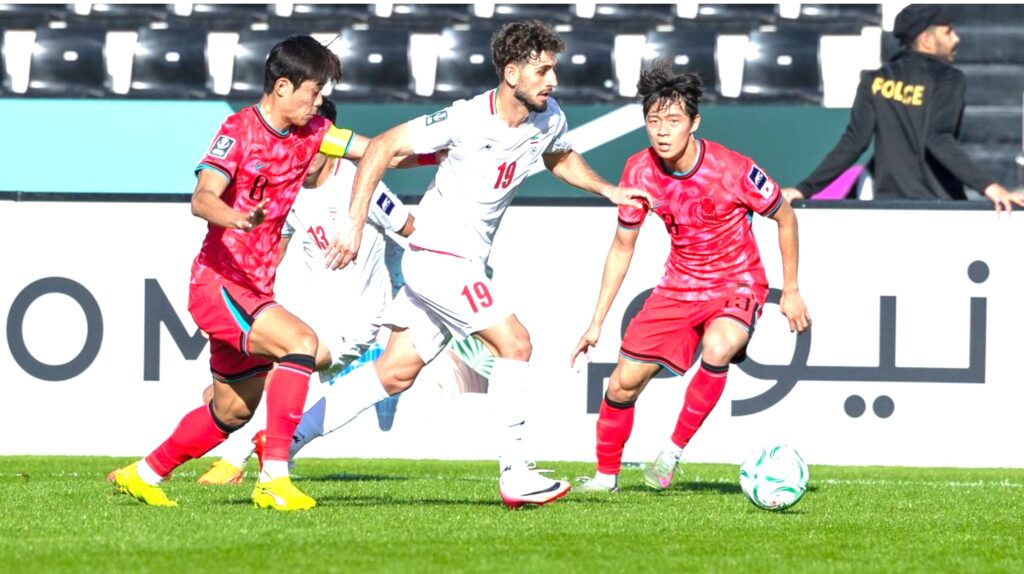
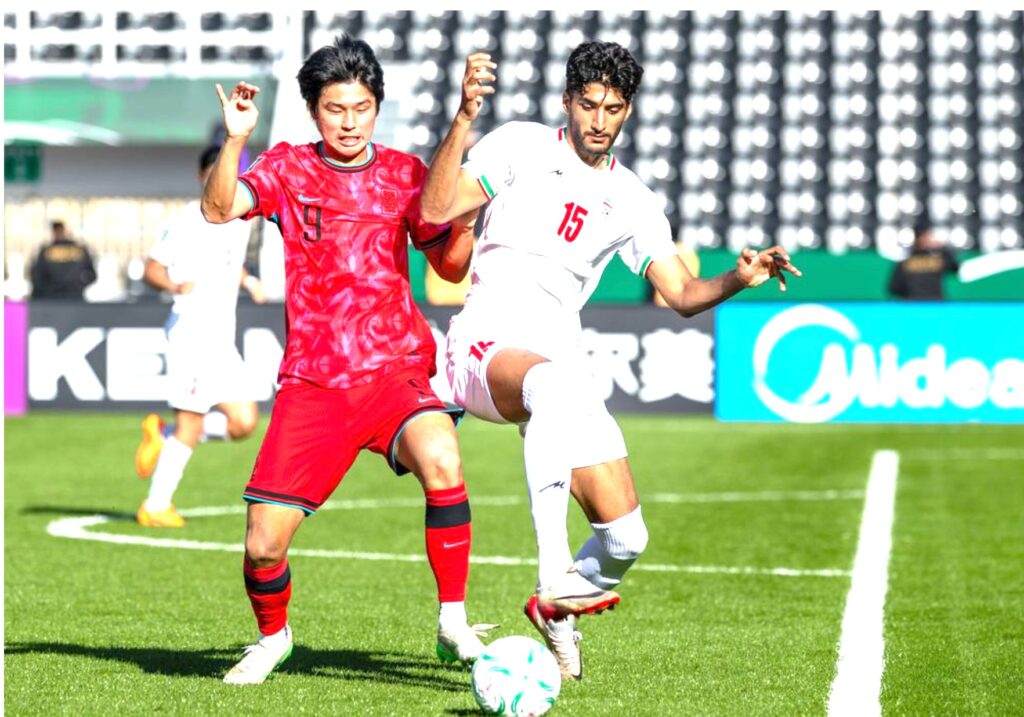
Iran’s U-23 national team, the Omid Team, began their challenging AFC U23 Asian Cup 2026 campaign with a disciplined and resilient performance, holding tournament favorites South Korea to a 0-0 draw in a tense, tactical affair.

While the match will not be remembered for attacking flair or goalmouth drama, it will be noted for Iran’s impressive defensive organization and control of the game’s tempo. Contrary to pre-match predictions, it was Iran who looked the more composed side for large periods, effectively neutralizing the traditional high-energy, offensive threat of their East Asian rivals.

A Match of Tactical Chess, Not Fireworks

From the outset, the Omid Team, under coach Reza Ravankhah, executed a clear game plan: maintain defensive concentration, control the midfield, and patiently probe the notoriously solid Korean backline. The strategy succeeded in limiting South Korea to half-chances, with the Iranian defense, marshaled superbly, showing little vulnerability.

The Koreans, unusually subdued, appeared wary of Iran’s counter-attacking potential. Their typically relentless pressing and quick transitions were replaced by a more cautious, possession-based approach, which played into Iran’s organized defensive structure.

Iran’s lone moment of true attacking quality in the first half came from their standout player, Javan Hosseinnezhad. The elegant midfielder delivered a perfectly weighted diagonal ball from the right, finding Ali Rostami in stride. Rostami’s powerful first-time volley whistled just past the upright, a near-miss that served as the half’s most serious threat.

A Dull Game Sparks to Life at the Death

The second half followed a similar pattern—a slow-paced, midfield battle with few clear-cut chances. Iran continued to prefer intricate ground passes in an attempt to unlock the defense, often opting for safe diagonal switches of play rather than risky penetrating runs.

Just as the match seemed destined to peter out into a forgettable draw, it erupted in a thrilling finale during injury time. First, Iranian substitute Mehdi Jafari unleashed a powerful, low drive from distance, forcing Korean goalkeeper Hong Seong-Min into a spectacular, full-stretch save to his right.

Almost immediately, the action raced to the other end. A desperate scramble in Iran’s penalty area presented South Korea with a golden chance to steal a late winner. However, goalkeeper Mohammad Khalifa emerged as the hero, making a crucial intervention amidst the chaos, allowing his defenders to clear the danger to safety and preserve the hard-earned point.

Analysis: A Solid Foundation, But Room for Growth

The final whistle confirmed a valuable point for Iran in the tournament’s “Group of Death,” a creditable result against one of Asia’s youth football powerhouses. The performance demonstrated significant improvement in tactical discipline and defensive solidity, the foundations upon which campaigns are built.

However, the match also highlighted a clear area for improvement. Iran’s lack of attacking ambition and variety ultimately cost them a chance at a historic victory. Despite showing clear aerial superiority, the team persistently relied on ground strokes against a compact defense. The reluctance to deliver early crosses or utilize long balls to test the Korean backline made their offensive efforts largely predictable.

For Coach Ravankhah, the takeaway is twofold: pride in a well-earned clean sheet against a top opponent, and a clear cue to inject more offensive daring and tactical variety into their next crucial fixture. This draw proves the Omid Team belongs on this stage; their upcoming match will show if they have the tools to advance from it.

MATCH DETAILS

Korea Republic
21 Hong Seong-Min GK
2 Kang Min-Jun DF
3 Bae Hyun-Seo  DF YC 53‎’‎
5 Lee Hyun-Yong DF  YC 33‎’‎
23 Shin Min-Ha DF
6 Lee Chan-Ouk MF [73′ Jung Ji-Hun]
8 Kim Dong-Jin MF
9 Kim Tae-Won FW [80′ Jeong Jae-Sang ]
10 Kang Sang-Yoon FW [28‎’‎ Jung Seung-Ba]
13 Kim Do-Hyun MF [73′ Kim Han-Seo]
17 Kim Yong-Hak MF [46‎’ Kang Seong-Jin]


Substitutes
1Moon Hyun-Ho
4Jo Hyun-Tae
7Kang Seong-Jin 46‎’‎
11Jung Ji-Hun
12Hwang Jae-Yun
14Jung Seung-Bae 28‎’‎
15Baek Ga-On
16Kim Han-Seo
18Jeong Jae-Sang
19Lee Geon-Hee
20Park Jun-Seo
Manager-Min-Sung Lee
Iran
1 Mohammad Khalifeh GK
3 Arsha Vosoughifard DF
13 Mahdi Mahdavi DF
15 M. Mohebi DF [83′ Danial Iri YC 89′]
16 Farzin Moamelehgari DF
8 Pouria Latififar MF
9 Yadegar Rostami MF
10 Javad Hosseinnejad MF [62 ‘A. M. Sadeghi]
19 Mahdi Goudarzi MF [71′ M.Askari]
20 Abbas Habibi MF [72′ Razzaghinia YC 69′]
7 Reza Ghandipour FW [71′ M. Jaffari]


Substitutes
2 B. Goudarzi
4 D. IriSub5M. Zare
6 A. Razzaghinia
11 M. Askari
12 P. Rafiei
14 F. Jafari
17 E. Jamshidi
18 A. Sheikhi Rad
21 H. Zaruni
22 A. Maghsoudi
23 M. Sadeghi
Manager-Omid Reza Ravankhah

AFC U23 Asian Cup: Korea Republic v Iran

The-afc.com
Tue, 06 January, 2026

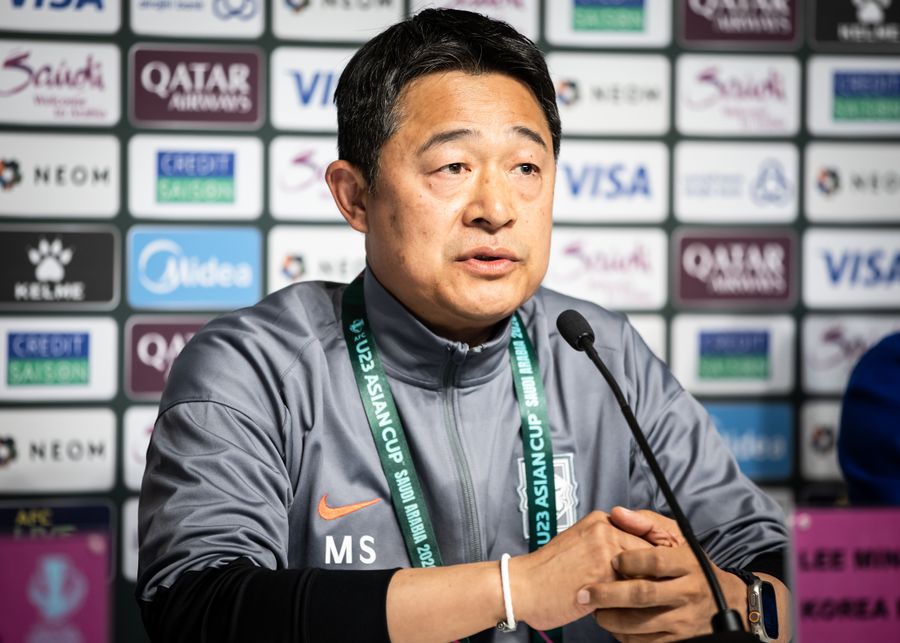
Riyadh:  Korea Republic are determined to kick off their campaign on a winning note when they face Iran in their AFC U23 Asian Cup Saudi Arabia 2026™ Group C opening tie on Wednesday.

The 2020 champions are aiming to go all the way after making their exit at the quarter-final stage in the last two editions, and head coach Lee min-Sung is confident of their chances.

“We have studied the way Iran play, and they have very good strikers and are good in their build-up,” he said.

“We need to control these aspects, and this will prove to be a very exciting match. “

image content

“The players have had seven training camps since I took over as head coach, and they faced some problems with teamwork and fitness levels, but we overcame these at our final camp.

“Today we are in peak condition, our confidence is high and it is really important that we obtain the best possible result in our opening match.”  

#AFCU23 Saudi Arabia 2026 | Group Stage Preview

Iran head coach Omid Ravankhah echoed Lee’s sentiments about Group C being composed of exceptional teams.

“This is a group with respected teams, but we have set our objective and are determined to perform well,” he said. “We are familiar with the Korea Republic game and they are very strong, but we will go out to win.” 

image content

The Central Asian side did not qualify for the 2024 edition, but their perfect showing in the Saudi Arabia 2026 Qualifiers has boosted their confidence. 

“We have very strong, talented players, and all of them are looking forward to succeeding and achieving a significant result in our first match.”


Trivia

  • This will be the second encounter between Korea Republic and Iran in the AFC U23 Asian Cup, with the former winning the previous meeting 2-1 in 2020.
  • Korea Republic have won 18 games in the AFC U23 Asian Cup, the joint-most by any side in competition history alongside Japan.
  • Iran have failed to progress beyond the group stage in each of their last two AFC U23 Asian Cup participations (in 2022 and 2020), after having done so in their debut edition in 2016.

Korea Republic v Iran
Venue: Al Shabab Stadium (Riyadh)
Kick-off: Wednesday, 14:30 (UTC+3)

Omid Team to play in Kyrgyzstan tournament.

MANAS CUP International Football Tournament will be held in Manas city. The Kyrgyz Football Union (KFU) reported.

The national football team of Kyrgyzstan will also take the field. The matches will be held at Kurmanbek city stadium.

In addition to the host, teams from Bahrain, Iran, and Russia will also participate in the international tournament. All opponents will be represented by U23 Olympic teams.

The players will be 23 years old or younger. All participants in the upcoming games in Osh are preparing for the 2026 AFC Asian Cup final tournament, which will be held in January in Saudi Arabia.

Iran’s Omid Team (U23) will be led by Omid Ravankhah, who has already called 23 players for the squad.
Amir Mehdi Maghsoudi and Aria Shafidoust from (Sepahan),
Arash Mortazavi (Zobahan),
Mohammad Hossein Sadeghi (Persepolis),
Saeed Saharkhizan and Amir Mohammad Razaghinia (Esteghlal),
Afshin Sadeghi, Erfan Jamshidi (Peykan),
Hojjat Ahmadi (Esteghlal Khuzestan),
Arshia Vosoughifar (Fajr Shahid Sepasi),
Farzin Aghagari (Shams Azar),
Hamid Reza Zarooni and Masoud Mohebi (Khyber Khorramabad)
Danial Iri, Abbas Habibi, and Mehdi Jafari (Malvan Bandar Anzali)
Omid Amiri (Nasaji Mazandaran),
Mohammad Khalifa, Seyyed Mehdi Mahdavi, and Bahram Goodarzi (Aluminum Arak),
Alireza Safari (Chador Malo Yazd)
Mohammad Javad HosseinNejad (Dinamo Makhachkala- Russia ) and
Mohammad Mehdi Zare (Akhmat Grozny- Russia).

Matches Schedule

*Iran – Russia; November 11

*Iran – Kyrgyzstan; November 14

*Iran – Bahrain; November 17

Iran’s Omid Team Opens AFC U23 Qualifiers with Commanding 4-0 Win Over Hong Kong

In their opening match of Group I in the AFC U23 Asian Cup qualifiers, Iran’s Omid Team secured a comprehensive 4-0 victory against Hong Kong.

The goals for Iran were scored by Mahdi Jaafari, Amir Mohammad Razzaghnia, and a brace from Kasra Taheri.

Iran U23 has been drawn into Group I of the qualifying tournament alongside the UAE, Guam, and Hong Kong. Head coach Omid Ravankhah selected a starting lineup consisting of Mohammad Khalifa, Masoud Mohebbi, Farzin Maqsadagari, Arshia Vosoughifard, Seyed Mehdi Mahdavi, Amir Mohammad Razzaghinia, Pouria Latififar, Abbas Habibi, Erfan Jamshidi, Yadgar Rostami, and Saeed Saharkhizan.

The two teams had previously met in a warm-up match prior to the tournament, which ended in a 5-1 victory for Iran. This competitive encounter, however, proved more challenging initially.

Iran began the match with dominance, controlling possession and the flow of play. Despite their advantage, Hong Kong’s organized and tight defense limited Iran’s opportunities to create clear-cut chances. The first half concluded with the scoreline locked at 0-0.

Hong Kong’s resilient defense continued into the second half, frustrating the Iranian attackers, who were also hampered by wayward finishing. Midway through the half, Coach Ravankhah made several crucial substitutions, introducing captain Mohammad Javad Hosseinnejad and Kasra Taheri to reinforce the forward line, replacing Saeid Saharkhizan.

The changes invigorated Iran’s attack. The breakthrough finally came in the 69th minute from a free kick on the edge of the penalty area, awarded by the Korean referee. Mahdi Jaafari stepped up and executed a clever shot that left the Hong Kong goalkeeper stranded, putting Iran ahead 1-0 and relieving the growing pressure on the team.

The floodgates opened just three minutes later. A swift run down the left flank breached Hong Kong’s tiring defense, and the resulting cross found Amir Mohammad Razzaghnia, who calmly finished from close range to double Iran’s lead.

Substitute Kasra Taheri then took center stage, sealing the victory with two well-taken goals. His first came in the 83rd minute, and he added another in the second minute of stoppage time (90+2) to complete the 4-0 rout.

The match was played in intense heat, which challenged both sides. For much of the game, it seemed Iran’s superiority might not translate into goals. However, the impactful substitutions by Ravankhah, combined with Hong Kong’s fatigue in the latter stages and a confident finish from the Omid Team, ultimately made the difference.

Iran’s next match will be against Guam.

Part 1: Iran’s U23 (Omid) team Coaching Appointments: Cronyism Over Competence


A review of recent coaching appointments for Iran’s U23 (Omid) team reveals a glaring truth: experience and a proven track record in high-level football were the last considerations in the selection process.

After months of delays, the Football Federation finally reached an agreement with the National Olympic Committee to assume full control of the Omid team. Yet, rather than appointing a qualified leader, the federation unveiled a head coach whose resume is shockingly inadequate for the role—sparking immediate backlash from fans and media alike.

Omidreza Ravankhah, who transitioned directly from playing into coaching, has spent his career in Iran’s lower divisions, with brief, disastrous stints in the top flight. His sole Premier League experience—with Havadar—ended in relegation after just 17 matches, yielding a pitiful 0.82 points per game. That such a record qualifies him to lead Iran’s Olympic hopefuls is nothing short of farcical.

Even within the Football Federation, dissent has surfaced. Rahman Salari, a board member, openly admitted: “I was unaware of the selection process and learned of it through the media. What upsets me is that credentials were ignored. I remain in shock—how did we go from Yahya Golmohammadi to Omid Ravankhah? Those responsible must be held accountable.”

If the head coach’s appointment was baffling, the choices for his assistants border on sabotage. Ravankhah’s first deputy, Hadi Mahdavikia—brother of legendary Mehdi Mahdavikia—has zero experience coaching in Iran’s top tiers, having only worked with youth teams at the Kia Academy. Iman Mobali, though a former Team Melli player, brings limited experience as an assistant in mid-table clubs.

The most egregious misstep, however, is the appointment of Mehdi Totounchi—a sports presenter—as technical advisor. This role demands a seasoned strategist capable of guiding the coaching staff, yet Totounchi’s sole credential is a youth championship with Saipa. The message is clear: expertise is irrelevant; connections are everything.

This is more than mere cronyism—it is a brazen insult to Iranian football. The federation, under Mehdi Taj’s leadership, operates with utter impunity, disregarding meritocracy while expecting miracles from unqualified appointees.

With such a woefully inexperienced staff, Iran’s dream of ending its 50-year Olympic absence is in peril. The Omid team now resembles a ship steered by the blind, with fans left to pray for divine intervention.

Only a fool would bet on qualification under these conditions. The federation has failed—again—and the price will be paid by the players and the nation.


Another IRIFF blunder on the way!

The Iranian football federation once again is planning to appoint low or no experience coaches for Youth Teams.

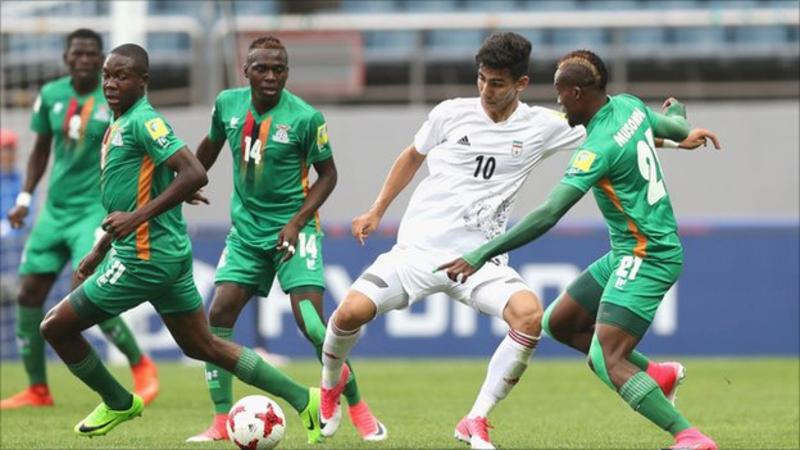
After elimination from the group stages of the FIFA U-20 World Cup 2017 in Korea Rep. and failure of coach Peyrovani to get the best out of one of the most promising youth teams in decades , FFIRI is looking to renew the team and select another coach.

The list of the candidates is headed by no other than the failed coach Amir Hossein Peyrovani, Ex-Team Melli Captain Javad Nekounam , Omid Ravankhah and Hossein Cahmanian.

For FFIRI, teams at youth level do not warrant employing high caliber experience coaches. It has been a stepping stone for wannabe coaches a policy which has resulted in Iranian teams failures at most youth levels.