Author: admin

Ghalenoei Unveils 35-Man Squad for March Friendlies; Team Melli Prepares Amidst Turbulent Times.

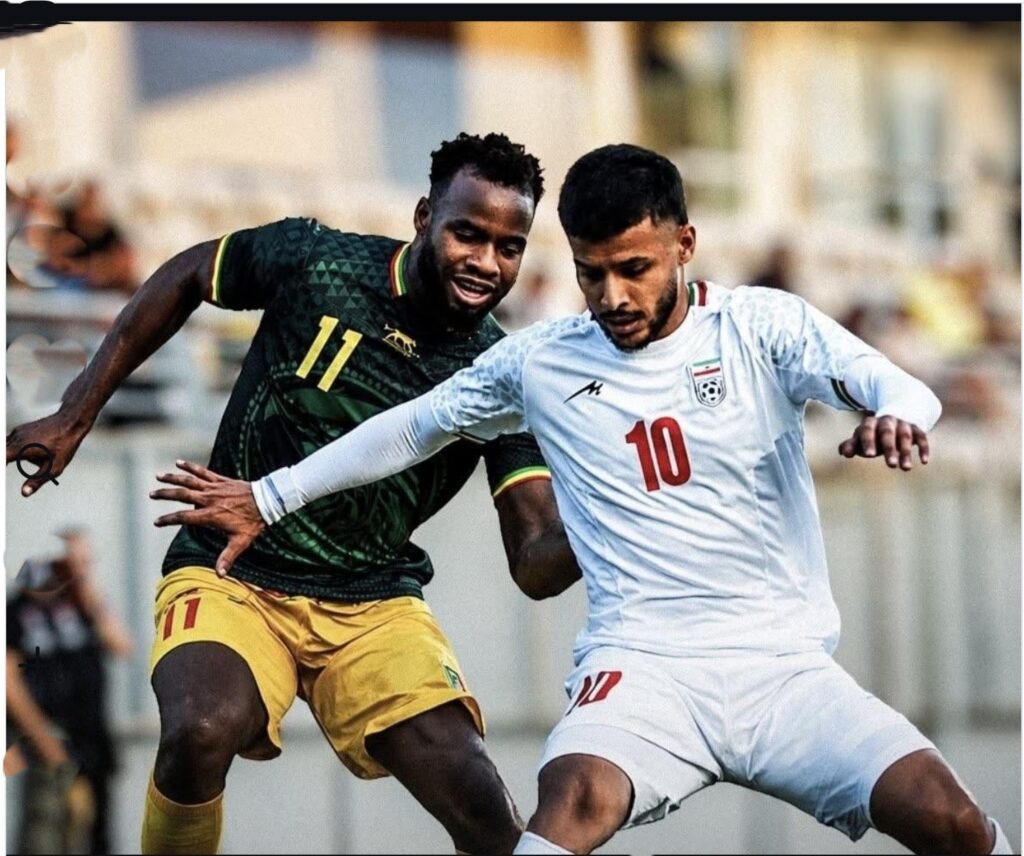
Team Melli travels by road to Van , Turkey.

As Iran continues to face relentless Israeli/American military aggression, including direct strikes on its territory, civilian targets such as a Girls school and the assassination of its leaders, military commanders, and nuclear scientists, the national football team is preparing to navigate a complex path forward.
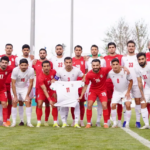
Head coach Amir Ghalenoei has announced a 35-man preliminary squad for the upcoming March training camp and two high-profile friendly matches against Nigeria and Costa Rica. The camp, set to commence in Turkey, represents a crucial step in Team Melli’s preparation for the future, even as the nation endures one of the most volatile periods in its modern history.

The announcement comes as Iran remains under sustained attack, making logistics quite a complicated task. Economic and military sanctions have further strangled infrastructure, and the sports sector has not been immune to these pressures.

In this context, Team Melli’s activities abroad are not merely logistical exercises; they are acts of resilience. The decision to hold the camp and matches in Turkey is a direct result of the security situation. With the nation under bombardment and airspace frequently compromised, hosting international teams inside Iran is currently impossible. The federation’s ability to arrange fixtures, secure flights, and guarantee the safety of players and staff has been severely tested by the twin pressures of war and sweeping sanctions.

The Squad: A Blend of Veterans and a High-Profile Debut

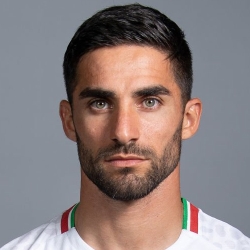
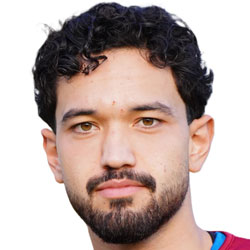
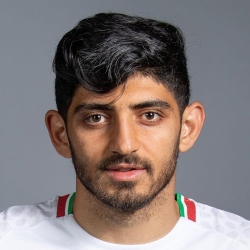
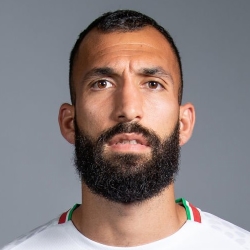
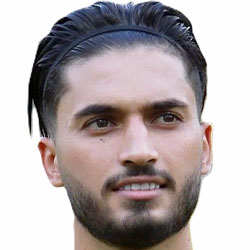
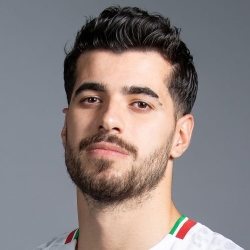
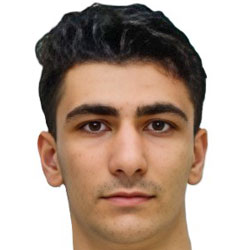
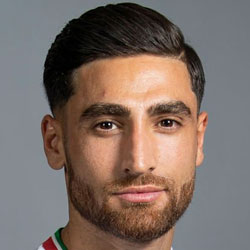
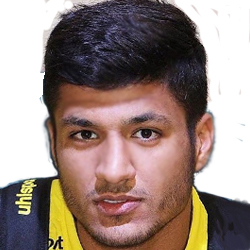
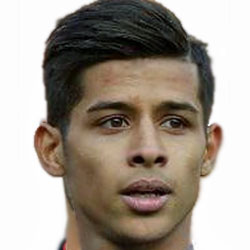
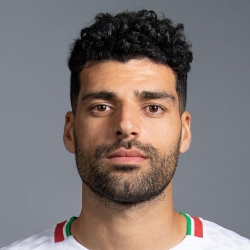
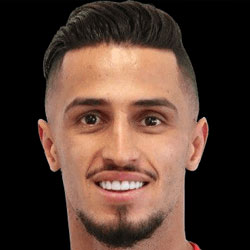
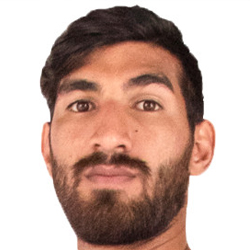
Ghalenoei’s roster reflects a strategy of continuity, veteran players, and the integration of some fresh talent. The squad is headlined by the return of out-of-favor Mehdi Torabi , Ehsan Hajsafi and the introduction of a dual citizen Iranian. Dennis Eckert.

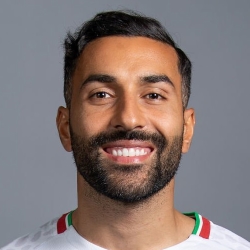
There are several significant talking points in this squad, the most important of which is the exclusion of top scorer Sardar Azmoun for allegedly posting a picture with the ruler of Dubai in his social media post. Also, the first-ever call-up for Dennis Eckert, the 29-year-old Iranian-German forward currently plying his trade for Standard Liege in Belgium. Eckert, who is eligible to represent Iran through his heritage, has been granted the necessary permits from FIFA to switch his international allegiance. His inclusion is seen as a major coup for the federation, adding a powerful, physical presence to the forward line. Eckert’s ability to operate as a central striker or on the wing provides Ghalenoei with tactical flexibility against physically robust opponents like Nigeria.

The full 35-man squad is as follows:

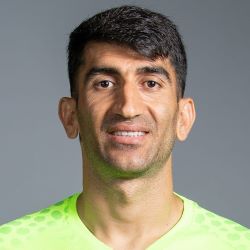
  • Goalkeepers: Alireza Beiranvand, Seyed Hossein Hosseini, Payam Niazmand, Mohammad Khalifa.
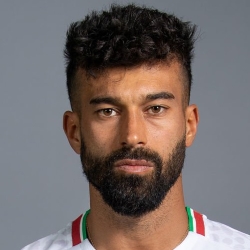
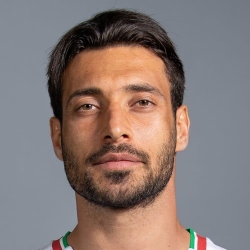
  • Defenders: Ali Nemati, Hossein Abarghouei, Shoja Khalilzadeh, Saman Fallah, Mohammad Hossein Kanaanizadegan, Danial Iri, Ehsan Hajsafi, Milad Mohammadi, Abolfazl Jalali, Saleh Hardani, Ramin Rezaeian, Danial Esmaeilifar.
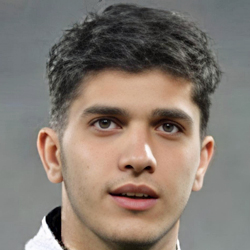
  • Midfielders: Saeid Ezatolahi, Mohammad Ghorbani, Omid Noorafkan, Saman Ghoddos, Amir Mohammad Razzaghinia, Mohammad Mohebi, Mehdi Ghayedi, Mehdi Torabi, Hadi Habibinejad.
  • Forwards: Mehdi Taremi, Amir Hossein Mahmoudi, Alireza Jahanbakhsh, Ali Gholizadeh, Mehdi Hashemnejad, Ali Alipour, Shahriyar Moghanlou, Ehsan Mahrougi, Amir Hossein Hosseinzadeh, Dennis Eckert.

The Matches: A Litmus Test Amidst Isolation

Team Melli is scheduled to face Nigeria (March 27) and Costa Rica (March 31) in Antalya, Turkey. These fixtures are considered a significant upgrade in opposition quality compared to many of Iran’s recent friendlies, which have been difficult to arrange due to the country’s political isolation.

The match against Nigeria, one of Africa’s powerhouses, will serve as a physical and tactical litmus test. The Super Eagles possess blistering pace and individual brilliance, mirroring the style of some Asian opponents while presenting a higher intensity. The game against Costa Rica, a team renowned for its defensive organization, will offer a different challenge, simulating the type of low-block defenses Iran often struggles to break down in Asian competitions.

For Ghalenoei, whose position is often a subject of intense public debate, these matches are an opportunity to demonstrate progress against top-tier opposition. The results, while secondary in friendlies, carry psychological weight for a nation seeking moments of pride and normalcy amidst the chaos of war.

Logistical Challenges Under Fire

The decision to hold the camp in Turkey is a pragmatic necessity born of crisis. Due to the ongoing bombardment of Iranian territory, the constant threat of further Israeli airstrikes, and the stringent enforcement of American-led sanctions, hosting international teams in Iran has become impossible. Turkey serves as the only viable logistical hub, allowing Iranian players based in Europe—such as Taremi, Ali Gholizadeh and Jahanbakhsh- to join the camp with minimal risk.

FFIRI has confirmed that news and images of the team’s preparations and departure will be disseminated through official media channels, attempting to maintain transparency and connect with a fan base eager for distraction from the relentless news of military strikes and regional escalation.


Conclusion: A Selection Defined by Caution, Not Courage

Ghalenoei’s 35-man squad lays bare the conservative philosophy that has come to define his tenure. Rather than using these friendlies—played under exceptional circumstances—as an opportunity to inject fresh blood into the national team, the head coach has doubled down on familiarity, leaning heavily on a core of aging veterans whose best years are behind them.

The inclusion of Shoja Khalilzadeh (37) , a controversial figure whose presence has often divided fans and pundits alike, alongside the returns of Ehsan Hajsafi (36) , Ramin Rezaeian (36) , and Alireza Jahanbakhsh (33) , speaks volumes. In the case of Jahanbakhsh, the call-up is particularly difficult to justify; he has been far from impressive while playing for a struggling club at the bottom of the Belgian league. These selections reflect a coach who prioritizes experience over form and familiarity over potential.

To be sure, Ghalenoei will have excuses at the ready. The suspension of domestic league matches has deprived him of a meaningful rhythm to evaluate younger talent. The broader dearth of high-quality options within the league, exacerbated by the suffocating geopolitical situation and the ongoing war that has disrupted every facet of Iranian life, has undoubtedly limited his pool. These are not trivial obstacles, and they will serve as convenient justifications should the team’s performances in Turkey fall short of expectations.

And yet, even accounting for these constraints, the squad reveals a deeper issue: a chronic lack of ambition from the coaching staff. Where a more daring manager might have used the chaos as cover to experiment and build for the future, Ghalenoei has clung to his policy of continuity regardless of circumstances. The result is a selection that feels safe to the point of stagnation.

More than a handful of players in this 35-man list have done little to earn their place on merit alone. Their presence suggests that Ghalenoei is content to ride or die with the old guard, using the league suspension and the regional crisis as a shield against criticism rather than a challenge to innovate.

In sum, this is a disappointing selection—not merely because of the geopolitical nightmare the nation is enduring, but because it reflects a coach whose perennial fear of risk continues to hold Team Melli back from the evolution it so desperately needs.

Azmoun kicked off national team for disloyalty, say reports!

March 20 (Reuters) – Sardar Azmoun, one of Iran’s top soccer players, has been expelled from the national team for a perceived act of disloyalty to the government, Iranian media has reported, making it unlikely he will play any part in the World Cup.

Iran’s participation in the World Cup as a whole is under a cloud because of the ongoing conflict with the United States, which is co-hosting the June 11-July 19 tournament with Mexico and Canada.

If Team Melli do turn up for their opening-round group matches, they will undoubtedly be weakened by the absence of striker Azmoun, who has scored 57 goals in 91 internationals since making his debut as a teenager in 2014.

Azmoun, who plays his club football in the United Arab Emirates for Shabab Al-Ahli, upset the Iranian authorities this week by posting a picture on his Instagram feed of a meeting with Dubai’s ruler, Mohammed bin Rashid Al Maktoum.

Iran has launched rocket and drone attacks on the UAE following air strikes by the United States and Israel, which killed the country’s Supreme Leader, Ayatollah Ali Khamenei.

A report on the Fars News Agency, which has links to the hardline Islamic Revolutionary Guard Corps, cited “an informed source within the national team” as saying Azmoun had been expelled from the squad.

PICTURES REMOVED

Azmoun later removed the pictures but was still lambasted on state TV on Thursday, with football pundit Mohammad Misaghi saying the striker’s actions had been an act of disloyalty.

“It’s unfortunate that you don’t have enough sense to understand what kind of behaviour is appropriate at a given time,” Misaghi said.

“We should not mince words with such people. They should be told that they are not worthy of wearing the national team jersey.

“We have no patience for this sulking and childish behaviour. National team players should be people who proudly belt out the national anthem and deserve to wear the Iran jersey.”

There was no immediate response to a request for comment on the matter from the Football Federation of the Islamic Republic of Iran (FFIRI).

Azmoun, 31, is one of the best-known footballers in Iran, where the game is a national obsession.

He has played his entire club career abroad with stints at Zenit Saint Petersburg, Bayer Leverkusen and Roma, as well as featuring for Iran in the 2018 and 2022 World Cups.

An unsourced report on the Navad News channel said on Thursday that an order had been issued for the seizure of the assets of Azmoun, another UAE-based national team forward Mehdi Ghayedi, and former international Soroush Rafiei.

Misaghi was speaking against the backdrop of pictures of a ceremony welcoming the Iranian women’s national team back to Tehran on their return from Australia.

Seven of the delegation accepted asylum in Australia after the team was branded “wartime traitors” on Iranian state TV for not singing the national anthem before a Women’s Asian Cup match. Five later decided to return to Iran.

Iran’s men are scheduled to play friendly internationals in Antalya, Turkey, against Nigeria on March 27 and Costa Rica four days later as part of their World Cup preparations.

Team Melli to set up camp in Antalya, Turkey.


Members of Team mELLI are set to depart for Turkey later this week as part of their preparations for the 2026 FIFA World Cup. According to reports from Tasnim News Agency, the team will play two international friendly matches against Nigeria and Costa Rica on the 27th and 31th of March 2026, respectively. These fixtures will provide a valuable opportunity for the coaching staff to evaluate the squad and fine-tune tactics ahead of the global tournament.

The team is scheduled to travel by land to the Turkish city of Van on Friday before continuing by air to Antalya, where the training camp will be held. Players based abroad are expected to join the squad following their club commitments, ensuring that the national team assembles at near full strength in the days leading up to the matches.

The coaching staff is also expected to announce the list of invited players soon. The selection will likely combine experienced internationals with emerging talents, as the team builds toward what is hoped to be a strong World Cup campaign.

However, preparations are unfolding under the shadow of a far more serious reality. Iran is currently facing ongoing military aggression carried out by the United States and Israel, part of a rapidly escalating conflict that has seen airstrikes on Iranian territory and retaliatory actions across the region. These developments have introduced a level of uncertainty rarely associated with sporting preparations of this scale.

Beyond the immediate challenges of training and squad selection, there are growing concerns about Iran’s ability to participate smoothly in the 2026 World Cup. Logistical issues such as international travel, airspace restrictions, and player movement could all be affected by the continuation of hostilities. In addition, the role of Donald Trump remains a point of concern, particularly given his administration’s direct involvement in the military campaign and past positions on restricting entry for Iranian nationals. The possibility—whether explicit or implied—of visa limitations or political barriers affecting players, staff, or supporters cannot be entirely dismissed.

This combination of sporting ambition and geopolitical pressure places the Iranian national team in a uniquely difficult position. While the players and coaching staff remain focused on their duties on the pitch, the broader circumstances serve as a reminder that international football is sometimes deeply intertwined with global events beyond its control.

For now, the team presses ahead with its preparations—determined to compete, but aware that factors beyond football may ultimately shape its path to the World Cup.

Claudia Sheinbaum - Mexico President

Mexico Confirms Readiness to Host Iran’s 2026 FIFA World Cup Matches

TEHRAN (Tasnim) – Mexico said on Tuesday that the country stands ready to host some of Iran’s matches during the 2026 FIFA World Cup.

Mexican President Claudia Sheinbaum confirmed her country’s readiness when responding to a question about whether Mexico would welcome Iran’s participation in Mexico’s home ground for the tournament. “Yes,” she replied with a clear endorsement, emphasizing that Mexico maintains diplomatic relations with all countries worldwide and is eagerly awaiting FIFA’s final decision on the hosting arrangement.

This announcement comes as US President Donald Trump issued a thinly veiled threat to Iran’s national football team last week by declaring they are “welcome” but warning it would not be “appropriate” for them to attend “for their own life and safety.”

The statement was posted on his Truth Social platform, following the US-Israeli aggression that has severely damaged several Iranian sports facilities.

In response to these events, Tehran has vowed to boycott the tournament as a protest against the assassination of its leaders and the ongoing imposed war. 

The statement by the US president came just days after Trump assured FIFA President Gianni Infantino that Iran would be allowed to compete in the tournament co-hosted by the United States, Mexico, and Canada.

Will Iran withdarw from the World Cup?

Donald Trump has said that it would not be “appropriate” for Iran to play in this summer’s World Cup following the US and Israeli strikes on the country.

Iran’s sports minister Ahmad Donyamali had previously appeared to rule out the possibility of the country playing at the tournament, saying that “the conditions for participation do not exist”, before Trump’s latest intervention struck a similar tone.
The US president posted on Truth Social: “The Iran National Soccer Team is welcome to The World Cup, but I really don’t believe it is appropriate that they be there, for their own life and safety. Thank you for your attention to this matter!”

Fifa president Gianni Infantino insisted at one point that he had received assurances from Trump that Iran would be welcome at the tournament. However, the organisation is yet to respond to requests for comment regarding Iran’s participation in the finals in the light of Donyamali’s comments or Trump’s remarks.

The tournament takes place across multiple cities in the United States, Mexico and Canada this summer. Iran’s group games are scheduled to be played in the US, between Los Angeles and Seattle.

Iran were the only nation to be missing from a World Cup planning event that included participating teams, held earlier this month in Atlanta.

Could Iran boycott the World Cup?
Iran are scheduled to play two World Cup games in Los Angeles and another in Seattle. They will face New Zealand and Belgium in LA on June 15 and June 21, followed by the match against Egypt in Seattle on June 26.

But little is known about how Iran could respond to the US and Israeli strikes in a sporting context. Iran’s supreme leader Ayatollah Khamenei has been killed, with his son Mojtaba Khamenei replacing him.

There has never been a boycott of the World Cup on political grounds and the last World Cup boycott was 60 years ago, when African teams refused to play in protest of receiving just one-third of a qualifying berth.

There has never before been a situation where a World Cup host has attacked a qualified team so close to the start of the tournament, with just four months to go before the opening game.

As the Independent’s Miguel Delaney highlighted, several European countries discussed a World Cup boycott when the United States threatened to annex Greenland in January.

Even before the strikes, there was political tension over Iran’s involvement in the tournament due to visa restrictions. The country’s football federation followed through on a threat to boycott Novembers’s World Cup draw in Washington DC.

At the time, Iranian Football Federation spokesman Amir Mehdi Alavi said the US had granted visas to four members of the Iranian delegation, including head coach Amir Ghalenoei, but had not issued one to its football president Mehdi Taj.

The boycott of the World Cup draw, Alavi said, followed “unsportsmanlike actions” by one of the host countries.

And the situation has only escalated since then. Athletes, teams members and family members were previously excluded from Trump’s travel ban but the US government could also decide to restrict Iran from competing at all if they cited security risks.

What could happen if Iran don’t play?
In Fifa’s World Cup regulations, published last year and before the qualifying stage of the tournament was complete, it states: “If any Participating Member Association withdraws and/or is excluded from the Fifa World Cup 26, Fifa shall decide on the matter at its sole discretion and take whatever action is deemed necessary. Fifa may decide to replace the Participating Member Association in question with another association.”

Iran qualified automatically for the World Cup, with the United Arab Emirates losing out on an automatic qualification spot and subsequently going out in the play-off rounds. In the event of Iran not playing in the World Cup, they would be the closest replacement. Iraq could only be an option, if they do not come through their intercontinental play-off against either Bolivia or Suriname in Mexico later this month.

But the uncertainty in the Persian Gulf as a result of the US strikes means that replacing Iran with either the UAE or Iraq could be far from straight-forward, and Fifa’s regulations indicate that they could do whatever they would like, anyway.

There is some precedent from last summer when Mexican side Club Leon were kicked out of the Club World Cup due to multi-club ownership rules. Fifa then announced a play-off between Los Angeles Football Club (LAFC) and Mexican team Club America which was won by LAFC, granting them access to the tournament.

Fifa’s World Cup regulations also state: “Fifa has the right to cancel, reschedule or relocate one or more matches (or the entire FIFA World Cup 26) for any reason at its sole discretion, including as a result of force majeure or due to health, safety or security concerns.”

Seemingly, there is therefore the possibility that Iran’s games could be moved from the US; but there is also the possibility that the US and Iran could play each other at the tournament. This would happen if both teams were runners-up in Group D and Group G respectively, with that fixture scheduled to be played in Arlington, Texas.

Iran could face sanctions if it withdraws from the World Cup.

Iran could face disciplinary action from FIFA, including a possible ban from future tournaments, if they unilaterally withdraw from the World Cup.

Donald Trump told Politico last week that he “really doesn’t care” if Iran fail to take part in this summer’s tournament, but FIFA remains committed to the World Cup going ahead with all qualified teams participating.

The president of the country’s football federation, Mehdi Taj, cast doubt on Iran’s involvement last week by saying “we cannot be expected to look forward to the World Cup with hope”, but pulling out may not be straightforward.

Under FIFA statutes, member associations are not permitted to withdraw from competitions, and declining to take part in a World Cup would be unprecedented in the modern era. No country has pulled out of the tournament after the draw since France and India did not take part in 1950, citing travel costs.

FIFA has protections in its tournament rules, which sources have indicated would be upheld. The regulations state that withdrawing before the tournament incurs a fine of between €275,000 (£238,000) and €555,000, depending on the date of the withdrawal, and triggers a referral to FIFA’s disciplinary committee, which could impose sporting sanctions.

“Participating associations that withdraw at any stage of the Fifa World Cup 2026 shall be required to reimburse all funds received from Fifa for the preparation of their national team, as well as any competition-related contributions received from Fifa,” the regulations state.

“The Fifa disciplinary committee may impose additional disciplinary measures, taking into account in particular the timing of the withdrawal or exclusion, the seriousness of the infringement that led to the inadmission or exclusion, possible mitigating factors, and any other relevant circumstances.

“These disciplinary sanctions may include the exclusion of the association concerned from a future Fifa competition or the replacement of that association by another.”

Iran have played at six World Cups, including the past three, in Brazil, Russia and Qatar. Their Group G opponents this summer are New Zealand, Belgium and Egypt, and they would face the United States in the knockout stage if both sides qualify as group runners-up.

Iranians are barred from entering the US under a travel ban introduced by the Trump administration last June, although it permits exemptions for athletes involved in the World Cup or 2028 Olympics in Los Angeles.

FIFA was contacted for comment.

Infantino’s idolisation of Trump has left football with blood on its hands

Story by Barney Ronay
 The Guardian

Mr President. Fellow exco members. We’re going to need a bigger Board of Peace. How many mini‑pitches are we up to now? Gaza got 50 of them last month. What will it take to football-fix the global conflict being set in train by Fifa’s own Peace Prize Boy? A hundred mini-pitches? Four billion mini-pitches? All the mini‑pitches in the universe?

In a more sane version of what we must, out of habit, call the real world, it would seem absurd to talk about sports administration in the context of the US, Iran and the airborne conflict being played out across the borders of their allies.

Sport is the most important of all the unimportant things. Sport is a part of a culture you fight for, but not a part of the battle. Sport is also prone to insisting on its own importance, shoving itself to the front of every photo like a particularly deluded family Labrador.

When news emerged on Monday that Iran had launched a drone attack on the Ras Tanura oil refinery in Saudi Arabia, there was an urge to point out this is a mere 250 miles from Cristiano Ronaldo’s house. Do we need a footballers‑and-their-war-menaced-mansions gallery? Meanwhile the UK government has advised British nationals in Saudi to stay inside and take cover. So … you’re saying this is an Ivan Toney story?

There are two reasons why this dynamic has now shifted, why football is not just an observer but an active participant in this picture; reasons that should in any sane version of reality be hugely damaging for Fifa and its executive.

The basic premise is jaw‑dropping enough. The co‑host of the Fifa World Cup finals this summer is currently bombing one of its participating nations. The co‑host of the tournament has murdered the head of state of the third‑ranked team in Group G.

Nothing quite like this has happened before. Britain was involved in bloody conflicts in Borneo and Aden while it hosted the 1966 World Cup. Russia has been banned from international sport as a consequence of invading the borders of a sovereign state, although this was still deemed unproblematic in 2018.

Clearly, nobody out there will have the will or the courage to apply a similar logic to the US. The issue is the extent of Fifa and Gianni Infantino’s willingness to act as a fluffer, ally and de facto propaganda mouthpiece for Donald Trump’s regime.

Never mind how gravely Infantino might frown, while pretending this has all been necessary realpolitik. The fact is, Fifa has tied itself with unquestioning zeal to a US president who has initiated eight acts of overseas aggression in his second term. And football has blood on its hands now, too.

This might seem like a stretch, or an overly dramatic take on the necessary exercise of Fifa’s global remit. But this has also been a choice. Infantino has, in full view of the consequences, repeatedly put Fifa in the same room as Trump’s autocratic exercise of power. Not as a guest or a bystander, but as an enabler, an active participant in the publicity machine.

Under its own statutes Fifa is supposed to be politically neutral. And yet this has still happened, to a degree that it has by now moved past cartoonish to grotesque. It was a choice to trail after the president like a goggle-eyed teenager offering gifts, a bauble here, a peace prize there, a strange and frightening Club World Cup trophy replica that looks like it contains a tiny drawer full of crow’s heads.

It was a choice not just to award Trump a peace prize, but to invent a peace prize from scratch so he could win it, that fittingly gruesome drag‑me‑to‑hell golden bauble with its nest of clawing hands.

As was the related announcement of the weird and pointless Gaza mini-pitch construction project, with its manipulative background imagery of rubble and displaced people casually tossed into the mix, a gruesome form of public conscience washing.

All of this is doubly absurd given the continued participation in the Fifa-verse of Israel, the same nation that is levelling Gaza’s existing infrastructure. Almost as an afterthought, it goes without saying that the weapons being used to reduce these people’s homes to rubble are being part-funded by the hosts of this summer’s tournament and Infantino’s own daddy‑regime. But never mind. The president has a golden peace ball. Keep looking at the peace ball.

In the end this will catch up with you. The open doors, the hours at the buffet table, the ballroom passes, all come at a cost. Fifa may not be directly responsible for all this. But it is now decisively part of the image-making that has empowered Trump to take his extreme executive actions.

There is of course a hugely complex set of demands in play here. The idea of a right and wrong side of history is never really clear. Sometimes you might straddle many of them all at once. But Fifa is so clearly drawn to the nearest power source, the biggest stick, the grandest stage, all the while presenting itself as grave and stately ambassador of hope, led by a man who increasingly resembles essence of pure inauthenticity, reconstituted into human form, packed into a blue suit and pushed out on stage to talk about peace, in the voice of a man addressing you from the bridge of his own golden ship of hope.

What happens next is entirely uncertain. As news broke of the US bombardment of Tehran, Fifa executives were at Hensol Castle in Wales overseeing the 140th annual general meeting of the International Football Association Board, which is at least a suitably scaled occupation for a bunch of sports administrators.

It seems impossible that Iran can now compete at the World Cup this summer, or indeed that it should have been present in any case given the regime is accused of killing tens of thousands of civilian protesters. The Iranian FA has stated it “cannot be expected to look forward to the World Cup with hope”. Its fans were already banned from entering the US.

Under Fifa’s statutes, there is no direct remedy should Iran drop out, although there is pretty much a free hand under force majeure for the executive committee to act as it sees fit. The United Arab Emirates and Qatar, struck by Iranian bombs in the past few days, were in the same qualifying group. As were North Korea. Perhaps Infantino has a route here to usher in another dear leader.

Some kind of fudge will be offered. A World Cup will take place if there is still a world left to contest it. The US needs this to happen. The show must continue. And this is an incidental aspect of the extraordinary story of Trump and Infantino. Football is always telling you things about the world, always running ahead to the tide.

Amir Ghalenoei

In this case it is providing the ideal, textbook, read-it-and-take-notes lesson in how dictatorships and propaganda work, how power glosses its actions with noise. How spectacle is used to flood the zone, and how nothing floods the zone like football.

In any sane version of sports governance Infantino should, at the end of all this, be forced to explain his actions, to justify taking global football into this space. It won’t happen. His own executive power is absolute.

The money continues to flow to his sub-partners. But history will still judge him, and judge his version of Fifa. There is no way of escaping that lens. And from here it already looks like the most grotesque, post-truth, fawningly complicit version of big sport ever devised.

Team Melli to Face Puerto Rico in Friendly Match Ahead of 2026 World Cup

According to Mehr News Agency, the Iranian national football team is planning to hold a friendly match against Puerto Rico as part of their preparation program for the 2026 FIFA World Cup.

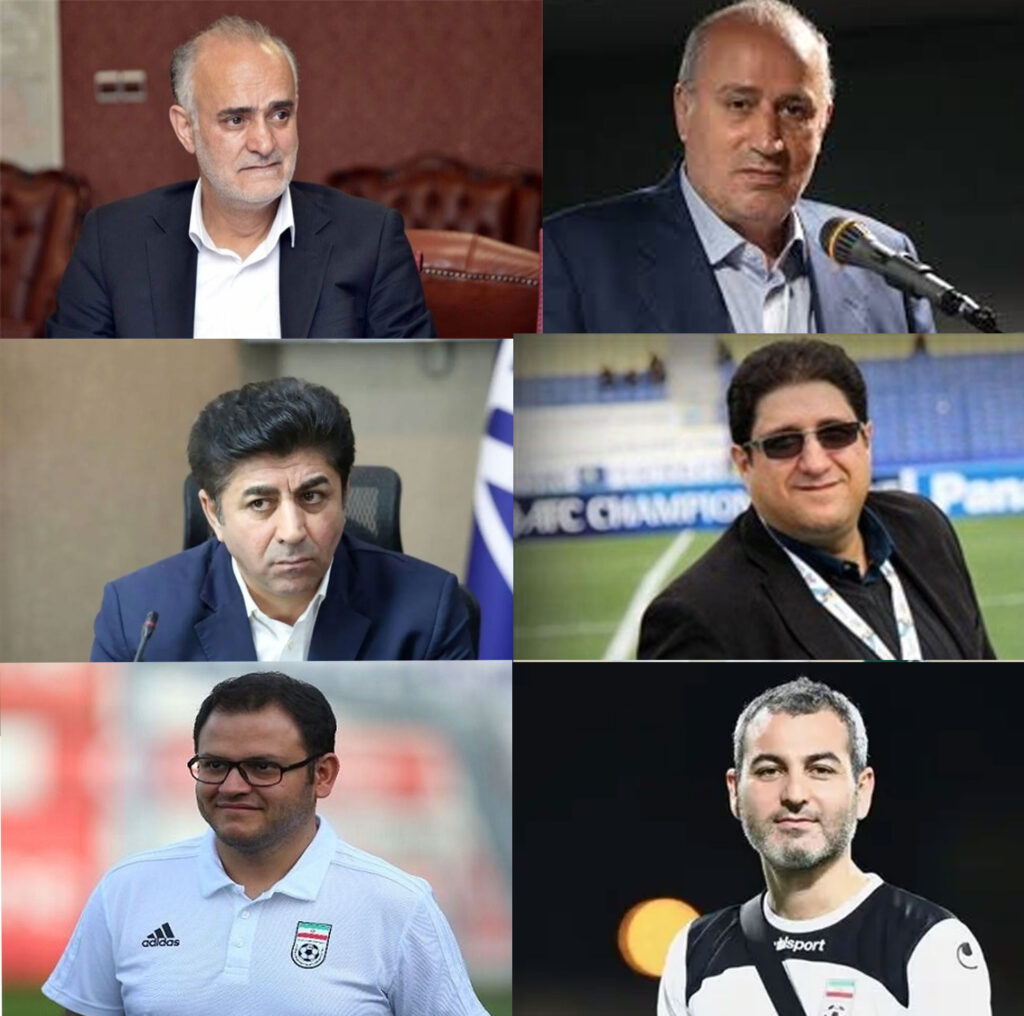
Mehdi Mohammadnabi, Vice President of the Football Federation and manager of the national team, stated that a low-intensity friendly has been scheduled for the period leading up to Iran’s opening World Cup match against New Zealand.

“This match will be held behind closed doors,” Mohammadnabi explained. “As is common practice in past World Cups, matches close to the start of the tournament are usually arranged with teams that are at a similar or even lower technical level than the national team to provide more suitable preparation conditions.”

The behind-closed-doors encounter is designed to fine-tune the team’s tactics and fitness without revealing strategies to future opponents. Iran is set to begin their World Cup campaign against New Zealand, making this friendly an important final step in their preparations.

Puerto Rico is ranked 160th in the FIFA World Rankings. The two teams have never met at an international level at any competition.

Sardar Azmoun back in action

Sardar Azmoun made a successful return to competitive action on Friday, providing an assist just two minutes after stepping onto the pitch as Shabab Al-Ahli cruised to a dominant 5-1 victory over Al-Dhafra in the ADNOC Pro League.

The match, which took place in the 18th week of the UAE league season, marked the Iranian striker’s first appearance in four months. Azmoun was introduced as a substitute in the 75th minute and immediately made his presence felt, setting up a goal for his teammate in the 77th minute to cap off a memorable comeback.

Shabab Al-Ahli’s emphatic win also saw another Iranian international, Saeed Ezzatollahi, get on the scoresheet. The midfielder calmly converted a penalty to register his team’s second goal of the evening.

The comprehensive victory propelled Shabab Al-Ahli to the top of the league standings. The Dubai-based club, who are drawn to face Tractor SC in the Round of 16 of the AFC Champions League Elite, will be boosted by Azmoun’s return to form and fitness ahead of that crucial encounter.

In another fixture involving an Iranian player, Al-Wahda suffered a narrow 2-1 home defeat to Al-Jazira. Reza Ghandipour, the young Iranian talent featuring for Al-Wahda, was brought on in the 67th minute but was unable to help his side overturn the deficit.

Jalali “Our football is in a downward trajectory”

After Omid Ravankhah was dismissed as head coach of Iran’s U-23 national team, veteran coach Majid Jalali offered a sharp critique of the short-term decision-making that continues to hinder Iranian football. Jalali stressed that the root issue with the Omid team is not who serves as head coach, but rather the lack of long-term planning and managerial stability—problems he believes have persisted for nearly half a century and now extend to the senior national team.

Majid Jalali

Ravankhah was removed from his position following Iran’s early exit from the 2026 AFC U-23 Asian Cup. A review of the team’s performance is set to take place during an upcoming technical committee meeting, where potential replacements will also be discussed.

In an interview with ISNA, Jalali reflected on the persistent struggles of the Omid team: “Unfortunately, we keep repeating the same mistakes when it comes to the U-23 side. For about 50 years, we haven’t managed to progress past a certain stage—despite trying more than 30 coaches. Foreign coaches, domestic coaches, and recently even young, inexperienced coaches like Ravankhah have been given opportunities. We always have a four-year cycle to plan, yet we leave decisions to the last three months and then complain about a lack of time!”

Jalali continued, emphasizing that the recurring issues run deeper than coaching choices: “There must be other significant reasons behind these failures. Believing that replacing a coach with a high-profile foreign name will solve everything is a strategic mistake we’ve made over and over—and apparently, we’re about to make it again. If we truly want the Omid team to succeed, we have four years to prepare. But when we only start thinking about it in the final three months, failure is inevitable. We need to change how we see and plan for this team.”

He also pointed out the counterproductive habit of changing coaches mid-cycle: “Often, we’ve acted a year before a tournament and replaced the coach midway through. That means we lose time there, too. I believe we need a solid, long-term plan—looking ahead a full four years—if we want this team to qualify for the Olympics. If we fail again despite proper planning, that’s just part of the game. But if we succeed without a plan, it’s mere coincidence. And the truth is, we’ve never really had a long-term plan for the Omid team.”

Jalali further stressed the importance of preparation and exposure: “There have been times when we had talented players, but because they lacked international friendlies and competitive experience—and because coaches often lacked international exposure themselves—we’ve been hurt in crucial moments. That’s part of the problem, but the real issue is the absence of a long-term vision. This weakness in the Omid team has directly affected the senior squad. Team Melli is now one of the oldest in the world because the youth and U-23 teams haven’t produced enough quality players to refresh the national team.”

When asked whether long-term planning and infrastructure should come before selecting a head coach, Jalali replied: “Maybe even before that! First, we need a plan. Our Omid teams have consistently underperformed, and as a result, the senior team has aged without viable replacements. If our youth and U-23 teams were successful, we’d see more young players in international competitions and eventually in the senior squad.”

Jalali also criticized the lack of continuity in grassroots development: “The few promising players who emerge often leave their clubs because they don’t get enough playing time at clubs that are focused on results and have little inclination to youth development.”

“Our rivals plan for years. While we struggle to do any such long-term planning. It is the same story with other youth and age group teams. These are failed experiments we keep repeating. Our football is on a downward trajectory.”

Asked about the recent elimination of Iranian clubs Esteghlal and Sepahan from Asian competitions, Jalali saw it as further evidence of decline: “Our football is sliding backward. I once said we were on the right track, but that’s no longer the case. There are many reasons for this. When I was at the federation, we diagnosed these issues and laid them out in a comprehensive plan, why we’ve reached this point. I said then that the future would be harder, and I’ll say it again. The further we go, the tougher it gets. Years ago, we were upset about not winning trophies. Now, we’re satisfied just to see our teams advance a round or two.”

“Over time, we’ll face stronger competition from second-tier nations, and soon maybe even third-tier teams. Right now, we’re struggling to get past the group stage in the Asian League Two, while we once lamented not being champions of Asia. Our wealthy, big-spending clubs can’t progress in second-tier competitions. It’s clear we’re in decline, and we still haven’t found a way out.”