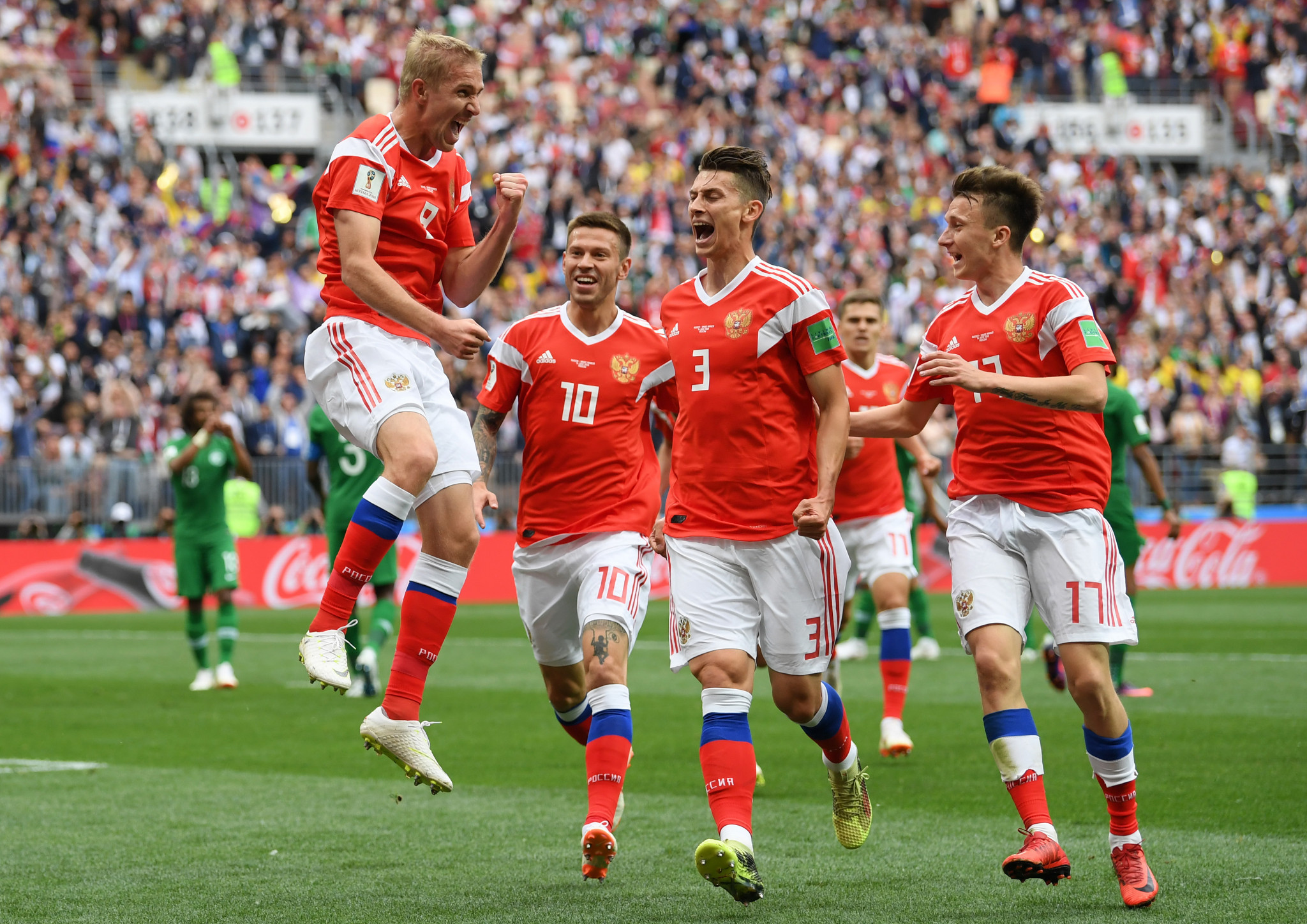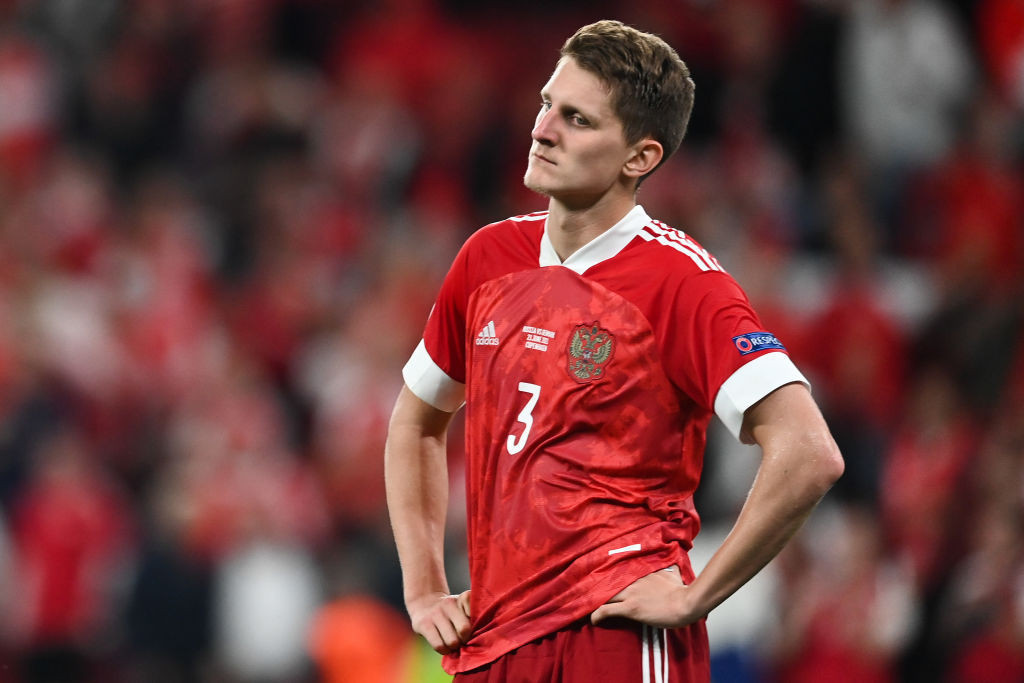


Porto striker Mehdi Taremi has won the UEFA Goal of the Season award for his stunning bicycle kick against Chelsea.
Taremi scooped the prize as a reward for scoring Porto's last-gasp winner in the second leg of their Champions League quarter-final tie with Chelsea on April 13.
The Portuguese outfit ultimately exited the competition 2-1 on aggregate to the eventual winners, but their talismanic frontman has secured a place in European football history after receiving 30 percent of the final vote for the best goal of 2020-21.
There did not appear to be a lot on when Porto substitute Nanu raced down the right-wing in stoppage time at Sevilla's Ramon Sanchez-Pizjuan Stadium, but he managed to produce a perfectly weighted cross that found its way to Taremi with his back to goal.
The Iran international could have tried to bring the ball down before letting fly, but instead trusted his goalscoring instincts to unleash a sensational first time overhead kick, which flew into the top corner and left Blues goalkeeper Edouard Mendy rooted to the spot.
60,000 votes were cast for the UEFA prize in total, with Italy talisman Lorenzo Insigne coming in second for his superb individual goal against Belgium in the Euro 2020 quarter-finals, which ultimately gave the Azzurri a 2-1 victory before they went on secure the trophy with wins against Spain and England.
Rangers star Kemar Roofe has completed the top three, having been recognized for the spectacular long-range effort he produced in a Europa League group stage clash with Standard Liege.
Taremi joined Porto from Rio Ave last August and quickly established himself as the focal point in Sergio Conceicao's set-up at Estadio do Dragao.
The 29-year-old scored 23 goals in his debut season with the Primeira Liga club, including his wonder goal against Chelsea, while also recording 18 assists.
The two mighty neighbors Turkey and Iran have a heavy mutual influence on each other, due to geographical proximity, economic benefits, linguistic and ethnic relations. They were also regional rivals at some stage of history and fought each other for influence and power. In modern times, the relation has been peaceful and friendly. Football formed part of this peaceful relationship and also created a regional rivalry.
The Turkish association with European football and its membership in UEFA, has immensely benefitted its development. The Turkish national team, despite making it to the World Cup twice only in their history (1954 & 2002), was always considered to be better and stronger than Iran's Team Melli from the early 50s. Those days, the two countries played a lot of football against each other including a regional tournament called RCD which was a three side annual tournament that also included Pakistan in the 60s.
However, like many things after the 1979 revolution, with Iran's major change of political ideology, the two countries experienced less than a cozy relationship, football naturally suffered from this cold relation and the two countries cut off their football connection. Neither side showed any interest in playing friendlies against the other, no doubt politics playing a major role in the break of footballing relationship.

Meanwhile, Turkish football, at club level at least, was thriving. The trio, Galatasaray, Fenerbahce, and Besiktas were as good as many first-rate European clubs. With financial clout and huge fan bases, Turkey became the focus of attention and the destination of many foreign players. For years, the Turkish clubs employed the services of European, African and Latin American footballers, those included some household names in football. However, the majority of the big name European signings were players at the twilight of their careers who were there for a last-ditch attempt to enrich their bank accounts before hanging their boots rather than seeking glory. The success of the policy of the Turkish clubs in attracting high profile aging footballers was mixed perhaps moderately successful at best.
What the Turkish club ignored was the abundance of talents on the eastern and southern borders. Iran and to a certain extent, Iraq had a wealth of young talents that were there for the taking. Since the late nineties, European clubs, particularly the German realized that as a number of the best Iranian players were employed by clubs like Bayern Munich , Hamburg, Hertha Berlin, and Arminia Bielefeld While talented Iraqi players headed south to the Persian Gulf states. At no time, the Turks endeavored to attract Iranians and Iraqis to play for their teams, although it would have been a good investment and certainly cheaper for them too.
By the beginning of the second decade of the millennium, The Turkish clubs, at last, looked at Iran. There had to be something special in that country's football that can generate quality players for Team Melli. With shoestring budgets, Iranian clubs managed to continuously deliver talented players thus enriching Team Melli and many 0f those young players eventually heading outside Iran to play professional football. In the process, Iran has made 4 appearances in the FIFA World Cup after a break of 20 years since the initial one in 1978, but also steadily climbed in the FIFA World Ranking to approach the elites. Meanwhile, Turkey managed one appearance in 2002.
That made the Turkish clubs think hard and employ scouts to talent hunt in Iran and seek bargains and future investments from the Persians.
For the Iranians, Turkey is the perfect destination for a professional player. The culture, the climate and the proximity of the two countries make it an ideal place to play football, to develop and to make a decent living. Although the flood gates had hardly opened on the Iranians, the Turkish clubs are beginning to be shrewd as they are constantly on the lookout for talented players even as young as 18 years old. In the case of Allahyar Sayyadmanish, who was hardly a fixed player in his club Esteghlal, such investment could turn out to be a clever an astute move by Fenerbahçe. The giant Turkish club is now seeking the services of the 19 years old Iraqi forward Muhanad Ali Kadhim from Al Shorta Club.
It is a win-win situation for both sides. Iranian Players can develop well in Turkey with training facilities and passionate fans enhancing the league to become one of the best in Europe. It is certainly the right environment for aspiring young Iranian and Iraqi players.
Allahyar Sayyadmanesh, is an 11th Iranian footballer in Turkey.
Naser Sadeghi (Galatasaray / Konyaspor) Mohammad Khakpour (Vanspor) Reza Shahroudi (Altay) Sohrab Bakhtiarizadeh (Erzurumspor) Mohammad Moemeni (Erzurumspor) Hamed Kavianpour (Kayserispor) Sajjad Şhahbazzade (Alanyaspor) ♣ Payam Sadeghian (Osmanlıspor) ♣ Vahid Amiri (Trabzonspor) ♣ Majid Hosseini (Trabzonspor) ♣♣ currently active.
Zari Fathi and Gelareh Nazemi , two of top Women Futsal referees in Iran , are off to Portugal to referee the UEFA Women Futsal Cup.
The Iranian Football Federation has reported that the duo will be refereeing in the European Nations Futsal Cup. The Women's European competition is now down to 4 semi finalist teams. with Portugal, Russia, Spain and Ukraine. The competition will start on 26th and finish on 28 February. The European Women's Futsal Championship stage was held in four groups of four teams, with four leading teams qualifying for the final stages of the competition.
It is a unique recognition for Iranian ladies and the first time they will whistle in European competitions after excelling in the Iranian domestic league and the Asian championships. Saying that, both the referees are seasoned and experienced campaigners and hold the FIFA Futsal refereeing badge.
Gelareh Nazemi is not the first Iranian international referee, nor even the first woman to referee men's events, but her selection for Olympics futsal competition made her a houehold name in the country.
It is yet another victory for Iranian girls and a definite sign of their passion and desire to be the best at many levels in face of a regime that has forced them to be second fiddle to their men and restricted many of their activities including wearing Hijab by force and fully covered attire even in sports that is restricting their movement or at times creating risks of injury.