Tag: Seattle

Infantino’s idolisation of Trump has left football with blood on its hands

Story by Barney Ronay
 The Guardian

Mr President. Fellow exco members. We’re going to need a bigger Board of Peace. How many mini‑pitches are we up to now? Gaza got 50 of them last month. What will it take to football-fix the global conflict being set in train by Fifa’s own Peace Prize Boy? A hundred mini-pitches? Four billion mini-pitches? All the mini‑pitches in the universe?

In a more sane version of what we must, out of habit, call the real world, it would seem absurd to talk about sports administration in the context of the US, Iran and the airborne conflict being played out across the borders of their allies.

Sport is the most important of all the unimportant things. Sport is a part of a culture you fight for, but not a part of the battle. Sport is also prone to insisting on its own importance, shoving itself to the front of every photo like a particularly deluded family Labrador.
When news emerged on Monday that Iran had launched a drone attack on the Ras Tanura oil refinery in Saudi Arabia, there was an urge to point out this is a mere 250 miles from Cristiano Ronaldo’s house. Do we need a footballers‑and-their-war-menaced-mansions gallery? Meanwhile the UK government has advised British nationals in Saudi to stay inside and take cover. So … you’re saying this is an Ivan Toney story?

There are two reasons why this dynamic has now shifted, why football is not just an observer but an active participant in this picture; reasons that should in any sane version of reality be hugely damaging for Fifa and its executive.

The basic premise is jaw‑dropping enough. The co‑host of the Fifa World Cup finals this summer is currently bombing one of its participating nations. The co‑host of the tournament has murdered the head of state of the third‑ranked team in Group G.

Nothing quite like this has happened before. Britain was involved in bloody conflicts in Borneo and Aden while it hosted the 1966 World Cup. Russia has been banned from international sport as a consequence of invading the borders of a sovereign state, although this was still deemed unproblematic in 2018.

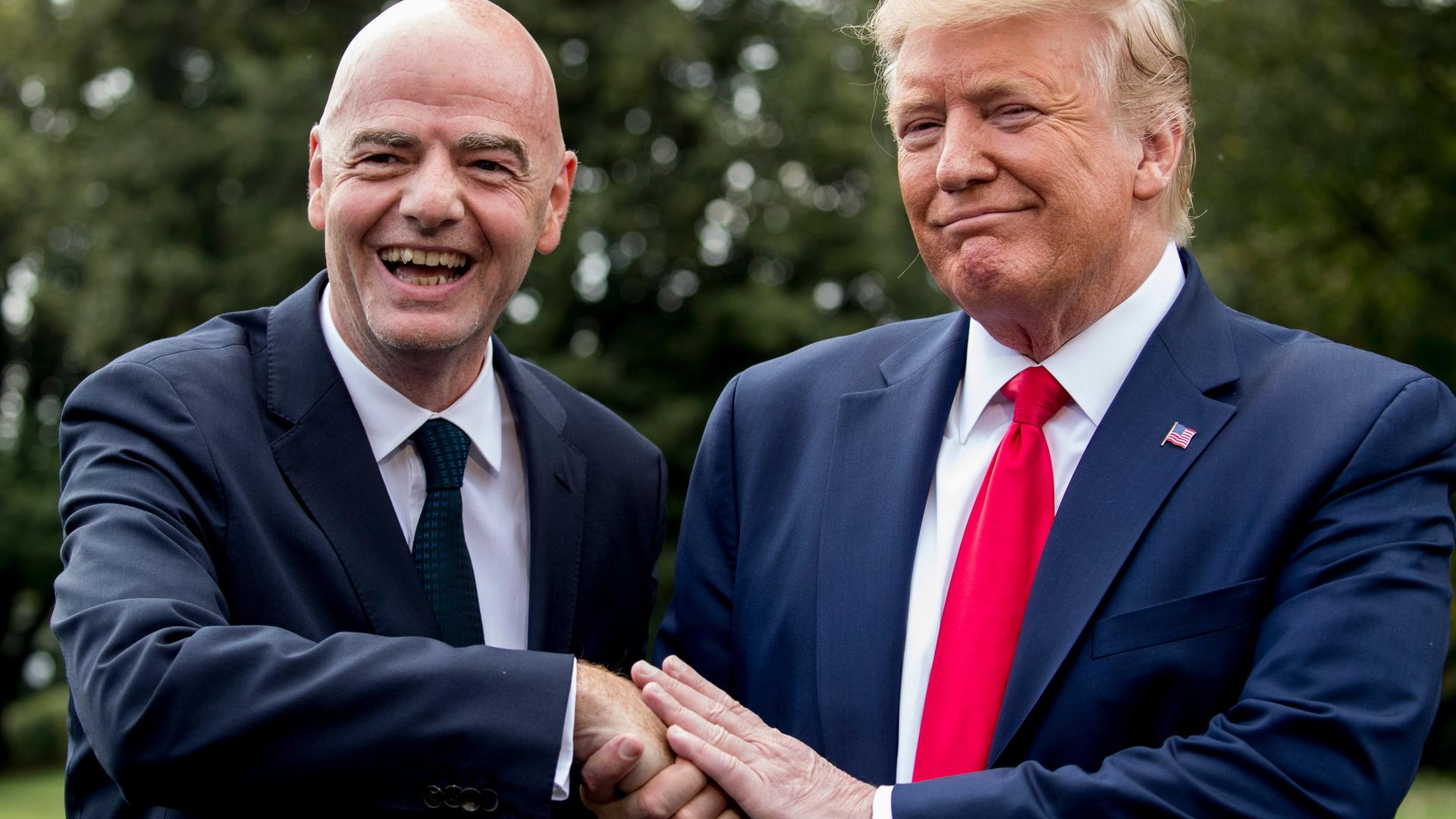
Clearly, nobody out there will have the will or the courage to apply a similar logic to the US. The issue is the extent of Fifa and Gianni Infantino’s willingness to act as a fluffer, ally and de facto propaganda mouthpiece for Donald Trump’s regime.

Never mind how gravely Infantino might frown, while pretending this has all been necessary realpolitik. The fact is, Fifa has tied itself with unquestioning zeal to a US president who has initiated eight acts of overseas aggression in his second term. And football has blood on its hands now, too.

This might seem like a stretch, or an overly dramatic take on the necessary exercise of Fifa’s global remit. But this has also been a choice. Infantino has, in full view of the consequences, repeatedly put Fifa in the same room as Trump’s autocratic exercise of power. Not as a guest or a bystander, but as an enabler, an active participant in the publicity machine.

Under its own statutes Fifa is supposed to be politically neutral. And yet this has still happened, to a degree that it has by now moved past cartoonish to grotesque. It was a choice to trail after the president like a goggle-eyed teenager offering gifts, a bauble here, a peace prize there, a strange and frightening Club World Cup trophy replica that looks like it contains a tiny drawer full of crow’s heads.

It was a choice not just to award Trump a peace prize, but to invent a peace prize from scratch so he could win it, that fittingly gruesome drag‑me‑to‑hell golden bauble with its nest of clawing hands.
As was the related announcement of the weird and pointless Gaza mini-pitch construction project, with its manipulative background imagery of rubble and displaced people casually tossed into the mix, a gruesome form of public conscience washing.

All of this is doubly absurd given the continued participation in the Fifa-verse of Israel, the same nation that is levelling Gaza’s existing infrastructure. Almost as an afterthought, it goes without saying that the weapons being used to reduce these people’s homes to rubble are being part-funded by the hosts of this summer’s tournament and Infantino’s own daddy‑regime. But never mind. The president has a golden peace ball. Keep looking at the peace ball.

In the end this will catch up with you. The open doors, the hours at the buffet table, the ballroom passes, all come at a cost. Fifa may not be directly responsible for all this. But it is now decisively part of the image-making that has empowered Trump to take his extreme executive actions.

There is of course a hugely complex set of demands in play here. The idea of a right and wrong side of history is never really clear. Sometimes you might straddle many of them all at once. But Fifa is so clearly drawn to the nearest power source, the biggest stick, the grandest stage, all the while presenting itself as grave and stately ambassador of hope, led by a man who increasingly resembles essence of pure inauthenticity, reconstituted into human form, packed into a blue suit and pushed out on stage to talk about peace, in the voice of a man addressing you from the bridge of his own golden ship of hope.

What happens next is entirely uncertain. As news broke of the US bombardment of Tehran, Fifa executives were at Hensol Castle in Wales overseeing the 140th annual general meeting of the International Football Association Board, which is at least a suitably scaled occupation for a bunch of sports administrators.
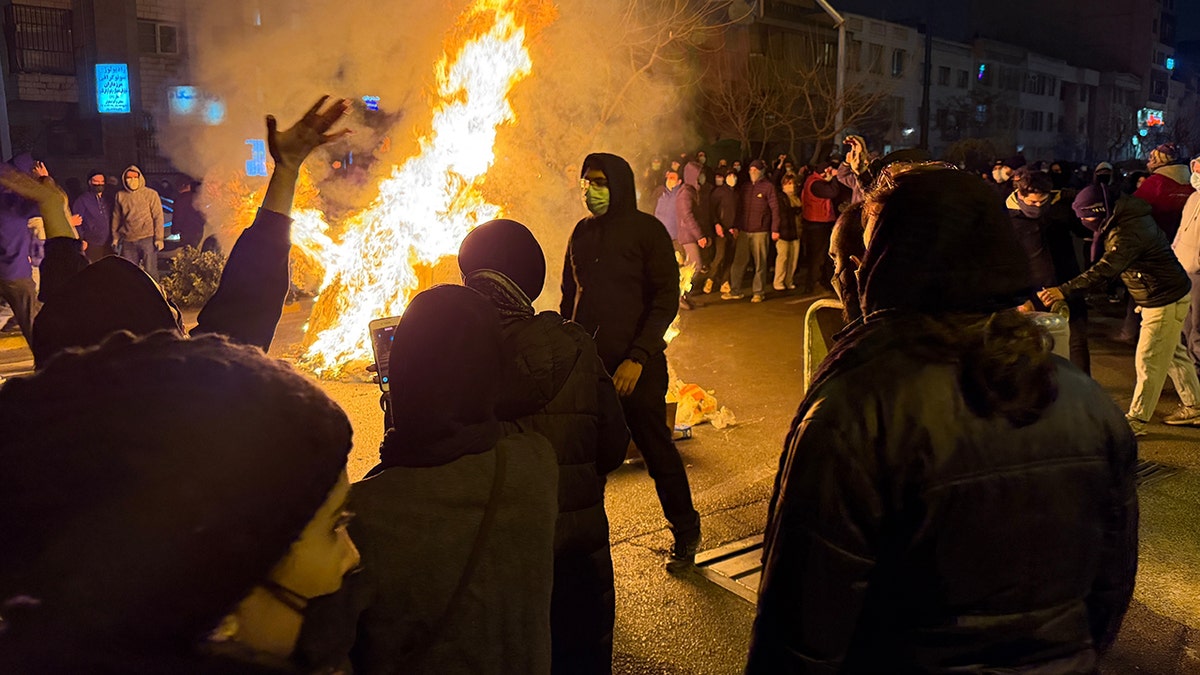
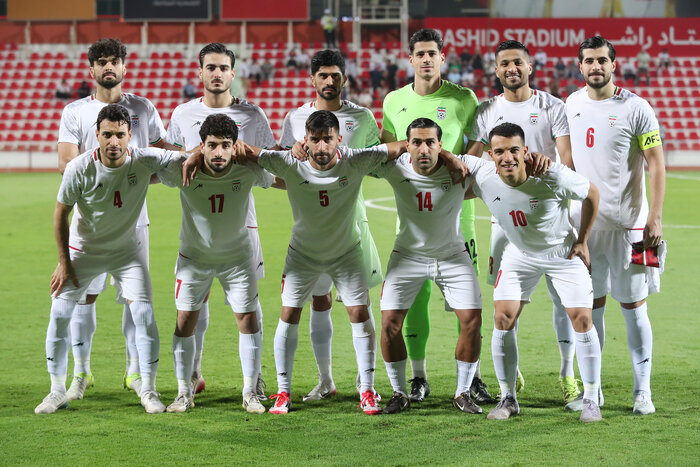
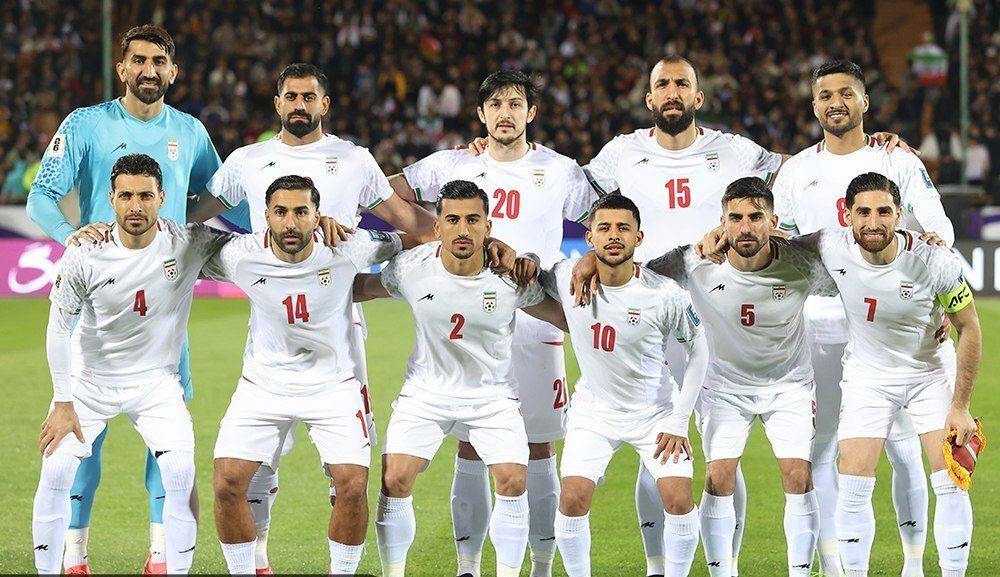
It seems impossible that Iran can now compete at the World Cup this summer, or indeed that it should have been present in any case given the regime is accused of killing tens of thousands of civilian protesters. The Iranian FA has stated it “cannot be expected to look forward to the World Cup with hope”. Its fans were already banned from entering the US.

Under Fifa’s statutes, there is no direct remedy should Iran drop out, although there is pretty much a free hand under force majeure for the executive committee to act as it sees fit. The United Arab Emirates and Qatar, struck by Iranian bombs in the past few days, were in the same qualifying group. As were North Korea. Perhaps Infantino has a route here to usher in another dear leader.

Some kind of fudge will be offered. A World Cup will take place if there is still a world left to contest it. The US needs this to happen. The show must continue. And this is an incidental aspect of the extraordinary story of Trump and Infantino. Football is always telling you things about the world, always running ahead to the tide.
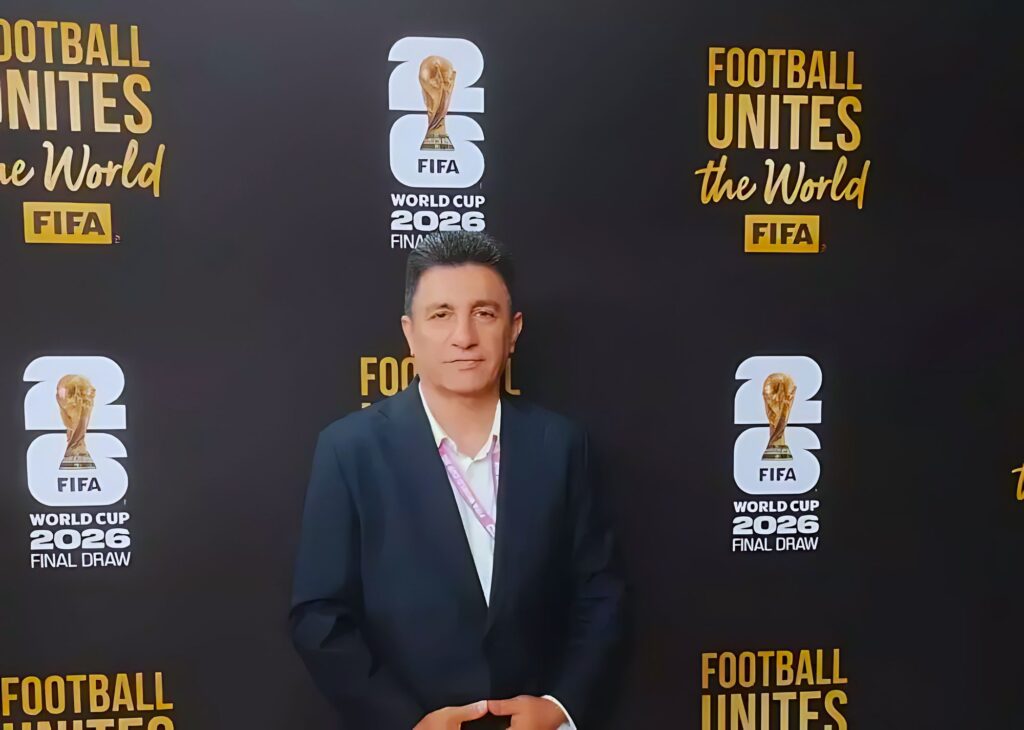
Amir Ghalenoei

In this case it is providing the ideal, textbook, read-it-and-take-notes lesson in how dictatorships and propaganda work, how power glosses its actions with noise. How spectacle is used to flood the zone, and how nothing floods the zone like football.

In any sane version of sports governance Infantino should, at the end of all this, be forced to explain his actions, to justify taking global football into this space. It won’t happen. His own executive power is absolute.

The money continues to flow to his sub-partners. But history will still judge him, and judge his version of Fifa. There is no way of escaping that lens. And from here it already looks like the most grotesque, post-truth, fawningly complicit version of big sport ever devised.
Cheering Under Caution: The Physical Peril and Emotional Toll on Team Melli Fans in America

In its official press release, FIFA confirmed that fans from all 211 of its member nations submitted ticket requests during the Random Selection Draw phase between December 11 and January 13.

The organization said it received an average of 15 million requests per day – a figure it described as a new record for global football demand.

The 2026 tournament will feature 104 matches across 16 cities in the United States, Canada, and Mexico.

However, FIFA noted that a valid match ticket does not automatically grant entry into any of the three host nations.

Each fan must still meet national immigration criteria and obtain the appropriate visa before travelling to attend games.

Donald Trump’s visa rules add new uncertainty for travelling fans

The reminder follows recent US visa changes introduced under Donald Trump, which have created additional requirements for several countries, including Iran, and some with national teams qualified for the World Cup.

While players and officials are unaffected, fans from certain regions may face longer processing times or extra screening.

While FIFA emphasizes collaboration with local authorities to assist international fans with travel, this assurance rings hollow against the backdrop of the United States’ complex and often stringent immigration enforcement regime. FIFA’s influence over federal law enforcement policy is negligible to nil. Consequently, fans planning to attend matches in the U.S. must prepare for more than just logistical hurdles; they must navigate a security environment where the lines between crowd control and aggressive immigration enforcement may dangerously blur.

The primary challenges are multi-layered:

1. The Visa and Entry Hurdle: Despite valid tourist visas, the sheer volume of applicants from 48 qualifying nations, combined with ever-shifting U.S. travel policies and heightened security screenings, will inevitably lead to delays, complications, and denied entries for some legitimate fans. The process will be stressful and unpredictable.

2. The Unprecedented On-the-Ground Risk: ICE and Policing at Mass Events: This constitutes the most severe and unique danger. Assuming fans secure both tickets and visas, they will have no special protection from U.S. Immigration and Customs Enforcement (ICE) or other law enforcement agencies. Historically, these forces have operated with broad discretion, and their actions have frequently been criticized for racial profiling and excessive force.

  • A Pattern of Targeting: Documented incidents show a disturbing focus on individuals perceived as foreign, particularly those of Hispanic, Middle Eastern, South Asian, and African descent. The pervasive fear is that in the frenetic, crowded environments surrounding World Cup venues, individuals speaking foreign languages or fitting certain racial profiles will be disproportionately subjected to stops, questioning, and detention.
  • Arbitrary Violence and Lethal Force: As highlighted by the tragic shooting of a mother of three by ICE agents, an American citizen, the potential for escalation to lethal force, while statistically low, exists and is a terrifying prospect. For visiting fans, unfamiliar with their rights in U.S. jurisdictions, a tense interaction could escalate rapidly.
  • A Heightened, Active Presence: It is a near certainty that ICE and Homeland Security units will be significantly bolstered around stadiums, fan zones, and transportation hubs under the banner of “event security.” Their mandate, however, will dualistically cover both public safety and immigration enforcement, creating a climate of anxiety for international attendees.

3. A Stark Tri-Nation Contrast: This paints a starkly different picture for the 2026 tournament’s three hosts. Canada and Mexico, while certainly implementing strong security, are generally perceived as having policing models more oriented toward facilitation and welcoming international guests at mass events. The U.S. approach, colored by its domestic politics and immigration debates, is projected to be more confrontational and enforcement-heavy.

Team Melli’s Diaspora: A Home Support in Exile, Shadowed by Risk
For Iran’s national team, Team Melli, the 2026 World Cup group stage in the United States presents a poignant and paradoxical scenario. Given the severely strained diplomatic relations and stringent U.S. visa policies, it is safe to assume that virtually no Iranian passport holder residing in Iran will successfully secure entry to attend matches in Los Angeles or Seattle. Consequently, Team Melli’s visible support in the stadiums will be almost entirely composed of the Iranian diaspora.

This diaspora, however, represents a formidable and passionate force. The bulk of the support will emanate from the vast and established Iranian communities in California and Washington state—cities like Los Angeles itself and Vancouver, BC, are home to some of the largest populations of the Iranian diaspora outside of Iran. Thousands of expatriates and second-generation Iranian-Americans and Iranian-Canadians will turn the stands into a sea of green, red, and white, creating a powerful “home-away-from-home” atmosphere. To a lesser extent, fans residing in Europe and other parts of the Middle East will also contribute to the numbers, forming a global patchwork of support united in national pride.

Yet, this unifying celebration will unfold under a cloud of palpable anxiety. The very identity that brings these fans together, their Iranian heritage, could make them specific targets in the heightened security environment. The political situation between the U.S. and Iran ensures that Iranian diaspora fans, regardless of their citizenship status, will be under increased scrutiny.

The Peril of Profiling and Intimidation

Even foreign-born fans holding U.S., Canadian, or European passports are not immune to risk. In the tense, crowded zones around stadiums, where ICE and federal agencies operate with broad mandates, the potential for profiling is acute. Fans speaking Farsi, wearing Team Melli regalia, or simply possessing features associated with the Middle East may face disproportionate stops, aggressive questioning, searches, and intimidation. The documented tactics of these forces, which critics describe as heavy-handed and uncivilized, could transform a day of festivity into an ordeal of confrontation.

The prediction, therefore, is bittersweet: While tens of thousands of Team Melli fans will passionately enjoy the historic opportunity to support their team on the world’s biggest stage in their adopted homes, their experience will be uniquely marred by an undercurrent of political tension and personal vulnerability. Their cheers will be a testament to enduring cultural pride, but their presence will be a navigation of a landscape where national heritage inadvertently becomes a security liability. The matches in the U.S. will be less a simple sporting getaway and more a complex act of visible, defiant celebration within a charged geopolitical context.

Conclusion: An Unprecedented Safety Calculus
Never in the history of the FIFA World Cup has the spectator safety calculus been so complex. The traditional concerns of pickpocketing or crowd crushes are now compounded by a genuine, if difficult-to-quantify, risk of adversarial encounters with federal enforcement agencies. Fans must be vigilant, thoroughly informed of their rights, and prepared for an atmosphere where the celebration of football intersects with the tense realities of American border politics. For many, the promise of the beautiful game will be shadowed by an unavoidable apprehension, making the U.S. host cities the most challenging and potentially perilous destinations of the 2026 tournament.