Tag: Persepolis

Yes Minister !!

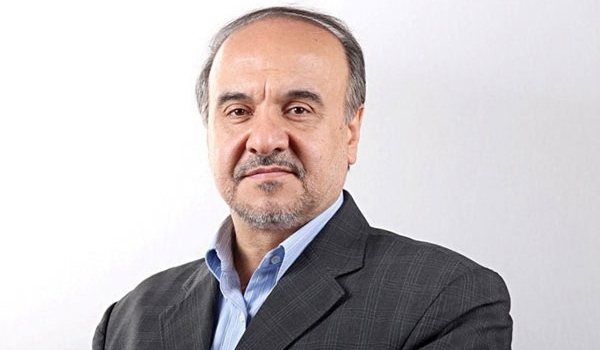
Masoud Soltanifar was spot on when he issued instructions to Mehdi Taj and ordered FFIRI to investigate the management calamity that has led to a heavy fine and sanctions by FIFA imposed on Persepolis club that might approach the 800,000 Euro including legal cost.

The Minister of youth and sports was even more judicious and decisive when he demanded, in no uncertain terms, that the football administrators get their act together and start learning the skills of the trade by attending courses or workshop in order to improve their knowledge in international law and football management.

On the surface of things, the reaction of the minister is praiseworthy. Mr. Soltanifar, is more than concerned about the repeated failures of Iranian football management and poor decision making leading to wastage of public funds. Virtually all clubs, but most significantly the two top popular ones, Esteghlal and Persepolis, are run by the government in some form or another. As such this control has cost the public coffers tens of millions of dollars in expenditure and wastage. There is another motive for issuing the order by Mr. Soltanifar. He is, no doubt bracing himself for questioning in the Majlis (the Parliament) by members who will question his authority and criticize his role in this humiliation.

Indeed, humiliation is the right phrase used by no other than Carlos Queiroz to describe this whole affair.

However, on close scrutiny of this event and the subsequent reaction by the Minister, it seems that this is a clear case of self-incrimination.

The individuals who are running Persepolis are appointees of the Ministry in the first place. The Youth & Sports Minister approves the Chief Executive, board member and major posts in the club, and hence he is directly accountable for the actions by the club. It is him that has failed to appoint a competent team of administrators and it is appropriate that he is questioned and held accountable for this fiasco.

Those who run football in Iran, particularly Esteghlal and Persepolis clubs, from directors to key administration personnel, are mostly political appointees. Rather than competency or merit based appointments, the candidates for the posts are either ex revolutionary guards’ commanders, military,  police or government employees who have served the regime and in returned are rewarded for their loyalties. This might work if those people are competent and experienced in this field. There is no place for entrepreneurs, businessmen or professionally trained and experienced executives in the boards of Persepolis and Esteghlal.  It is more important to be a pious man who does not miss his prayer rather than being a capable manager with knowledge in marketing, financing, legal affairs and public relations talents. There is a distinct lack of personnel who can run clubs as corporate entities.

It is not surprising that fiascos such as this can be committed by the likes of Mehdi Taj, Ali Kaffashian and Ali Akbar Taheri. A person such as Mohammad Rouyanian, led Persepolis to the verge of bankruptcy while at the helm of the club a few years back. The affairs in the other popular club , Esteghlal, is not much better.  The Minster and the government must shoulder the responsibility especially since the concern is wastage of public funds that can be used in much needed areas of football development (such as having a decent training ground for Team Melli)

The lack of accountability is quite rife in Iran’s football. It is indeed rare for a coach, Chairman or an accountable manager to accept responsibility for a failure and resign his post.  All those aforementioned have one undeniable skill and that is bargaining! The word Chaneh, meaning bargaining or lack of a better term, maneuvering, dodging and evading an issue by the use of justification, excuses and pleas. This is instilled in the Iranian culture and accepted in the bazzar when buying a commodity but it is also widely used in business and administration process. It is a trait that takes those who excel in it to great heights in the hierarchy. With maneuvering and use of words and terms, these people get away with murder. Fortunately, in international law, there is no place for such maneuvering and that is where Iran football gets caught. The suspension of Iran by FIFA post Word Cup 2006 is still fresh in the memory.

It is not that Iran lacks managerial and administration skills to run a successful football club or football federation.

When the country has the likes of Mohammad Javad Zarif and his team of negotiators on the nuclear deal who have done the nation pride by their skills, professionalism, knowledge and proficiency that has gained the respect of the whole world, it is pity that such skills are nowhere to be seen in football administration which is now a global multibillion dollar business and not just purely a sport.

The government has no business running football in Iran, not in any other country for that matter. By owning and running sports clubs, there is a great responsibility that has to be accomplished in a successful manner. The reality is that the government has a vivid lack of vision, tools and competency in doing so. Their priorities are focused on security and fear of expression of discontent leading to mass revolt. It might be a legitimate right for the regime to protect itself, but by controlling football clubs and federation, it is exposing itself too . The government should have much more important functions and priorities other than running Esteghlal and Persepolis. 

Yes Minister. You are correct in your demands for answers. But it is a step too late. In corporate terms, this is a reactive measure rather than proactive. Even if there is partial success in reducing the penalties, it only serves as a cover for the real perennial problem in Iran’s football…incompetent management.

Ansarifard Joins Olympiacos

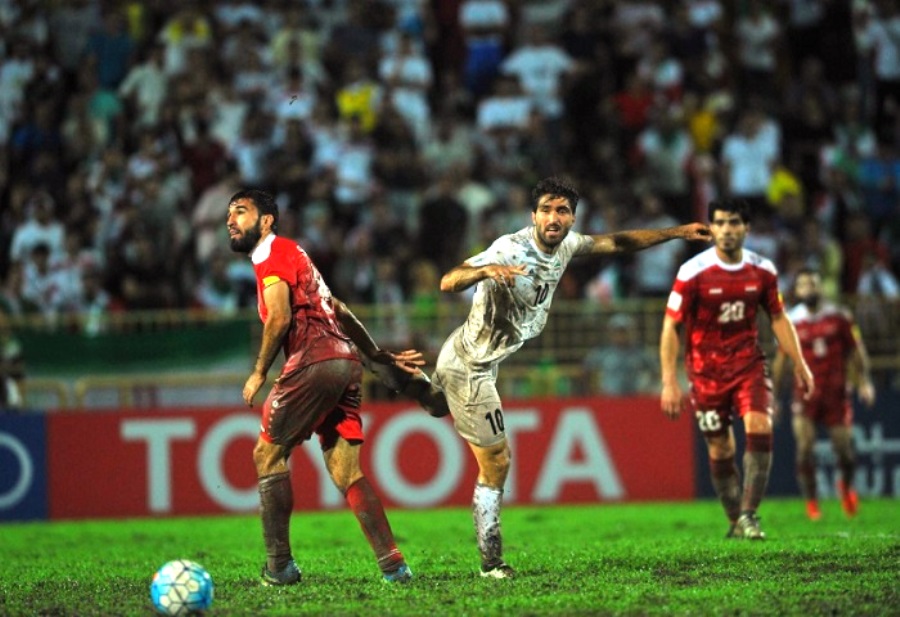
Team Melli striker Karim Ansarifard has joined the Greek giants Olympiacos from Panionios on a three-and-a-half year contract and a reported fee of €400,000 on Friday.

The 26-year-old who made a name for himself in Greek Super league with Panionios after scoring 11 goals in 36 appearances in all competitions last season, had offers from AEK, PAOK FC, Feyenoord and Olympique de Marseille. This current season, Karim has scored 5 goals and provided 3 assists in 14 matches.

Olympiacos is currently leading the table in the Greek Super League with 37 points from 14 games under tutelage of Portuguese coach Paolo Bento who was appointed in August 2016.

Olympiacos has qualified for the round of 32 in UEFA Europa League and they will take Turkish side Osmanlispor in a two-leg clash. Although it was initially reported that Ansarifard would remain at Panionios until the end of the 2016-17 season, the contract he eventually signed is effective from the January 2017 transfer window.

Karim started his professional career in 2007 with Saipa before moving to Iranian league giant Persepolis in 2012. After 2014 World Cup Ansarifard moved to Spanish Segunda division Osasuna where he was mostly used as a bench-warmer. A move to Panionios in the summer of 2015 saved his career as his good performance caught the eye of big teams and finally Olympiacos signed him.

Football Management of Iran !

Much has been said about the weaknesses of management in Iran’s football circles. The endless tales of failures by management of the football federation and clubs in Iran, is becoming so intolerable to the extent that the state-controlled and highly conformist Iranian media is becoming increasingly critical of the poor showing and embarrassingly appalling performance and decisions of the men in charge of football in the country.

Lack of proper selection and appointment mechanism of directors and personnel in Iranian clubs, dearth of experienced and skilled managers in football, poor international influences and relations building strategy, non-existent public relations , lack of vision , deficiency in  commercial activities and marketing skills , and absence of long term strategies are just a few of a long list of shortcomings that mars the working of football management in Iran.

It is quite safe to say, that without the government financial backing, none of the major clubs would be in existence and would have been bankrupt. That includes the major big clubs such as Esteghlal and Persepolis the two giants of Tehran, Zob Ahan and Sepahan of Esfahan and all the way to clubs in the South and North of Iran. Simply said these clubs could not run successfully and independently because there are very few capable, experienced and qualified football management running these clubs. The fact that government handouts is readily available, makes the situation even worse because these managers do not need to work hard to generate revenue to sustain the clubs activities.

 It is believed that Sepahan is one of the best run and most successful clubs in Iran. That is all relative, of course, as other clubs believe that the generous contribution by the state owned steel industry has been the main factor behind Sepahan’s success by pouring money into it.

However, it is prudent to review Sepahan and Sardar Azmoun episode

The prolific Team Melli young striker comes from the Turkmen region and was born in Gonbad-e Kāvus ,  of Golestan province on the New Year’s eve in 1995. He played football in various small provincial clubs before the scouts of Sepahan club spotted him in 2010 and invited him to join the youth Academy for development of talented player. It was definitely a fine move by the Esfahani club.

In the 3 years that Azmoun was registered under Sepahan, he was selected to represent Iran at several age Teams. He was always excellent and full of potential. However, Sepahan failed to see his real potential and opted to put on the sideline until a club from far away land of Chechnya decided that there is an enormous potential in this young Iranian lad that is worth investing in.

Sardar Azmoun, arguably, the best Iranian talent in the past two decades, left to Rubin Kazan without playing a single match for Sepahan senior team, not in the league nor in the cup.

Furthermore,  Sepahan Management never thought of protecting their investment by binding the player to a contract or writing a clause in it for future, like most other professional clubs do. Clauses to claim part of future transfers as their share of development of the player. So, after 3 years of work by Sepahan coaches at all levels, the boy left to Russia without Sepahan getting anything of significance.

Today, Azmoun’s current market value is close to £11.05 million, which FC Rostov will be getting from his sale to any club interested in the 22 year old striker; Those clubs include Première league Liverpool and Arsenal.

What about Sepahan? They will get zilch, no development right fees and no percentage of transfer fee, simply because amateurs’ are running the commercial departments of the clubs. People short of vision and devoid of ideas and strategy.

One can only imagine how bad & chaotic the business is conducted in clubs like Esteghlal and Persepolis, who are getting the lion-share of the public funds and government handouts without producing single Iranian young talented players in the last two decades.


.


Azadi stadium is becoming a full seater.

The Minister of Youth and Sport inspected the ongoing work in Azadi stadium to convert the jewel of Iranian crown into a full seater venue.

FIFA has put a partial ban on the stadium due to the fact that the higher level section was consisting of concrete slab and spectators had to suffer being seated on such a rough surface. That ban reduced the capacity of Azadi stadium to less than half.

The Sport Ministry managed to fork out a budget to upgrade the stadium especially since Iran is involved in the FIFA World Cup 2018 qualifiers starting next September. 

Mr. Mahmoud Goudarzi spoke to the media after concluding his inspection tour and assured the public that the seats will be ready before the match against Qatar on September 1st. "We have been promised the delivery of the stadium 10 days before the match. I am confident that we will have all the seats ready by then". "The stadium capacity will be reduced to 78,116 all seated." the minister declared.

Asked about the request by Carlos Queiroz to move the Team Melli practise sessions to Azadi Stadium , the Minister declined such request and said that "Azadi is a venue for matches and not a practise ground. The football federation must find a suitable place for Team Melli to practise". Responding to another question from a reporter on whether this Stadium will be handed over to Esteghlal and Persepolis, Mr. Goudarzi rediculed such claims "This is meaningless. This stadium belongs to the people of Iran, it makes no sense at all to hand it over  such a grand venue to two clubs only"

 Goudarzi said that by the instruction of the President, a technical team has been inspecting the stadium to check the safety level and problems of water seepage and accumulation. This team has already carried out the inspection and are in the process of finalizing its recommendations and report.


Who runs Iran’s football?

It is certainly not run by entrepreneurs or private companies in the style of European clubs. Most fans will probably think that Iran’s football is greatly influenced by the two most popular clubs in the land Persepolis and Esteghlal, which according to unofficial figures make up a total of over 93% of the fans in Iran. The fact that Iran is very much a bipolar football nation is quite obvious and a no brainer, but both  clubs have been through some turmoil, constant change of management and a center of power struggle.

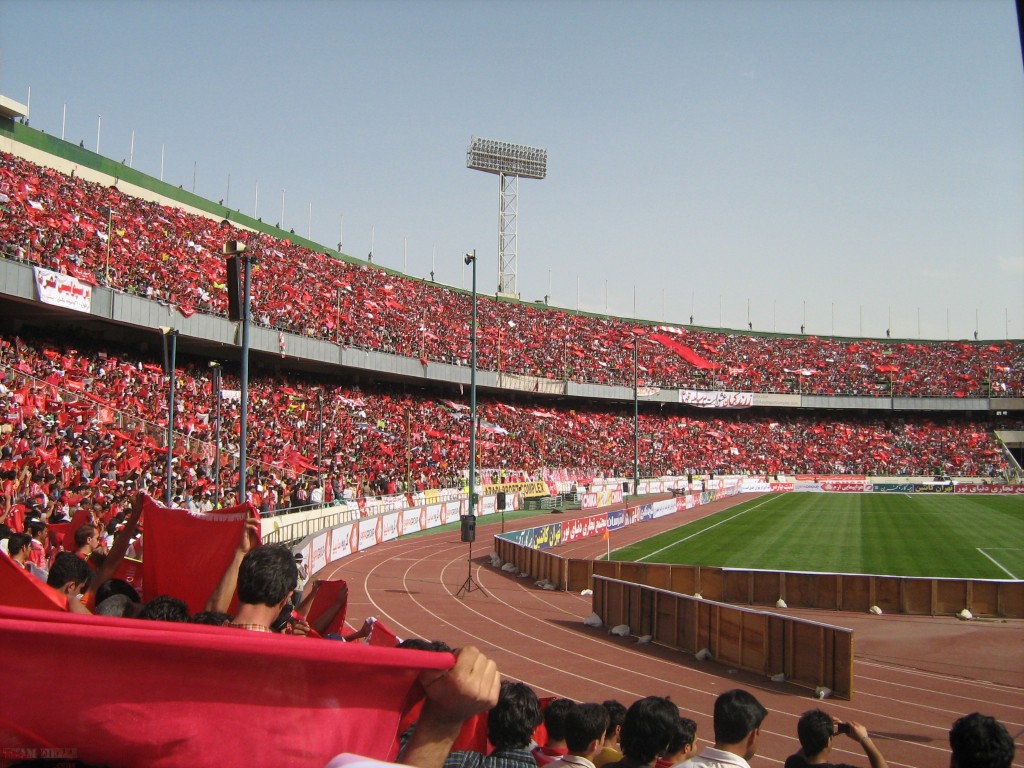
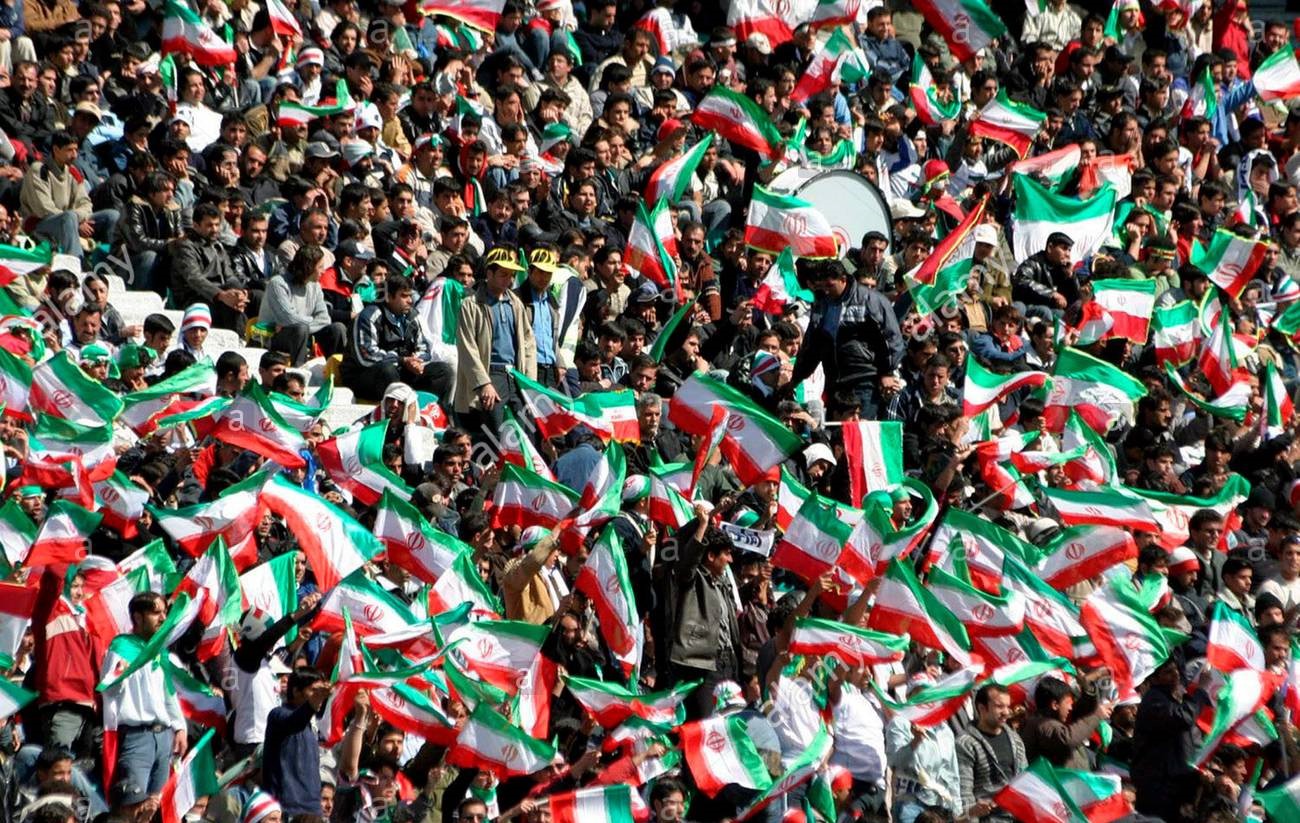
epa000398134 Iranian football fans cheer for their team in the Azadi stadium in Teheran during the Asia Group B World Cup qualification football game between Iran and Japan on Friday, 25 March 2005.  EPA/ABEDIN TAHERKENAREH
 Iranian football fans cheer for their team in the Azadi stadium in Teheran during the Asia Group B World Cup qualification football game between Iran and Japan 

Both are owned and run by the Islamic regime, and as such, their management appointees are from them men closely connected to the clergy and those who have certain political leanings. There is no such thing as election in these clubs. The appointees are not necessarily the most suited to develop or progress the clubs to success, their objectives is slightly different. Historically, it has been a goldmine for some. Persepolis have been poorly managed and taken advantage of. Gone are the days these two clubs produced the best players in Iran through their youth development systems, instead they rob other smaller clubs players and depend on their scouting system to lure young and potential players.

In Iran’s football, everything revolves around the Red and Blue.  These two clubs get the lion share of media coverage, including the most important of them all, the TV. The printed media is also monopolized by the events of these two teams; the Iranian sport social media is incredibly just about these two as if no other club exists. So, it is not uncommon for some dubious characters attempting to get a foothold in these two clubs as the rewards are certainly tempting and the influence obtained by being associated with these two are certainly fulfilling.  Those dubious and inept appointees, however , turned Persepolis and Esteghlal into a poorly run chaotic entities suffering from a plethora of problems and specifically lack of money , resources and corruption. 

Esteghlal fans in Azadi stadium

Poor management resulted in poor results on the field and because of this, it prompted the government to act to preserve the honor of the two clubs which at times are even more important to the fans than Team Melli!

The plans to change the way that football is owned and managed in Iran started from the time when ex-President Ahmadinejad was in power. In fact he was the one who was driving the case to improve and clean up football. The case for change became stronger following a series of poor results by Iranian teams across the board at club and national team levels.  Despite the genuine government attempts to privatize football beginning with Persepolis and Esteghlal, and the great enthusiasm shown by the football loving Ahmadinejad, in his two terms of presidency he failed to change anything.  President Rouhani, followed on the footstep of his predecessor and took up the case but this time with the support of the Majlis (Parliament), so far, Rouhani also failed to achieve anything of significance.   

None of the two presidents and their governments’ ministers delivered on the promise of privatization as a mean of development of football. That raises the obvious question, Who is more powerful than the Presidents in Iran to over-rule their attempts to change the way football clubs are run? Whose authority supersedes those of the President, the head of government and the parliament?

The supreme leader and his institutions, of course.

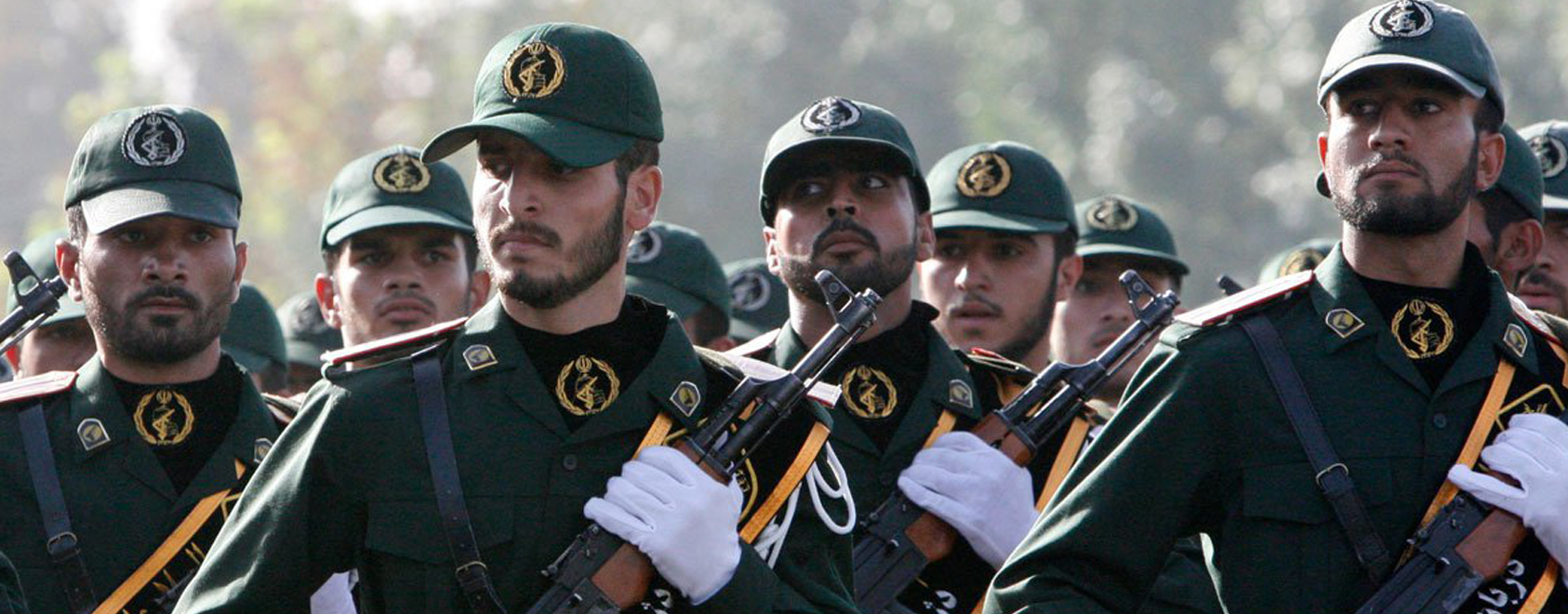
Football is very much under the influence and control of the revolutionary guards (IRGC) after years of infiltration by people associated with them. Their careful plans , empire building and using that power tool of religion that cannot be overridden made them virtually untouchable by the government ministries or agencies.

The Islamic Revolutionary Guards Corps (IRGC), these days, control many if not most clubs either directly or indirectly. In recent years, IRGC commanders have become executives with some of the major football clubs while they hold senior positions in Iran's extensive security apparatus.

Examples:

Akbar Ghamkhar, the former chief of logistics at the IRGC naval wing's Nouh Base, and Mohammad Rouyanian, an IRGC officer and later a police chief, have served respectively as President and Chief Executives of Persepolis Football Club, since 2002. Both were considered to be highly influential in football circles but with superficial knowledge of how to run the top club in Iran.

Both have failed, miserably while Rouyanian ended up in jail after being accused of corruption. He was released at a later date but details of his incarceration and the offences committed were never made public.

Colonel Zohrab Qanbari Mahardou is executive director of Fajr Sepasi FC of Shiraz, which is officially owned and run by the Islamic Revolutionary Guards. The club enjoyed some period of success in the last decade but then nose dived and eventually relegated to the lower division. It was rumored that Fajr Sepasi was the most hated club in Iran!

Lotfallah Forouzandeh Dehkordi, the IRGC chief of Chaharmahal and Bakhtiari province, is a Persepolis FC board member. Commander Mostafa Ajorlou, a former IRGC Physical Training chief, is a board member of the Tractorsazi Tabriz club after a long career with several other teams including one successful stint with once famous Pas club.

Brigadier-General Gholam-Asgar Karimian serves as chairman of the board of the same club, which is owned by Mehr 'e Eqtesad-e Iranian Investment Company, one of the IRGC's financial arms.

The presence and the control of the semi-military in the form of the IRGC in Iran's football affair is not a coincidence and far from the notion that these commanders love the beautiful game. Such control is a strategical and calculated move by the hierarchy to control the masses and ensure the crowd control is well within their grasp. Many Iranians suspect it was to extend control of the clubs' vast following of fans, which are seen as a potential power in the streets that, in certain circumstances, could turn on a clerical regime that tolerates little criticism.

In the last decade or so, football in Iran suffered some major setbacks. Doping , Game-fixing, Corruption , contemptible management, players’ power, nepotism, disastrous results & Performances, astronomical players and coaches wages , favoritism , cheating, lack of accountability and many other setbacks and scandals made the headlines. As such, all these and more provoked unusual public scrutiny into the commanders who run the sport. IRGC officers are busy trying to convince the country there is nothing awkward in their involvement and rumors about clubs being poorly run nothing but the enemy’s plot. Results in the field of football says otherwise.

Aziz-Mohammadi

Commander Aziz-Mohammadi, a veteran of the 1980-88 Iran-Iraq war and a former member of the Islamic Republic Football Federation IRIFF, says the IRGC presence in soccer was not "systematically planned".

Questioned by the sports publication Tamashagaran Emrooz (Today's Spectators), Aziz-Mohammadi explained that most IRGC officers played football before the 1980-88 war with Iraq and simply "pursued their pre-war interests after the war ended."

"If they make it to the top management of the soccer clubs it's because of their qualifications and not connections" he argued.  It is hard to digest such argument as there is little if any natural connection between football and the military or to be precise the Militia. Commander Aziz-Mohammadi was a candidate for the recently run elections to head the football federation. He came last in the 3 man race for the top job in IRIFF.

Mohammad Dadkan- Former head of IRIFF

However, the Guards may have another motive. Mohammad Dadkan, the former president of Iran Football Federation, defiantly hit out at the IRGC's growing control of the sport in an interview with Khabar Online on August 21st, 2015.

"There's no corruption in football itself … but the managers in the football world are corrupt. Unfortunately people who know nothing about football are involved in this sport - managers from the Guards and the Law Enforcement Forces," he said.

With the immense potential that the Iranians possess in football and most sports in general, the National team has failed to win the Asian Cup since the former Shah's days. Iranian teams failed to win even a single AFC Champions League title, while the U23 team failed to reach the Olympic games for over 40 years. Clearly, there is a systematic fault in how football is managed and run.

Control of the teams and the fan clubs also allows the regime to permit the soccer-going public to vent their anger and frustrations under controlled circumstances. The IRGC skillfully harnesses the unruly fans and sees to it that any shouldering sense of anger or frustration is directed against the opposing team rather than the Tehran regime. Interestingly enough, the hardliners who control football and security at the same time, have never allowed the Tehran derby, with regular attendances of 100,000 fans to be played at night. Crowd control is much easier at day time.

The regime has good reason to fear political fallout from football. In November 1997, as Iran advanced to the 1998 World Cup, soccer fans, including many women, took to the streets celebrating the national team (Team Melli) with songs and dances, which the regime frowned upon as un-Islamic. Religion is unquestionably above everything else including patriotism and football in Iran.

It was the same when Iran beat the United States 2-1 at the FIFA World Cup in France in 1998. But things were different in October 2001 when the national team was beaten 3-1 at home to Bahrain in a World Cup qualifying match.

As rumors spread that the match had been politically fixed, fans went on the rampage, setting fire to government offices, attacking banks and government properties and clashing with police.

The crossover of IRGC into the sporting world may not be altogether for the love of the game.

Mehdi Taremi back in Persepolis !

The central forward and Team Melli player Mehdi Taremi , did a quick U turn returning to his previous club Persepolis after announcement that he has signed for Turkish Club   Mehdi Taremi along with Ramin Rezaeian have signed with Turkish Super League club Çaykur Rizespor, but the former changed his mind and came back with giving any solid reasons. Both players left under a cloud of controversy and criticism for leaving unceremoniously. It seems that Persepolis is seeking legal advise on Rezaeian.  

Tribute to Fereshteh Karimi , the star of Iranian woman Futsal.

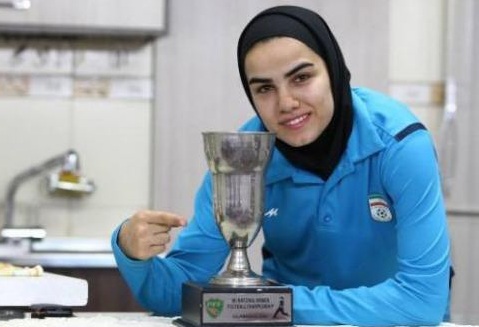
Fereshteh Karimi , the girl from Nazi Abad of Tehran is a unique sample of Iranian woman who have excelled under the most awkward of conditions. Born on 6 Feb 1989 , Karimi has just lifted the Inaugral AFC Women’s Futsal Championship 2015 and also picked up the tournament's Most Valuable Player Fereshteh Karimi attributed her accolade to the teamwork that Iran displayed while beating Japan in the competition's final on Saturday. The 26-year-old scored six goals in the campaign but undoubtedly her most important was the one she notched in the final, a strike which proved enough to hand Forouzan Soleimani’s side the title.

[pullquote align="right"]“I’m very happy that we have become champions and I’d like to dedicate this win to the whole of Iran back home.” [/pullquote]

“I and my teammates played from the depths of our hearts in this game and there was a great challenge from our opponents Japan, so this win is even the more meaningful for us. “But this award and win are not just because of me, but it was the great team effort that the other players consistently showed that made it possible and I’m thankful for them also for this recognition.” Fereshteh who plays for Persepolis has played 15 times for Team Melli Women futsal team scoring 9 goals in the process. No doubt that final goal against Japan in the final was her most valuable and memorable. She has been selected as one of the 11 best women futsal players by the famous futsalplanet website. fereshtehHer undeniable skill has attracted interest from Polish and Russian futsal teams. Fereshteh had to turn down such offer for social reasons, the hijab being the Achilles heel of her possible career in Europe. Speaking of Hijab, Fereshteh Karimi was playing football with Iran Women National team. She and her teammates were ready to play against Jordan in the 2014 Olympics games qualifiers. However, the team were denied from competing because hijab was deemed unacceptable. Fereshteh and her teammates were so shocked by this act of injustice , she broke down crying while the rest of the team followed. Their plight was so touching , the opponents, the Jordanian women , broke down joined the iranian girls crying. Fereshteh need not worry much about her hijab anymore as FIFA has permitted the competition with the head covers and the road is open for her and her teammates to bring glory to Iran.

Omid Alishah : a star in the making.

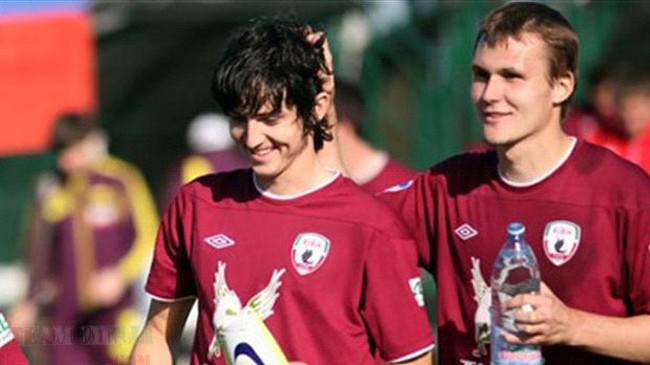
The young man from Sari , Mazanderan has been making headlines in Iranian football since his arrival at Persepolis from Rah Ahan.

The 23 years old who started his professional football at Nasaji before moving to Tehran with Naft, has been a regular in several age level Team Melli teams. Playing on the flanks and at times in the midfield , he has a remarkable ability to out run his opponents , a burst of speed that is second to none , and  classic dribbling skills.

Alishah came under prominence in Rah Ahan under Ali Daei who quickly identified the skills and ability of the young player promoting him to the first team and giving him much playing time ahead of senior players. Alishah did not disappoint and for the two seasons he was in Rah Ahan , he played 39 matches and scored 9 goals which is considered well above average for a player at his age in Iran.

In 2013 , Ali Daei  then Persepolis coach, managed to take  Alishah with him where he continued displaying his magic and goals. Alishah has been known to score some spectacular goals to compliment his other skills.

With attributes that are close to Hassan Rowshan and Mehdi Mahdavikia, having  similar physique to the two Team Melli legends , Alishah can terrorize his markers , out running and out maneuvering them with ease. His finishing is also not bad either.

Despite his undeniable talent, Alishah is one notorious diver, which mars his immaculate play. He has recovered numerous yellow cards for diving in league games and also received marching orders for this lack of honesty.

Alishah has been picked by Queiroz for the first time in Team Melli for the two matches against Guam and India. He can be the perfect replacement for the departed Shaojei and the out of favor Khalatbary. If only he plays his cards right, this young man has plenty of talent to make him a star.

The Minister who insists on running football.

In yet another turn of events of Iran2s football, the Minister of Youth and Sport Goudarzi has indicated that he will come down hard on football referees and those who want to hurt the Tehrani teams.

This is another blatant and direct interference in football affairs by the government minister  who has warned the football league referees that they will have to answer for their mistakes and errors in matches. Such function is the responsibility of the Football federation and its referees committee.

According to Sports reporter of Iranian Students News Agency (ISNA), Mahmoud Goudarzi, commenting on the of protests in recent weeks about football refereeing , mainly from the defeated teams Persepolis and Esteghlal, " I have been given a report about these  abuses and complaints in form of wrong calls against teams from Tehran, which I am investigating all the cases."

"In addition there are 3 other teams that have complained to me but it seems that the case for Persepolis is much more clearer than the rest. I will be reviewing all those with the football experts (...) If it is proven to us that there has been wrongdoings and intent to hurt these teams , then we will come down heavily on the culprits."

The minister who has always acted as the policeman and executioner of football in Iran is clearly violating the FIFA rules which prohibits political and politician interferences in football. Iran has already been suspended once by FIFA in 2006 for the same reason but Mr. Goudarzi is probably testing the waters and defying FIFA , an organization that itself is embroiled in corruption charges.

Persepolis and Esteghlal , the two teams that have complained the most are owned and run by the Iranian government, giving Mr. Goudarzi's statements and interest in their affairs , another meaning to the term "conflict of interest".

Alireza Mansourian , Naft Tehran and ex-Team Melli coach and player, expressed his surprise by the interference of the government minster.

source : ISNA

Karim Ansarifard signs for Greek club Panionios FC

Team Melli forward , Karim Ansarifard (25 years) signed a two-year contract with the Greek outfit Panionis FC.

Karim who last season experienced his worst ever season as a professional playing for Osasuna , was released by the Spanish second division club after he failed to score a single goal during the entire season. Playing alongside his Team Melli Captain Javad Nekounam was seen as a bonus for Ansarifard but his irregular selection, limited playing time , lack of confidence and his failure to gel with the other teams members resulted in a poor overall performance by the ex-Saipa and Persepolis & Tractorsazi striker.

Despite the woeful Season that Ansarifard suffered in Spain, he was adamant that he will continue to seek a European Club to continue his career. His confidence was high enough to make amends in another European country. The selection of Greece was more like immediate availability of a suitor for Ansarifard rather than choice

Greece, on the brink of bankruptcy as a country , does not seem to be the ideal place for the Iranian forward. During better days in the country, several Iranian professional footballer played in that country's league including  Nima Nakisa and current Naft Tehran coach , Alireza Mansourian. A few others also ended up playing in the Greek League.

Karim Ansarifard is one of the few Iranian footballers who has played in every age group of the national teams. A talented striker with a lot of potential, when he was first discovered by Ali Daei, he lost his bearing between Leaving Saipa to Persepolis and ending up in Spain. He still has a plenty of time to recover and return to the top.

Panionis FC is a based in Nea Smyrni suburb of Athens. Panionios has spent nearly its entire history in the Greek First Division (now called 'Superleague').

The team had its own share of financial troubles since the nineties and changed ownership several times. Last season it finished in the 13th position and avoided relegation. The club home ground is Stadio Néas Smírnis in Athens with a capacity of 11,756