Tag: Persepolis

Football Management of Iran !

Much has been said about the weaknesses of management in Iran’s football circles. The endless tales of failures by management of the football federation and clubs in Iran, is becoming so intolerable to the extent that the state-controlled and highly conformist Iranian media is becoming increasingly critical of the poor showing and embarrassingly appalling performance and decisions of the men in charge of football in the country.

Lack of proper selection and appointment mechanism of directors and personnel in Iranian clubs, dearth of experienced and skilled managers in football, poor international influences and relations building strategy, non-existent public relations , lack of vision , deficiency in  commercial activities and marketing skills , and absence of long term strategies are just a few of a long list of shortcomings that mars the working of football management in Iran.

It is quite safe to say, that without the government financial backing, none of the major clubs would be in existence and would have been bankrupt. That includes the major big clubs such as Esteghlal and Persepolis the two giants of Tehran, Zob Ahan and Sepahan of Esfahan and all the way to clubs in the South and North of Iran. Simply said these clubs could not run successfully and independently because there are very few capable, experienced and qualified football management running these clubs. The fact that government handouts is readily available, makes the situation even worse because these managers do not need to work hard to generate revenue to sustain the clubs activities.

 It is believed that Sepahan is one of the best run and most successful clubs in Iran. That is all relative, of course, as other clubs believe that the generous contribution by the state owned steel industry has been the main factor behind Sepahan’s success by pouring money into it.
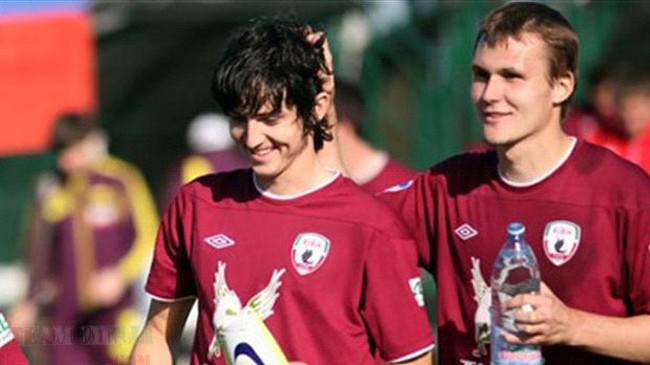
However, it is prudent to review Sepahan and Sardar Azmoun episode

The prolific Team Melli young striker comes from the Turkmen region and was born in Gonbad-e Kāvus ,  of Golestan province on the New Year’s eve in 1995. He played football in various small provincial clubs before the scouts of Sepahan club spotted him in 2010 and invited him to join the youth Academy for development of talented player. It was definitely a fine move by the Esfahani club.

In the 3 years that Azmoun was registered under Sepahan, he was selected to represent Iran at several age Teams. He was always excellent and full of potential. However, Sepahan failed to see his real potential and opted to put on the sideline until a club from far away land of Chechnya decided that there is an enormous potential in this young Iranian lad that is worth investing in.

Sardar Azmoun, arguably, the best Iranian talent in the past two decades, left to Rubin Kazan without playing a single match for Sepahan senior team, not in the league nor in the cup.

Furthermore,  Sepahan Management never thought of protecting their investment by binding the player to a contract or writing a clause in it for future, like most other professional clubs do. Clauses to claim part of future transfers as their share of development of the player. So, after 3 years of work by Sepahan coaches at all levels, the boy left to Russia without Sepahan getting anything of significance.

Today, Azmoun’s current market value is close to £11.05 million, which FC Rostov will be getting from his sale to any club interested in the 22 year old striker; Those clubs include Première league Liverpool and Arsenal.

What about Sepahan? They will get zilch, no development right fees and no percentage of transfer fee, simply because amateurs’ are running the commercial departments of the clubs. People short of vision and devoid of ideas and strategy.

One can only imagine how bad & chaotic the business is conducted in clubs like Esteghlal and Persepolis, who are getting the lion-share of the public funds and government handouts without producing single Iranian young talented players in the last two decades.


.

 

Azadi stadium is becoming a full seater.

The Minister of Youth and Sport inspected the ongoing work in Azadi stadium to convert the jewel of Iranian crown into a full seater venue.

FIFA has put a partial ban on the stadium due to the fact that the higher level section was consisting of concrete slab and spectators had to suffer being seated on such a rough surface. That ban reduced the capacity of Azadi stadium to less than half.

The Sport Ministry managed to fork out a budget to upgrade the stadium especially since Iran is involved in the FIFA World Cup 2018 qualifiers starting next September. 

Mr. Mahmoud Goudarzi spoke to the media after concluding his inspection tour and assured the public that the seats will be ready before the match against Qatar on September 1st. “We have been promised the delivery of the stadium 10 days before the match. I am confident that we will have all the seats ready by then”. “The stadium capacity will be reduced to 78,116 all seated.” the minister declared.

Asked about the request by Carlos Queiroz to move the Team Melli practise sessions to Azadi Stadium , the Minister declined such request and said that “Azadi is a venue for matches and not a practise ground. The football federation must find a suitable place for Team Melli to practise”. Responding to another question from a reporter on whether this Stadium will be handed over to Esteghlal and Persepolis, Mr. Goudarzi rediculed such claims “This is meaningless. This stadium belongs to the people of Iran, it makes no sense at all to hand it over  such a grand venue to two clubs only”

 Goudarzi said that by the instruction of the President, a technical team has been inspecting the stadium to check the safety level and problems of water seepage and accumulation. This team has already carried out the inspection and are in the process of finalizing its recommendations and report.


Who runs Iran’s football?

It is certainly not run by entrepreneurs or private companies in the style of European clubs. Most fans will probably think that Iran’s football is greatly influenced by the two most popular clubs in the land Persepolis and Esteghlal, which according to unofficial figures make up a total of over 93% of the fans in Iran. The fact that Iran is very much a bipolar football nation is quite obvious and a no brainer, but both  clubs have been through some turmoil, constant change of management and a center of power struggle.

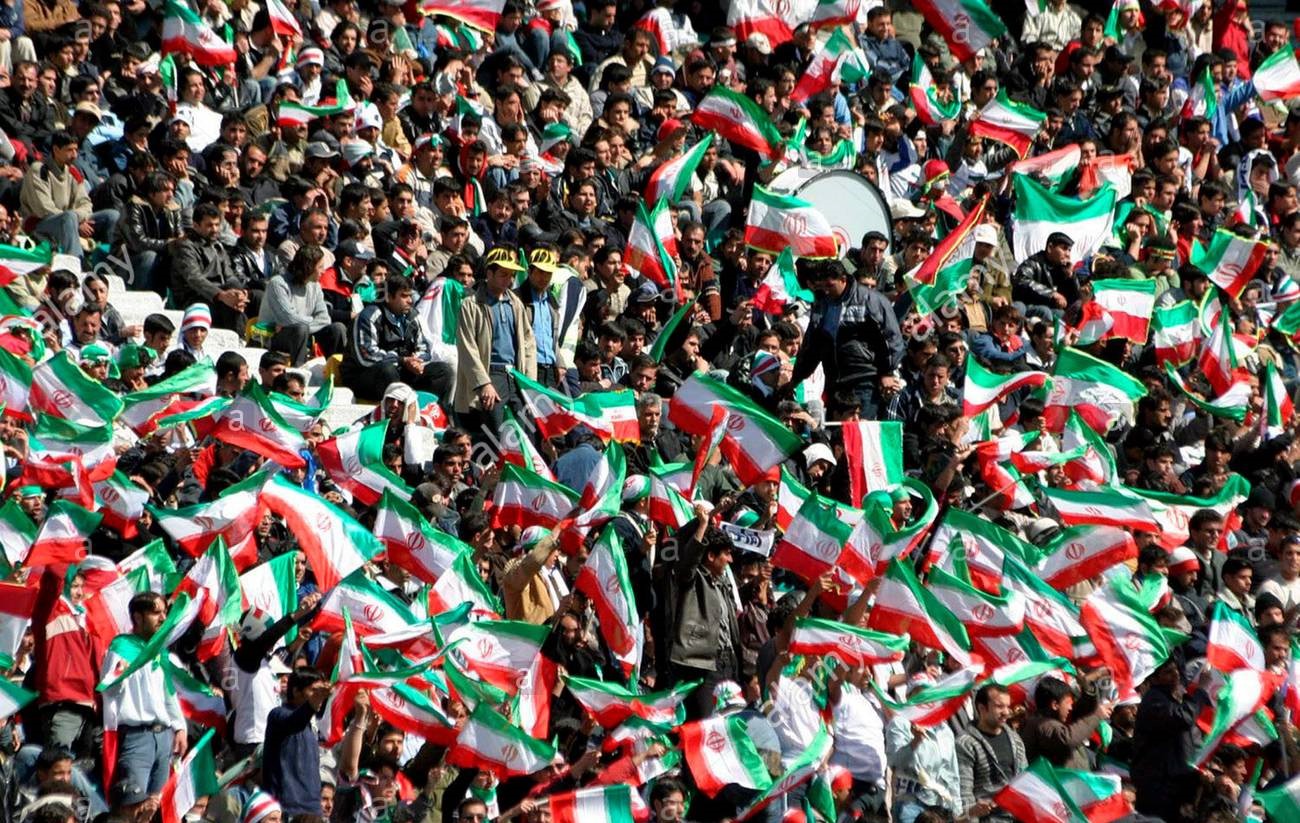
epa000398134 Iranian football fans cheer for their team in the Azadi stadium in Teheran during the Asia Group B World Cup qualification football game between Iran and Japan on Friday, 25 March 2005.  EPA/ABEDIN TAHERKENAREH
 Iranian football fans cheer for their team in the Azadi stadium in Teheran during the Asia Group B World Cup qualification football game between Iran and Japan 

Both are owned and run by the Islamic regime, and as such, their management appointees are from them men closely connected to the clergy and those who have certain political leanings. There is no such thing as election in these clubs. The appointees are not necessarily the most suited to develop or progress the clubs to success, their objectives is slightly different. Historically, it has been a goldmine for some. Persepolis have been poorly managed and taken advantage of. Gone are the days these two clubs produced the best players in Iran through their youth development systems, instead they rob other smaller clubs players and depend on their scouting system to lure young and potential players.

In Iran’s football, everything revolves around the Red and Blue.  These two clubs get the lion share of media coverage, including the most important of them all, the TV. The printed media is also monopolized by the events of these two teams; the Iranian sport social media is incredibly just about these two as if no other club exists. So, it is not uncommon for some dubious characters attempting to get a foothold in these two clubs as the rewards are certainly tempting and the influence obtained by being associated with these two are certainly fulfilling.  Those dubious and inept appointees, however , turned Persepolis and Esteghlal into a poorly run chaotic entities suffering from a plethora of problems and specifically lack of money , resources and corruption. 

Esteghlal fans in Azadi stadium

Poor management resulted in poor results on the field and because of this, it prompted the government to act to preserve the honor of the two clubs which at times are even more important to the fans than Team Melli!

The plans to change the way that football is owned and managed in Iran started from the time when ex-President Ahmadinejad was in power. In fact he was the one who was driving the case to improve and clean up football. The case for change became stronger following a series of poor results by Iranian teams across the board at club and national team levels.  Despite the genuine government attempts to privatize football beginning with Persepolis and Esteghlal, and the great enthusiasm shown by the football loving Ahmadinejad, in his two terms of presidency he failed to change anything.  President Rouhani, followed on the footstep of his predecessor and took up the case but this time with the support of the Majlis (Parliament), so far, Rouhani also failed to achieve anything of significance.   

None of the two presidents and their governments’ ministers delivered on the promise of privatization as a mean of development of football. That raises the obvious question, Who is more powerful than the Presidents in Iran to over-rule their attempts to change the way football clubs are run? Whose authority supersedes those of the President, the head of government and the parliament?

The supreme leader and his institutions, of course.

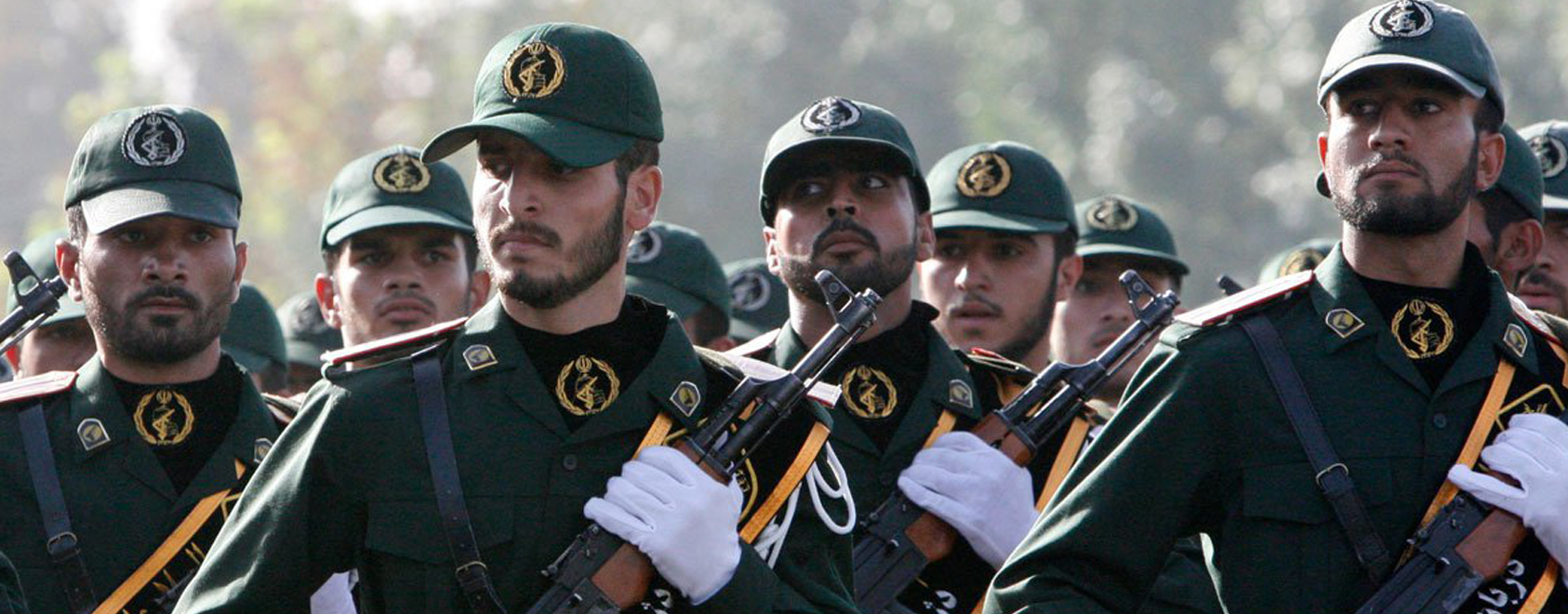
Football is very much under the influence and control of the revolutionary guards (IRGC) after years of infiltration by people associated with them. Their careful plans , empire building and using that power tool of religion that cannot be overridden made them virtually untouchable by the government ministries or agencies.

The Islamic Revolutionary Guards Corps (IRGC), these days, control many if not most clubs either directly or indirectly. In recent years, IRGC commanders have become executives with some of the major football clubs while they hold senior positions in Iran’s extensive security apparatus.

Examples:

Akbar Ghamkhar, the former chief of logistics at the IRGC naval wing’s Nouh Base, and Mohammad Rouyanian, an IRGC officer and later a police chief, have served respectively as President and Chief Executives of Persepolis Football Club, since 2002. Both were considered to be highly influential in football circles but with superficial knowledge of how to run the top club in Iran.

Both have failed, miserably while Rouyanian ended up in jail after being accused of corruption. He was released at a later date but details of his incarceration and the offences committed were never made public.

Colonel Zohrab Qanbari Mahardou is executive director of Fajr Sepasi FC of Shiraz, which is officially owned and run by the Islamic Revolutionary Guards. The club enjoyed some period of success in the last decade but then nose dived and eventually relegated to the lower division. It was rumored that Fajr Sepasi was the most hated club in Iran!

Lotfallah Forouzandeh Dehkordi, the IRGC chief of Chaharmahal and Bakhtiari province, is a Persepolis FC board member. Commander Mostafa Ajorlou, a former IRGC Physical Training chief, is a board member of the Tractorsazi Tabriz club after a long career with several other teams including one successful stint with once famous Pas club.

Brigadier-General Gholam-Asgar Karimian serves as chairman of the board of the same club, which is owned by Mehr ‘e Eqtesad-e Iranian Investment Company, one of the IRGC’s financial arms.

The presence and the control of the semi-military in the form of the IRGC in Iran’s football affair is not a coincidence and far from the notion that these commanders love the beautiful game. Such control is a strategical and calculated move by the hierarchy to control the masses and ensure the crowd control is well within their grasp. Many Iranians suspect it was to extend control of the clubs’ vast following of fans, which are seen as a potential power in the streets that, in certain circumstances, could turn on a clerical regime that tolerates little criticism.

In the last decade or so, football in Iran suffered some major setbacks. Doping , Game-fixing, Corruption , contemptible management, players’ power, nepotism, disastrous results & Performances, astronomical players and coaches wages , favoritism , cheating, lack of accountability and many other setbacks and scandals made the headlines. As such, all these and more provoked unusual public scrutiny into the commanders who run the sport. IRGC officers are busy trying to convince the country there is nothing awkward in their involvement and rumors about clubs being poorly run nothing but the enemy’s plot. Results in the field of football says otherwise.

Aziz-Mohammadi

Commander Aziz-Mohammadi, a veteran of the 1980-88 Iran-Iraq war and a former member of the Islamic Republic Football Federation IRIFF, says the IRGC presence in soccer was not “systematically planned”.

Questioned by the sports publication Tamashagaran Emrooz (Today’s Spectators), Aziz-Mohammadi explained that most IRGC officers played football before the 1980-88 war with Iraq and simply “pursued their pre-war interests after the war ended.”

“If they make it to the top management of the soccer clubs it’s because of their qualifications and not connections” he argued.  It is hard to digest such argument as there is little if any natural connection between football and the military or to be precise the Militia. Commander Aziz-Mohammadi was a candidate for the recently run elections to head the football federation. He came last in the 3 man race for the top job in IRIFF.

Mohammad Dadkan- Former head of IRIFF

However, the Guards may have another motive. Mohammad Dadkan, the former president of Iran Football Federation, defiantly hit out at the IRGC’s growing control of the sport in an interview with Khabar Online on August 21st, 2015.

“There’s no corruption in football itself … but the managers in the football world are corrupt. Unfortunately people who know nothing about football are involved in this sport – managers from the Guards and the Law Enforcement Forces,” he said.

With the immense potential that the Iranians possess in football and most sports in general, the National team has failed to win the Asian Cup since the former Shah’s days. Iranian teams failed to win even a single AFC Champions League title, while the U23 team failed to reach the Olympic games for over 40 years. Clearly, there is a systematic fault in how football is managed and run.

Control of the teams and the fan clubs also allows the regime to permit the soccer-going public to vent their anger and frustrations under controlled circumstances. The IRGC skillfully harnesses the unruly fans and sees to it that any shouldering sense of anger or frustration is directed against the opposing team rather than the Tehran regime. Interestingly enough, the hardliners who control football and security at the same time, have never allowed the Tehran derby, with regular attendances of 100,000 fans to be played at night. Crowd control is much easier at day time.

The regime has good reason to fear political fallout from football. In November 1997, as Iran advanced to the 1998 World Cup, soccer fans, including many women, took to the streets celebrating the national team (Team Melli) with songs and dances, which the regime frowned upon as un-Islamic. Religion is unquestionably above everything else including patriotism and football in Iran.

It was the same when Iran beat the United States 2-1 at the FIFA World Cup in France in 1998. But things were different in October 2001 when the national team was beaten 3-1 at home to Bahrain in a World Cup qualifying match.

As rumors spread that the match had been politically fixed, fans went on the rampage, setting fire to government offices, attacking banks and government properties and clashing with police.

The crossover of IRGC into the sporting world may not be altogether for the love of the game.

Mehdi Taremi back in Persepolis !

The central forward and Team Melli player Mehdi Taremi , did a quick U turn returning to his previous club Persepolis after announcement that he has signed for Turkish Club 

 Mehdi Taremi along with Ramin Rezaeian have signed with Turkish Super League club Çaykur Rizespor, but the former changed his mind and came back with giving any solid reasons. Both players left under a cloud of controversy and criticism for leaving unceremoniously. It seems that Persepolis is seeking legal advise on Rezaeian.


Tribute to Fereshteh Karimi , the star of Iranian woman Futsal.

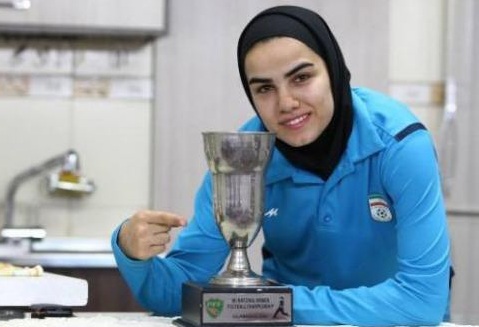
Fereshteh Karimi , the girl from Nazi Abad of Tehran is a unique sample of Iranian woman who have excelled under the most awkward of conditions. Born on 6 Feb 1989 , Karimi has just lifted the Inaugral AFC Women’s Futsal Championship 2015 and also picked up the tournament’s Most Valuable Player

Fereshteh Karimi attributed her accolade to the teamwork that Iran displayed while beating Japan in the competition’s final on Saturday. The 26-year-old scored six goals in the campaign but undoubtedly her most important was the one she notched in the final, a strike which proved enough to hand Forouzan Soleimani’s side the title.

[pullquote align=”right”]“I’m very happy that we have become champions and I’d like to dedicate this win to the whole of Iran back home.” [/pullquote]

“I and my teammates played from the depths of our hearts in this game and there was a great challenge from our opponents Japan, so this win is even the more meaningful for us.

“But this award and win are not just because of me, but it was the great team effort that the other players consistently showed that made it possible and I’m thankful for them also for this recognition.”

Fereshteh who plays for Persepolis has played 15 times for Team Melli Women futsal team scoring 9 goals in the process. No doubt that final goal against Japan in the final was her most valuable and memorable. She has been selected as one of the 11 best women futsal players by the famous futsalplanet website.

fereshtehHer undeniable skill has attracted interest from Polish and Russian futsal teams. Fereshteh had to turn down such offer for social reasons, the hijab being the Achilles heel of her possible career in Europe.
Speaking of Hijab, Fereshteh Karimi was playing football with Iran Women National team. She and her teammates were ready to play against Jordan in the 2014 Olympics games qualifiers. However, the team were denied from competing because hijab was deemed unacceptable. Fereshteh and her teammates were so shocked by this act of injustice , she broke down crying while the rest of the team followed. Their plight was so touching , the opponents, the Jordanian women , broke down joined the iranian girls crying.

Fereshteh need not worry much about her hijab anymore as FIFA has permitted the competition with the head covers and the road is open for her and her teammates to bring glory to Iran.

Omid Alishah : a star in the making.

The young man from Sari , Mazanderan has been making headlines in Iranian football since his arrival at Persepolis from Rah Ahan.

The 23 years old who started his professional football at Nasaji before moving to Tehran with Naft, has been a regular in several age level Team Melli teams. Playing on the flanks and at times in the midfield , he has a remarkable ability to out run his opponents , a burst of speed that is second to none , and  classic dribbling skills.

Alishah came under prominence in Rah Ahan under Ali Daei who quickly identified the skills and ability of the young player promoting him to the first team and giving him much playing time ahead of senior players. Alishah did not disappoint and for the two seasons he was in Rah Ahan , he played 39 matches and scored 9 goals which is considered well above average for a player at his age in Iran.

In 2013 , Ali Daei  then Persepolis coach, managed to take  Alishah with him where he continued displaying his magic and goals. Alishah has been known to score some spectacular goals to compliment his other skills.

With attributes that are close to Hassan Rowshan and Mehdi Mahdavikia, having  similar physique to the two Team Melli legends , Alishah can terrorize his markers , out running and out maneuvering them with ease. His finishing is also not bad either.

Despite his undeniable talent, Alishah is one notorious diver, which mars his immaculate play. He has recovered numerous yellow cards for diving in league games and also received marching orders for this lack of honesty.

Alishah has been picked by Queiroz for the first time in Team Melli for the two matches against Guam and India. He can be the perfect replacement for the departed Shaojei and the out of favor Khalatbary. If only he plays his cards right, this young man has plenty of talent to make him a star.

The Minister who insists on running football.

In yet another turn of events of Iran2s football, the Minister of Youth and Sport Goudarzi has indicated that he will come down hard on football referees and those who want to hurt the Tehrani teams.

This is another blatant and direct interference in football affairs by the government minister  who has warned the football league referees that they will have to answer for their mistakes and errors in matches. Such function is the responsibility of the Football federation and its referees committee.

According to Sports reporter of Iranian Students News Agency (ISNA), Mahmoud Goudarzi, commenting on the of protests in recent weeks about football refereeing , mainly from the defeated teams Persepolis and Esteghlal, ” I have been given a report about these  abuses and complaints in form of wrong calls against teams from Tehran, which I am investigating all the cases.”

“In addition there are 3 other teams that have complained to me but it seems that the case for Persepolis is much more clearer than the rest. I will be reviewing all those with the football experts (…) If it is proven to us that there has been wrongdoings and intent to hurt these teams , then we will come down heavily on the culprits.”

The minister who has always acted as the policeman and executioner of football in Iran is clearly violating the FIFA rules which prohibits political and politician interferences in football. Iran has already been suspended once by FIFA in 2006 for the same reason but Mr. Goudarzi is probably testing the waters and defying FIFA , an organization that itself is embroiled in corruption charges.

Persepolis and Esteghlal , the two teams that have complained the most are owned and run by the Iranian government, giving Mr. Goudarzi’s statements and interest in their affairs , another meaning to the term “conflict of interest”.

Alireza Mansourian , Naft Tehran and ex-Team Melli coach and player, expressed his surprise by the interference of the government minster.

source : ISNA

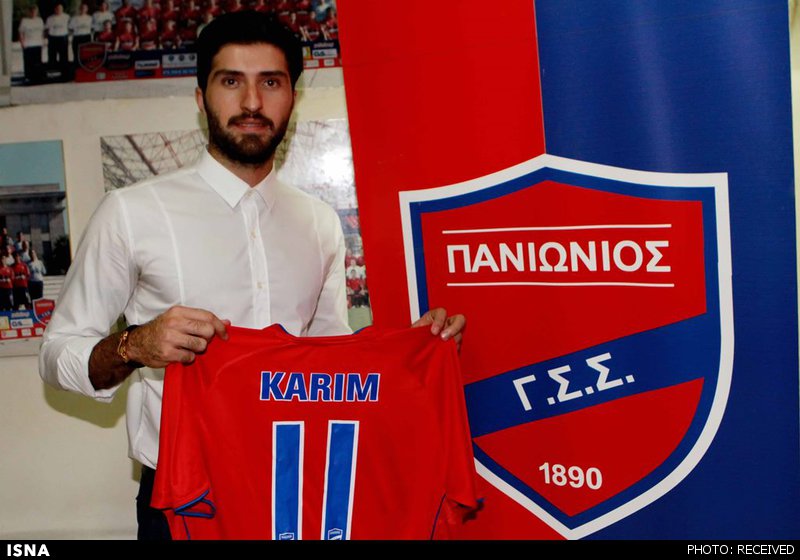
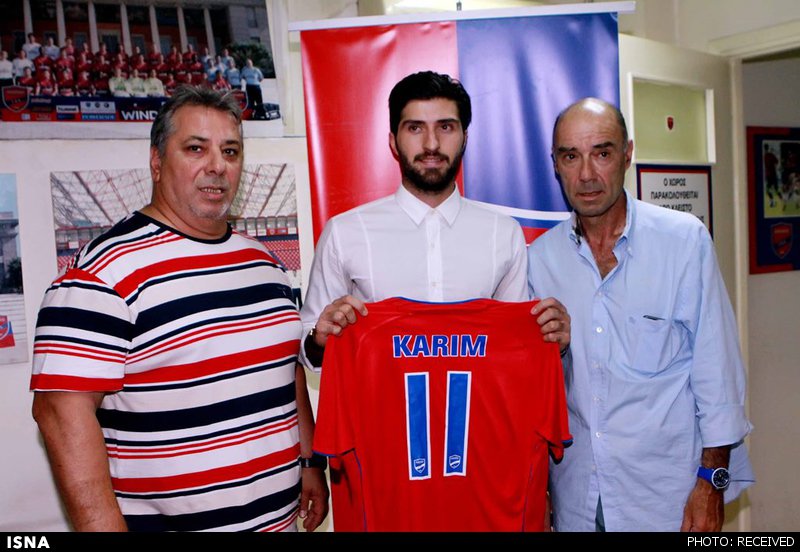
Karim Ansarifard signs for Greek club Panionios FC

Team Melli forward , Karim Ansarifard (25 years) signed a two-year contract with the Greek outfit Panionis FC.

Karim who last season experienced his worst ever season as a professional playing for Osasuna , was released by the Spanish second division club after he failed to score a single goal during the entire season. Playing alongside his Team Melli Captain Javad Nekounam was seen as a bonus for Ansarifard but his irregular selection, limited playing time , lack of confidence and his failure to gel with the other teams members resulted in a poor overall performance by the ex-Saipa and Persepolis & Tractorsazi striker.

Despite the woeful Season that Ansarifard suffered in Spain, he was adamant that he will continue to seek a European Club to continue his career. His confidence was high enough to make amends in another European country. The selection of Greece was more like immediate availability of a suitor for Ansarifard rather than choice

Greece, on the brink of bankruptcy as a country , does not seem to be the ideal place for the Iranian forward. During better days in the country, several Iranian professional footballer played in that country’s league including  Nima Nakisa and current Naft Tehran coach , Alireza Mansourian. A few others also ended up playing in the Greek League.

Karim Ansarifard is one of the few Iranian footballers who has played in every age group of the national teams. A talented striker with a lot of potential, when he was first discovered by Ali Daei, he lost his bearing between Leaving Saipa to Persepolis and ending up in Spain. He still has a plenty of time to recover and return to the top.

Panionis FC is a based in Nea Smyrni suburb of Athens. Panionios has spent nearly its entire history in the Greek First Division (now called ‘Superleague’).

The team had its own share of financial troubles since the nineties and changed ownership several times. Last season it finished in the 13th position and avoided relegation. The club home ground is Stadio Néas Smírnis in Athens with a capacity of 11,756

Persian Gulf League in action again.

The 15th season of Iran’s premiere league (Persian Gulf Professional League) will start in earnest from tomorrow Thursday 30th July 2015.

16 teams will be battling it out for the ultimate prize of lifting the Championship title and challenging the holder Sepahan Esfahan, the team with the most honors in the history of the league. The Esfahani team has been consistently challenging for the title since the start of the new league system, and has managed to win a record breaking 5 titles with 1 runner up and one third place positions. As such Foolad Mobarekeh Sepahan is the most decorated team of the league.

Sepahan won the league in style

The Defending Champions

No doubt that Sepahan will continue on the same trail this season with nearly same squad that won the title in the previous season under the leadership of Coach Hossein Faraki. The ex-Team Melli striker is building a deservedly good reputation for himself in Iran’s football by winning his second title in a row with two different clubs. The soft spoken coach has kept faith in the title winning squad and refrained from indulging in any business in the transfer market. No doubt that a fit again Navidkia will assist Sepahan further in this edition. The frail and injury prone Captain of the team was absent for many matches last season.


Branko Ivankovic ^ Ali Daei 2006
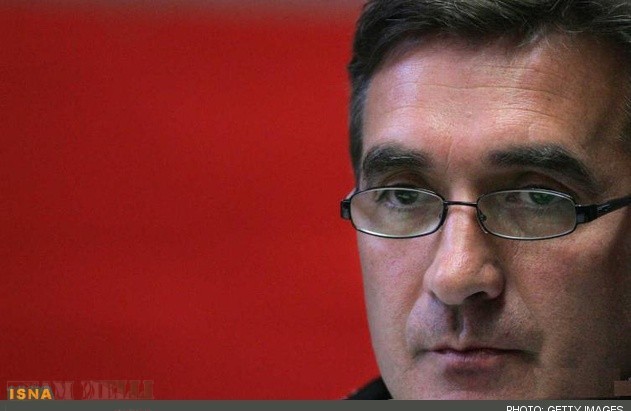
Branko Ivankovic Persepolis Coach

Persepolis

Persepolis, the most popular team in Iran along with Esteghlal, have been having torrid few seasons with changes in personnel occurring on regular basis. This club has so disappointed it millions of fans that the usual crowd of red army that used to paint Azadi in red has virtually disappeared. The Club numerous problems off the field, was further complicated the issue by some on the field transgressions of some players acting unruly and suffering from ill- disciplined. Poor appointments in coaching and administrative staff has furthered deteriorated the team to the extent that it was fighting for survival near the end of the last league season. Branko Ivankovic was recruited to replace the struggling Hamid Derakhshan. The Croat has maintained the league status of Persepolis and avoided the relegation, however, this season, there is little indication that the team will be decidedly better than last season.

Esteghlal goals rush unlikely

The Blues of Esteghlal

Esteghlal, forever a title contender, had a disappointing last season under Amir Ghalenoei who was eventually replaced by Parviz Mazloomi. The club has a tendency to stick to its own and picks coaches from the plethora of ex and retired players rather than seek professional and experienced coaches elsewhere. Mazloomi last stint as Esteghlal coach ended bitterly when bad results and losses against much weaker teams started a semi revolt in the stands by the blues fan who demanded his removal. The squad for this season has not seen major changes however the loss of two Team Melli players in Sadeghi and Beigzadeh to Saba and lack of real fire power in the offensive line could limit the chance of Esteghlal in challenging for the title.

Like Persepolis, Esteghlal is another organization in real administrative, financial and ,management difficulties.


[box title=”

Leauge Stats

” style=”soft” box_color=”#c8c8ba” title_color=”#0d0c0c” radius=”5″]You can follow the Persian Gulf Pro League results and tables in www. teammelli.com all the time. Simply check the “Supplements” menu and select Persian Gulf League , or go to https://www.teammelli.com/the-persian-gulf-league[/box]

The League Committee

Despite gradual improvements in the organization of the league each new season, football in Iran is still behind the overall standard of rival Asian countries and the neighboring Persian Gulf states. Most of the facilities and the stadiums lack the international standards. Mercifully, AFC pressure has forced the Iranian authorities into action. The Asian ruling body plays a major role in forcing the Iranians to improve standards and facilities like the recent ruling by the AFC and insistence to install seats in the stadiums rather than the fans endure the hardship od sitting on scorching cement slabs.

One of the weaknesses of last season was the periodical stoppage of the season for Team Melli training camps which resulted in unanimous outcry by the coaches and teams. Those league stoppages were demanded by Carlos Queiroz as conditional for Team Melli survival in the World Cup. With no World Cup in 2016 , it is hoped that the season will continue without much interruption that hurts team’ momentum.

The blues


Attendances

Last season suffered from lack of interest by the fans. Factors that has affected the poor attendances varied amongst the major ones were; shortages of quality games, dearth of exciting players or games to attract the crowds, failure of the two most popular teams to shine which dampened the enthusiasm of their huge number of followers, match organizers lack of respect and appreciation of fans comfort and finally the broadcast of major European leagues matches on TV. Sepahan traditional never matched the fans base of the big two and their remote stadium has played a major role in the paltry attendance figures. The only team that made a difference and kept the league stands alive was Tractorsazi with its phenomenal and passionate crowds. No team has away travelling support either as the team from Tabriz. This season, despite the disappointing finish of last, should see the Azerbaijani fans flocking back once again to the Yadegar Imam stadium. The rest of the stadiums in Iran are a matter of hit and miss.

Celebration Tractorsazi style

Broadcast rights.

 Amongst the peculiarities of football in Iran is the TV and non-payment of broadcast fees.

In Iran, there is one government owned and run organization that has unjustifiably and unfairly taken full advantage of football enjoying a free ride for decades without paying anything in return. IRIB, the TV and Radio monopoly, has flatly refused to entertain any demands for payment to the league clubs or the FFIRI for broadcasting league or Team Melli matches a system that is globally implemented. IRIB, argues that it is providing a free service for fans and clubs alike and not charging the viewers, so it does not find any justification for paying while it is not charging subscription fees. In the in the contrary, IRIB thinks that it has to be paid because it is doing a favor for the clubs!.

IRIB conveniently, opportunistically and deviously ignored the millions of dollars that it has received from TV advertisers when broadcasting football matches.

This stand of arrogance and egotism by IRIB resulted in tension in the league and spilled out in the parliament and the media with various heated debates. IRIB is an organization which is strongly supported and protected by the by the highest of the hierarchy in the regime. It has dodged all attempts by all sides including the Iranian parliament to pay for broadcasting rights that is believed to have earned it coffers millions of dollars in return. Even an attempt to a TV black out and ban of cameras in stadiums, which only lasted for one round, did not dislodge the IRIB from its position. The IRIB simply brushed such a move as a minor inconvenience!

Good news of this season, however, is that IRIB finally agreed to pay for the broadcast of matches. The figures are closely kept secret and many insiders believe that it is nowhere near the true value of the league. In any case, it is a step forward and this might be a beginning of a new era for many clubs with huge financial difficulties (read the majority of the clubs) to get some return from TV broadcast rights.

Team Melli Players

10 out of the 32 players that donned Iran’s Team Melli jersey have changed club so far. There are expected to be a few more changes as several players have not agreed terms with their present clubs while many other countries have not started the season yet..


The full list of Team Melli player is as follows:


# Players Name Previous Team Current Team
1 AMIRI, Vahid Naft Tehran Naft Tehran
2 ANSARIFARD, Karim Osasuna Rah Ahan
3 AZMOUN, Sardar FC Rostov FC Rostov
4 BEIGZADEH, Hashim Esteghlal Saba Qom
5 BIRANVAND, Alireza Naft Tehran Naft Tehran
6 DEJAGAH, Ashkan Al Arabi Al Arabi
7 EBRAHIMI, Omid Esteghlal Esteghlal
8 EZZATOLLAHI, Saeid Athletico Madrid FC Rostov
9 FOROUZAN, Mohsen Esteghlal Esteghlal
10 GHAFOORI, Vourya Sepahan Esfahan Sepahan Esfahan
11 GHOOCHANNEJAD, Reza Al Wakra Al Wakra
12 HAGHIGHI, Alireza FC Penafiel  FC Penafiel 
13 HAJSAFY, Ehsan Sepahan Esfahan Sepahan Esfahan
14 HASSANZADEH, Masoud Zob Ahan Zob Ahan
15 HEYDARI, Khosrow Esteghlal Esteghlal
16 HOSSEINI, Jalal Al Ahli Naft Tehran
17 JAHANBAKHSH, AliReza NEC NEC
18 KANANI, Mohammad Hossein Malavan Malavan
19 KHANZADEH, Mohammadreza Persepolis Foolad Kuzestan
20 MOHAMMADI, Milad Rah Ahan Rah Ahan
21 MONTAZERI, Pejman Umm Salal Al Ahli
22 NEKOUNAM, Javad Osasuna Saipa
23 POOLADI, Mehrdad Al Shahaniya Al Shahaniya
24 POURALIGANJI, Morteza Tianjin Teda Tianjin Teda
25 RAFIEI, Sourosh Foolad Khuzestan Foolad Khuzestan
26 REZAEIAN, Ramin Rah Ahan Persepolis
27 SADEGHI, AmirHossein Esteghlal Saba Qom
28 SHARIFI, Mehdi Sepahan Esfahan Sepahan Esfahan
29 SHOJAEI, Masoud Al Shahaniya Al Shahaniya
30 TAREMI, Mehdi Persepolis Persepolis
31 TEYMOURIAN, Andranik Tractorsazi Tabriz Umm Salal
32 TORABI, Mehdi Saipa Saipa

Nuclear deal and Iran’s football.

It is not far from accurate to claim that the lifting of sanction against Iran in the aftermath of the nuclear deal especially when it comes to the banking sector, will have an immediate impact on Iran’s football like every other sector of society.

Banking Restrictions

One major problem that hindered the progress of football was the restrictions of money transfer which made it difficult to engage foreign coaches and teams. The football federation has still not been paid its share of participation in the World Cup 2014 by FIFA estimated to be around US$8 million, because of the restriction on banking transaction with Iran. Similar difficulties have faced the clubs and the federation when arranging for friendlies, payments to foreign coaches and establishment of training camps outside the country. With the lifting of these sanctions, a huge burden will be lifted and business would be conducted unrestricted.


Bright economic outlook

By all accounts, the economic and financial outlook of Iran is truly bright. A country with hardly any foreign debts and huge uncapped resources, is gradually recovering billions of dollars in unlawfully held frozen assets plus interests. On top of that, the economic growth as result of lifting of the sanction could hit record highs. Both the Bourse in Tehran and the Iranian currency has seen rates going up north within hours of the deal announcement.

However, it is hardly improbable that the football will be on the receiving end of much of that wealth. No flood gate opening of foreign coaches and players expected soon in Iran, although marginal increase of foreign imports is expected.


Clubs difficulties

With the financial difficulties faced by almost all of the league clubs, it will take some time for them to recover and perhaps benefit from government handouts, a government that has many priorities ahead of football. President Rouhani has much work to do trying to mend much of the fiascoes of the previous government. Football clubs are becoming a heavy burden for the economy not to mention a source of corruption and embezzlement. Despite what looks like a genuine interest in privatizing major clubs in Iran, the government has failed to deliver through bad management of the deal.

The government, through the ministry of Sports is also guilty of some poor appointments of managers and CEO’s for these clubs, much nepotism and little regards to the person’s competency or professionalism.


Management failures

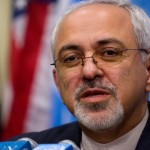
The major problem of Iran’s football is not just the lack of financial resources however. It is the acute failure of its management at all levels from the Ministry , federations all the way to clubs and local football consuls. While Iran has a person such as Javad Zarif negotiating and managing to strike a deal with the world power, Iran’s football managers cannot arrange a simple task without failures, embarrassments and disappointments. Be it arranging a training camp or appointing coaches or negotiating for friendly matches, time after time we have seen these people running the show, fail to deliver and cause embarrassments to Iran’s reputation one after another.

Failures galore!

The list of such humiliation can handsomely produce volumes of pages worthy of reading. It is not bad to run quickly through some major blunders and pitfalls of the last few years . FIFA sanction against Iran for political meddling, AFC suspension of Iran youth level teams for several years for falsifying document to lower players ages, Iran’s disqualification from the London Olympics football qualifying rounds for fielding an ineligible player, numerous cancelation of friendly games and training camps, failure of the government (Ministry of youth and Sports) to privatize Persepolis and Esteghlal after 4 attempts, appointing of an ineligible coach for Iran U23 team who does not hold proper qualification according to AFC and FIFA requirements.

When a country has a man in the caliber of Mohammd Javad Zarif, as a foreign minister supported by a team of professional who are all graduates of the most famous and highly regarded educational institutes of the world, when the country advances in so many fields including sport itself as evident from the meteoric rise of Iran’s Volleyball team to the top of the World League , when he country despite the huge brain migration to the west , still manages to run a respectable financial , political and military establishments, one wonders why these skills are not seen or reflected in Iran’s football management!

Football’s bad apples.

It seems that football in Iran attracts incompetent and dodgy characters. The sport pages of Iranian media is full of claims , trash talk , rhetoric , false promises and pure lies by these football administrators especially those associated with Persepolis and Esteghlal. When it comes to achievement, accomplishment and delivery, these people fail miserably at that. No matter how much money is flooded into football in Iran and most of it is public funds , if it is not managed properly , it will definitely be wasted.

From the Minister of Sports, to the FFIRI presidency, the clubs and all the way down, Iran has experienced far too many managerial failures that cannot be simply improved by pumping more money.

The Future & the options.

Somewhere along the line, there has to be a drive to introduce skillful management starting at the highest level into this football. Visionary Managers who understand the sport but more important than their understanding of the game plans, they should be adept corporate managers who can run clubs and federation like corporate entities. Iran does not need old retired players who have not achieved anything in life beyond their playing football to run its football. For some odd reasons so of these veterans keep demanding their rights to manage and own clubs!

Lack of skilled managers with modern mentality, flexibility, adaptability and global experience will hurt Iran’s football in the long run. And right there, is precisely where things are going wrong in Iran. Short term mentalities, has been the Achilles heel of this football. Lack of interest by managers of anything beyond the years that they are in office or in control. This disinterest in future is one reason that for decades now, Esteghlal and Persepolis have failed to produce quality young players.

Conclusion

In general, when the dust settles down, it is hoped that football reaps the benefit of Iran’s new chapter in its relation with the west. It is no shame to invest in foreign expertise even in football. The world has seen plenty of examples of countries utilizing foreign expertise and the best that their money can buy to develop its infrastructure.