Tag: FIFA World Cup 2026 qualifiers

The Tale of Two Halves: Team Melli’s Victory Over North Korea

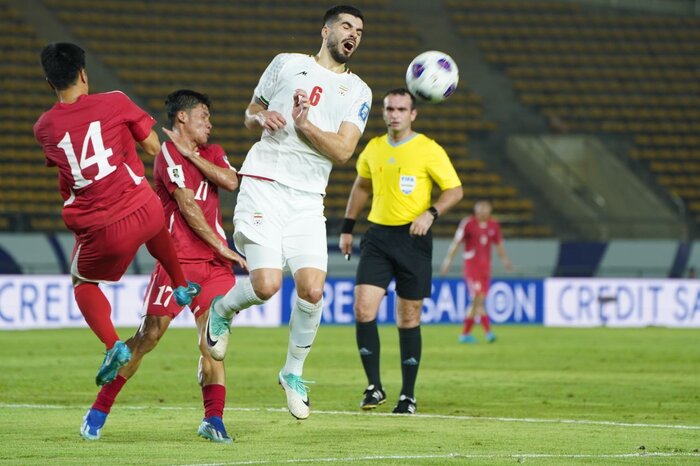
Team Melli triumphed over North Korea on Thursday, solidifying its position at the top of the group. With this 3-2 win, the Iranian team opened a three-point lead over Uzbekistan and a six-point cushion over third-place UAE. However, the victory was a tale of two contrasting halves—one showcasing Team Melli’s dominance and another marred by a collapse in discipline and defensive frailty.

A Dominant First Half

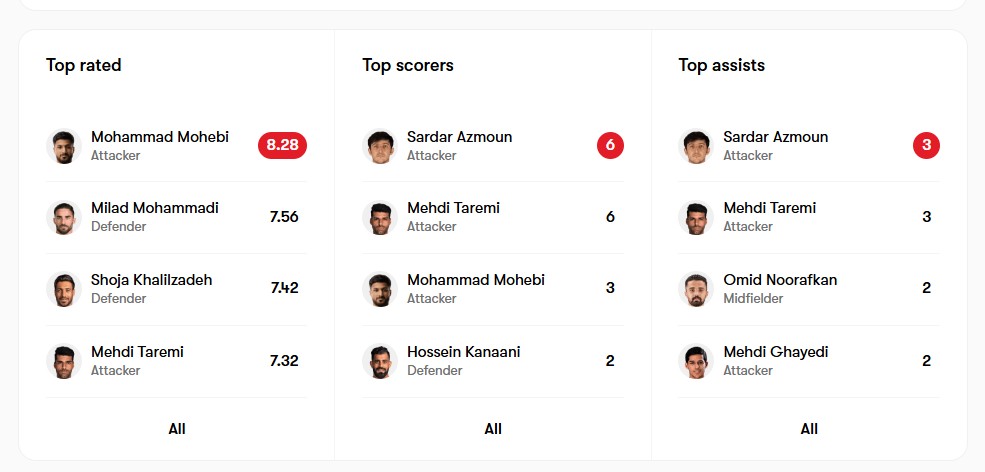
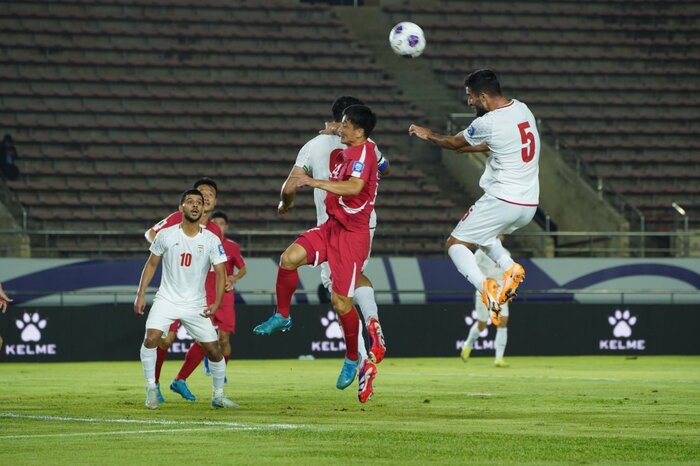
Despite the challenges posed by a rough and uneven pitch, Team Melli began with a commanding display. Within the first ten minutes, Iran launched six attempts on goal, keeping the North Koreans on the back foot. Mehdi Ghayedi opened the scoring, and Mohammad Mohebbi added two more goals, assisted brilliantly by Mehdi Taremi, who seemed unstoppable. By halftime, Iran held a comfortable 3-0 lead, and fans expected more of the same in the second half.

Second-Half Collapse: A Familiar Story

The second half painted a different picture as Iran’s perennial struggle with discipline and defensive coordination resurfaced. The self-inflicted wounds began early, leading to a near-collapse that could have cost them the match.

Shojaa Khalilzadeh’s Red Card
Shojaa Khalilzadeh, the oldest player in the squad at nearly 35, proved to be a liability. His lack of pace was exposed once again, reminiscent of his costly foul against Qatar’s Akram Afif in the 2019 Asian Cup semifinal. Against North Korea, Khalilzadeh’s inability to keep up with a faster opponent resulted in another red card. This selection error raised serious questions about head coach Amir Ghalenoei’s tactical analysis. Despite claims of thorough preparation, the coaching staff failed to anticipate the Koreans’ speed and agility, leaving the Iranian defense vulnerable.
Taremi’s Nightmare Half
While Taremi shone in the first half with three assists, his second half was disastrous. It began with an own goal, as he deflected the ball into Iran’s net from an ill-advised position. Minutes later, Sardar Azmoun’s botched clearance ricocheted off a Korean forward, leading to North Korea’s second goal. Adding to the defensive woes, Mohammad Hossein Kananizadegan’s error—failing to clear a simple ball—further destabilized the backline.

At 3-2, the threat of a North Korean equalizer loomed large with half an hour to go and one man down. The Koreans pressed relentlessly, hitting the woodwork twice and missing numerous chances. Iran’s fragile defense was exposed repeatedly, leaving fans on edge.

Penalty Drama
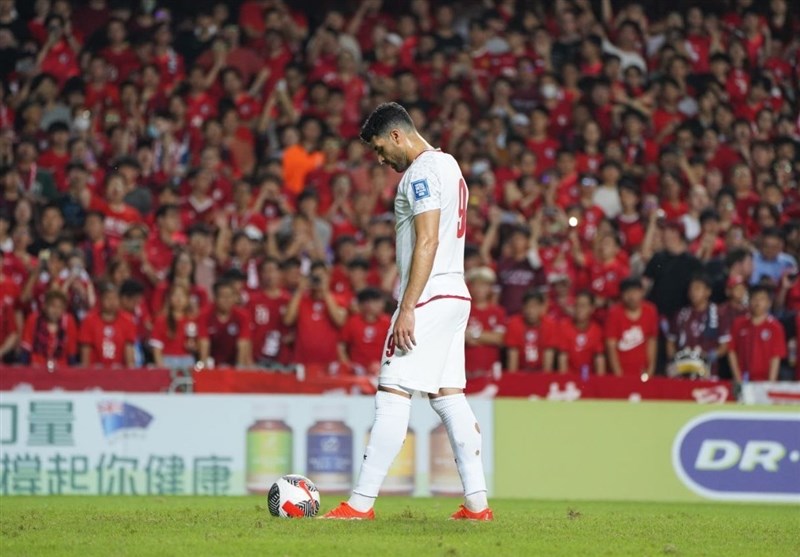
Iran was awarded a penalty after a VAR review, offering a chance to regain control. Azmoun, not known for his penalty-taking prowess, handed the responsibility to Taremi. However, Taremi’s weak attempt was easily saved, capping off his miserable second half.
What Did We Learn?

The match underscored familiar issues with Team Melli. While they are capable of brilliance, moments of indiscipline and defensive lapses continue to plague the team. Ghalenoei faces significant challenges in addressing these weaknesses:

  1. Defensive Fragility
    The defense’s inability to handle pacey opponents remains a glaring issue. Khalilzadeh’s inclusion despite his age and lack of speed highlights the need for better player selection and tactical adjustments.
  2. Midfield Shortcomings
    Iran’s midfield lacks cohesion and fails to bridge the gap between attack and defense. This imbalance often leaves the defense exposed and contributes to second-half collapses.
  3. Player Discipline
    Taremi’s erratic performance and Azmoun’s unconvincing display emphasize the need for psychological coaching and tactical discipline, especially in high-pressure moments.

Moving Forward

While Team Melli managed to secure a victory, the match exposed vulnerabilities that could be exploited by stronger teams. Ghalenoei must instill discipline and address defensive frailties if Iran hopes to succeed against tougher opponents. Additionally, players like Taremi and Azmoun need to be more consistent and composed to avoid costly errors.

As for Taremi, his performance against North Korea was a mixed bag. While his first-half brilliance was crucial to Iran’s lead, his second-half errors could have undone all the good work. Counseling and support may help him regain confidence, especially with high expectations from both fans and his club, Inter Milan.

In the end, Team Melli survived a scare and held on to their lead. However, this match serves as a reminder of the need for better preparation, discipline, and adaptability to sustain success on the international stage.
Iran Edges Out North Korea 3-2 in World Cup Qualifier

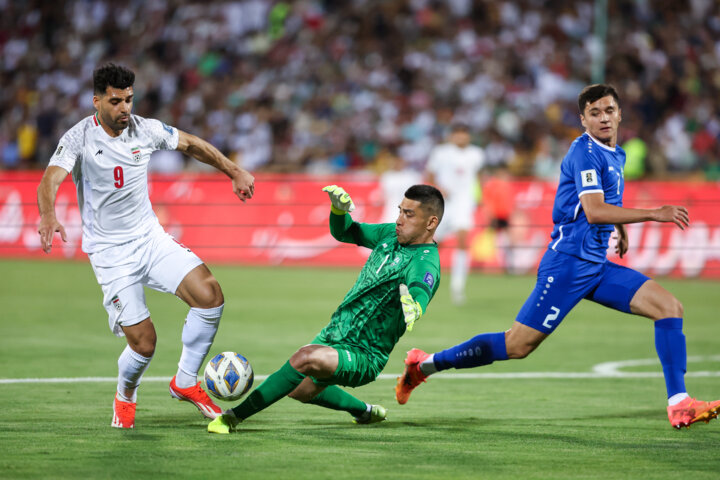
In a thrilling showdown on November 14, Iran defeated North Korea 3-2 in their fifth Group A match of the third Asian qualifying round for the 2026 FIFA World Cup. The match took place at Vientiane’s New National Stadium in Laos.

Iran adopted a 4-2-3-1 formation, with Sardar Azmoun as the lead striker and Mehdi Taremi supporting just behind him. Ehsan Ghaeydi and Sadegh Mohebbi played on the left and right flanks, respectively, while Saeid Ezatollahi and Ali Karimi took on defensive midfield roles. The back line featured Rouzbeh Cheshmi and Shoja Khalilzadeh as central defenders, with Omid Mohammadi and Mohammad Youssefi positioned as left and right fullbacks. Alireza Beiranvand guarded the goal.

North Korea, in a 4-4-2 formation, had forwards Han Kwang-sung and Ri Jo-guk leading their attack. Kang Kook-chul anchored the midfield with support from Choi Joo-sung and Baek Chung-sung on the flanks. The defensive lineup included Kim Beom-hyuk and Choi Ok-chul as fullbacks, with Kim Yu-sung and Jang Kook-chul as central defenders. Kang Joo-hyuk stood as the goalkeeper.

First Half: Iran’s Dominance

Iran dominated the first half, applying consistent pressure that eventually yielded their opening goal. In the 28th minute, Taremi threaded a perfect pass into the box for Ghaeydi, who fired a right-footed shot past the North Korean keeper.

Iran’s offense continued to press, and in the 40th minute, Mohebbi doubled the lead with a powerful strike from the edge of the penalty area. Just before the halftime whistle, Taremi found Mohebbi again, threading a pass behind the North Korean defense. Mohebbi calmly slotted the ball home, putting Iran up 3-0 and completing Taremi’s hat-trick of assists.

Second Half: A Shift in Momentum

A crucial turning point came early in the second half. Iran’s Khalilzadeh was shown a red card in the 50th minute for a last-man foul on a North Korean forward charging towards goal. This forced Iran to play with ten men, and North Korea quickly capitalized on their numerical advantage.

In the 55th minute, a North Korean corner led to a chaotic scramble in Iran’s penalty area, resulting in an own goal by Taremi. Just three minutes later, North Korea’s Kim Yoo-sung took advantage of Iran’s disrupted defense, slotting a shot into the bottom left corner, narrowing Iran’s lead to 3-2.

Iran’s Defensive Stand

Sensing North Korea’s momentum, Iran shifted focus to defend their lead, substituting key attacking players, including Taremi, Azmoun, and Ghaeydi, to stabilize the backline. Despite North Korea’s relentless attempts to equalize, Iran held firm, demonstrating late-game concentration to secure the 3-2 victory.

Group A Standings

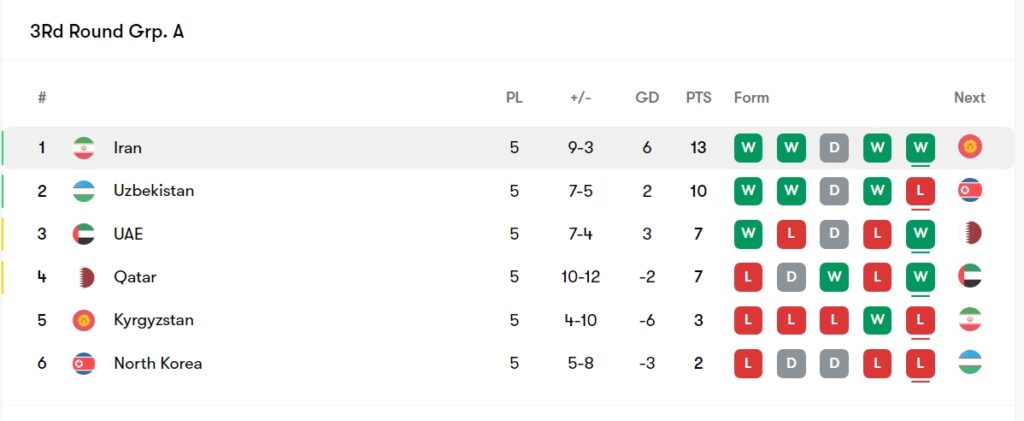
With this win, Iran remains at the top of Group A, boasting four wins and one draw (13 points) in five matches in the third qualifying round. North Korea, meanwhile, sits at the bottom of the group, with two draws and three losses (2 points).


North Korea’s last attempy to seek qualifcation.

Vientiane: Iran will face DPR Korea in Group A of the Asian Qualifiers™ – Road to 26 knowing that victory will almost surely secure their ticket to the FIFA World Cup 2026.

Iran, on 10 points, lead the standings ahead of Uzbekistan on goal difference with both sitting six clear of the United Arab Emirates and Qatar after just four matches. 

Seeking a fourth consecutive appearance at the FIFA World Cup and seventh overall, Iran’s qualification campaign has been serene.

The opening two matchdays saw the Central Asian side registering 1-0 wins over Kyrgyz Republic and UAE, with a tough 0-0 draw with Uzbekistan following.

Iran, however, were at their scorching best against Qatar on Matchday Four as they cruised to an emphatic 4-1 win and with their key players all available, they will fancy their chances against DPR Korea in the neutral venue of Vientiane.

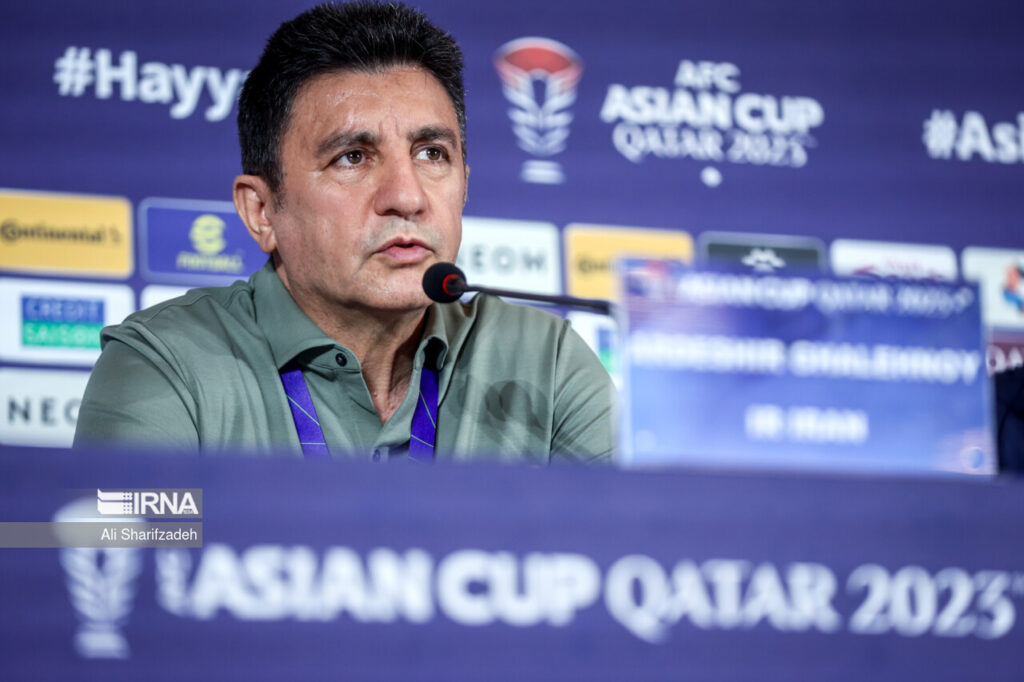
“We are well aware that we have a tough game. The Korean team has a strong defense. They also work very well and quickly in attacks. In this game, we have to go to the field with more focus and responsibility than in the previous matches. We got a good result in the last two games, but those two matches are history now,” Ghalenoei said.

The Team Melli coach says that the match against North Korea and Kyrgyzstan are “the most important” matches of the national team.

“We must play with high concentration from the first minute to the 90th minute. We have analyzed North Korea and we know how strong they are. Even in the match against Uzbekistan, where they lost, or in the match against the UAE, where they shared the spoils, they could have won the match, so we must face this opponent with full attention,” he added.

Asked his is there any challenge ahead of Iran football team against the Korean team, Ghalenoei said, “Fortunately, we don’t have any special challenge ahead of us and the players are ready to play. I have to thank the Iran Football Federation, because we traveled to Laos by direct flight, otherwise it would endure a 30-hour trip.

 However, the truth of the game is when the referee blows the whistle to start the game, and I hope that the players of the national team will start and finish their work in this match with the same concentration they had in the game against Qatar and use the opportunities effectively.

In response to the question about the history of matches between two teams, North Korea have always been a difficult opponent, Ghalenoei said, “Football in Asia has progressed and you can see this in the World Cup qualifiers. North Korea have also shown that they are a good team with a plan, and their past results prove this. The matches against North Korea and Kyrgyzstan are our most important matches and we want to do our best to secure our berth in the World Cup.”.

While DPR Korea still have a mathematical chance of securing one of the two top spots which will guarantee automatic qualification, they will need to win their remaining matches and hope other results go in their favour.

With just two points on the board, victory is a must against Iran and DPR Korea can be expected to produce their best as they strive to keep their campaign alive. 


DPR Korea v IR Iran

Venue: Lao National Stadium KM16 (Vientiane)

Kick-off: Thursday, 19:00 (UTC+7)

Analyzing Ghalenoei’s Tactics for Team Melli’s Success

Team Melli’s Commanding Position in World Cup Qualifiers

Iran’s national football team, Team Melli, currently sits at the top of Group A in the FIFA World Cup 2026 third-round qualifiers, with 10 points from 4 matches. While Uzbekistan also holds 10 points, Iran maintains an edge through superior goal difference. The upcoming match against North Korea is crucial in solidifying Iran’s lead in the group and moving closer to securing a spot in the Canada/Mexico/USA World Cup. This fixture marks the end of the first round of qualifiers, with each team poised to complete their initial schedule before starting the return leg just five days later.

While five matches remain, a victory against North Korea, coupled with a Qatar defeat by Uzbekistan and a UAE loss to Kyrgyzstan, would put Team Melli in a strong qualifying position. An anticipated win over Kyrgyzstan in Bishkek would provide even greater confidence as Iran heads into a break, with qualifiers resuming next year.

Beyond qualifying mathematics, Team Melli’s recent performance against Qatar marked a turning point. Their impressive 4-1 win against the AFC Asian Cup champions showed a surge in form after three prior matches saw only two goals scored in total. Against Qatar, Team Melli displayed tactical sharpness, capitalizing on both skill and strategy. Now, Iran aims to replicate that cohesive performance against North Korea, who have historically posed a physical and tenacious challenge.

Ghalenoei’s Strategy and Selections: A Consistent Approach

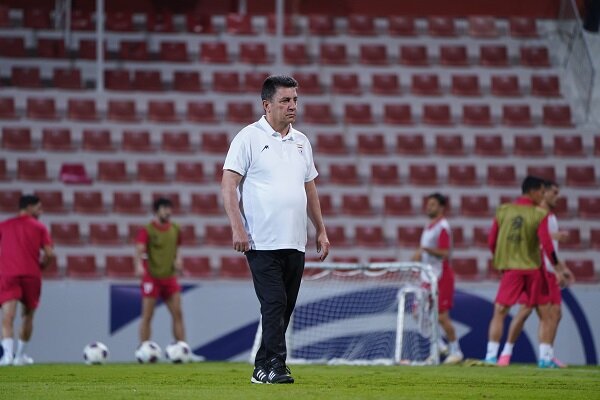
Much debate surrounds Head Coach Amir Ghalenoei’s tactics and player selections, but it appears he is committed to his game plan. Ghalenoei, who values stability and consistency, continues to rely on a familiar roster and strategy. While he has faced criticism, he maintains that as long as results meet the team’s objectives, Team Melli should be exempt from critique. This strategy, though conservative, has proven effective, as evidenced by Iran’s undefeated standing so far.

In Vientiane, Ghalenoei is expected to retain much of the lineup that excelled against Qatar. The defense held firm, save for a single lapse that led to a conceded goal, and successfully contained two of Asia’s top forwards, Akram Afif and AlMoez Ali. In attack, Sardar Azmoun delivered a standout performance, while Mohammad Mohebbi filled Mehdi Taremi’s typically prolific role, showcasing his ability to step up under pressure.

However, Iran’s midfield continues to present challenges. Lacking creative playmaking and efficient distribution to the forward line, this area remains a potential vulnerability. Despite a more assured defensive role, the midfield has struggled to effectively support the attack. Hopes are high that Alireza Jahanbakhsh will remain on the bench in favor of a trio of Mohammad Karimi, Saman Ghoddos, and Saeid Ezatollahi in the center, with Ali Gholizadeh adding an offensive edge from the wing. This combination may provide the balance and dynamism Iran needs to unlock North Korea’s compact defense.

PLAYERS PERFORMANCE


Facing North Korea: Physicality and Discipline

North Korea, known for its tenacity and physical style, has had a mixed record in this qualifier stage. While their defense remains tightly organized, a lack of clinical finishing has hampered their results. Despite these limitations, they are a resilient side that has given Iran tough matches in the past, rarely backing down from challenges and often engaging in a physical style of play.

To succeed, Team Melli must avoid unnecessary physical confrontations, maintain composure, and remain disciplined—especially with a view to avoiding yellow and red cards that could weaken the squad in critical moments. Staying focused and maintaining an 11-man team on the field will be essential to handling North Korea’s aggressive tactics.

This encounter will be pivotal not only for Team Melli’s qualifying aspirations but also for maintaining their momentum and confidence as they progress in the World Cup qualifiers. With an opportunity to lock in a commanding lead, Iran heads into this clash with determination and focus, aiming to take a definitive step toward the 2026 World Cup.

Sardar Azmoun Injured During UAE Cup Match, Faces Possible Team Melli Absence.

Sardar Azmoun, the star center forward of Team Melli and Shabab Al-Ahli, sustained an injury during his club’s UAE Cup match against Diba Al-Hisn.

Azmoun, who recently impressed by scoring twice and assisting Mohebi in Iran’s victory over Qatar, continued his fine form with an early goal in the 9th minute of the match. However, his night was cut short when he was forced to leave the field in the 32nd minute due to injury.

In the dressing room, medical staff conducted an initial evaluation, quickly assessing the severity of his condition. Fortunately, after further examinations, it was confirmed that Azmoun had not sustained damage to his cruciate ligament. His injury, though requiring treatment, is not expected to sideline him for an extended period. The estimated recovery time is less than a month.

Despite the relatively short recovery period, Azmoun is at risk of missing Iran’s next two World Cup qualifying matches in November — away games against North Korea, which are likely to take place in Laos and Kyrgyzstan.

Team Melli currently tops Group A in the third round of FIFA World Cup qualifiers with 10 points, closely followed by Uzbekistan. The top two teams from the group will qualify directly for the finals, while the third-placed team will have to navigate a playoff to secure their spot in the tournament.


Ghalenoei’s Outburst: A Coach’s Unusual Rant Against Critics

Following Team Melli’s emphatic victory against Qatar, head coach Amir Ghalenoei surprised many with a heated outburst, targeting his critics and demanding that Iran’s national broadcaster, IRIB, stop airing their opinions. His remarks, unusually severe even by his own standards, sparked widespread reactions across media outlets.

In the post-match press conference, Ghalenoei expressed his frustration, saying, “They [the critics] did not help the team. If you’re going to talk about someone, speak from your experience. Not everyone deserves a platform to criticize. It seems anyone with an issue against Amir Ghalenoei gets a voice on radio and television. Check these people’s resumes and compare them to mine.”

He went on to highlight his accomplishments: “I’m not just Amir Ghalenoei from the league. I’ve earned over a thousand points coaching various teams, not just one. I’ve taken responsibility for teams that were struggling both financially and in terms of scheduling. For example, Sepahan, a club I’m proud of, was 14th in the table when I took over, and we achieved great results on a minimal budget.”

He continued by mentioning his time with Tractor Sazi, where he led the team to its first-ever qualification for the AFC Champions League, which he considers one of his proudest achievements. Ghalenoei also highlighted his success with Esteghlal, his boyhood club. Wrapping up his speech, he addressed IRIB officials directly: “Team Melli and I are not without flaws. Criticize us, but don’t hold grudges. Some people are given a platform to criticize, not based on merit, but out of past grievances. One day I’ll respond to all of them, but for now, I must stay silent due to my position. Mr. Taj has also asked me to remain calm, but the day will come when I answer them all.”

While coaches often feel targeted by criticism, believing that dissent is a personal attack, Ghalenoei’s remarks crossed a line by calling for national media censorship. His demand that IRIB, Iran’s only authorized television and radio network, silence his critics struck many as authoritarian.

The backlash was swift. Javad Khiabani, a veteran broadcaster and respected authority on Team Melli, was one of the most outspoken critics. Khiabani condemned Ghalenoei’s arrogance and accused him of attempting to stifle free speech and the press’s role in providing objective analysis. He reminded Ghalenoei that journalism’s duty is to scrutinize and hold those in power accountable. “Ghalenoei acts as though he is beyond criticism, but his resume, despite his boasting, is lacking in international success,” Khiabani pointed out. “Beating Qatar is not an achievement to be proud of like defeating world champions, France or Brazil. Ghalenoei has twice failed to win the AFC Asian Cup as Iran’s coach and has yet to qualify for the World Cup, something an Iranian coach achieved decades ago with far fewer resources and fewer finalist (16 teams).”

Khiabani further criticized Ghalenoei for trying to dictate the terms of criticism, a job that rightly belongs to journalists. He emphasized that no coach should be immune from analysis, especially when leading the national team.

Ghalenoei’s tirade reveals a deep-seated insecurity and fear of criticism, suggesting a lack of confidence in his own abilities. His unreasonable demand for IRIB to suppress negative opinions is unlikely to be entertained by the authorities, and it may only amplify the voices of his critics. By lashing out at the media, Ghalenoei has likely emboldened his detractors, who will now scrutinize every aspect of his leadership, from player selections to tactics.

In the end, Ghalenoei’s rant may have done more harm than good, intensifying the spotlight on his tenure and raising questions about his ability to handle the pressures of leading Team Melli.

Team Melli Dominates Qatar in 4-1 Victory, Strengthening World Cup Hopes

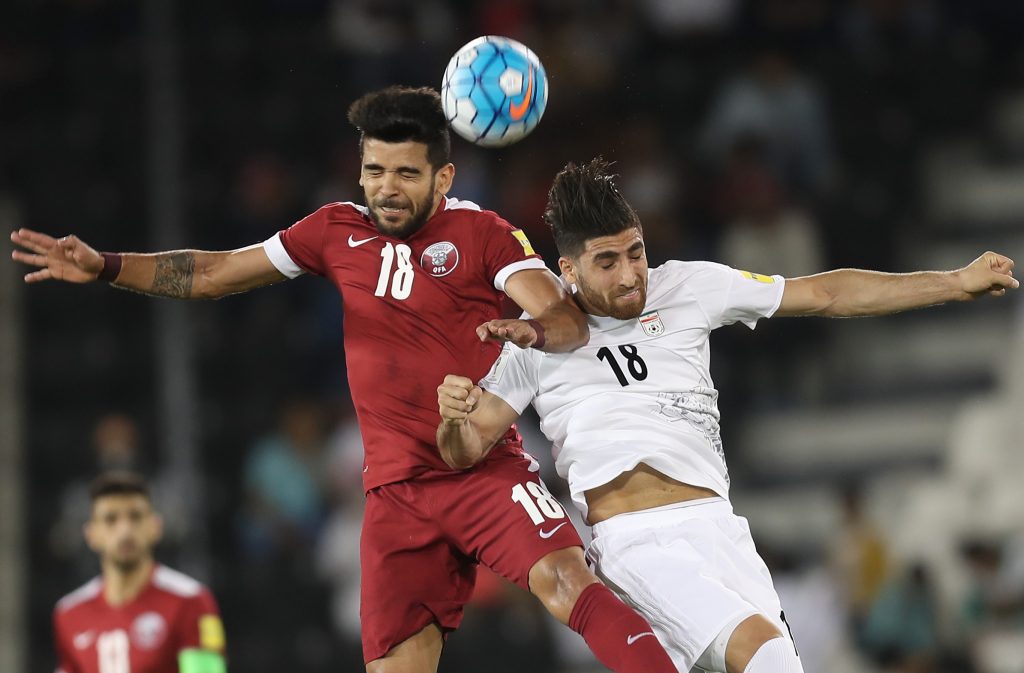
In a commanding performance, Team Melli triumphed 4-1 over reigning AFC Asian Cup champions Qatar in a crucial home game in Dubai. This victory gives Iran a significant advantage in their quest to qualify for the FIFA World Cup for the fourth consecutive time.

Key Milestones and Table Standings

The win propelled Iran to the top of Group A with 10 points and a two-goal advantage over Uzbekistan. More importantly, it opened up a crucial six-point gap between the top two teams and the third-ranked side, which could prove decisive as only the top two teams directly qualify for the 2026 World Cup.

This match also served as sweet revenge for Team Melli, who narrowly lost 3-2 to Qatar in the semi-finals of the AFC Asian Cup in Doha.

A Match Full of Drama

The match delivered plenty of excitement for Iranian fans, despite an early scare. Almoez Ali stunned the crowd with a thunderous shot that found the back of Beiranvand’s net, giving Qatar a 1-0 lead. However, Iran quickly regained composure, demonstrating their strength, skill, and resilience to score four goals and secure the emphatic victory.

Positives from the Match

While there were challenges, Team Melli showcased its potential and ability to dominate:

1. Sardar Azmoun’s Resurgence:
After a string of lackluster performances, Azmoun was the standout player, delivering a man-of-the-match performance. He scored twice and assisted the third goal, demonstrating his value to the team. Playing on his club’s home ground, Azmoun’s performance was a timely reminder of his quality and class as a forward.

2. Defensive Agility:
Despite conceding early, Iran’s makeshift defense—missing two key players—showed impressive resilience. They managed to neutralize Qatar’s dangerous forwards, Akram Afif and Almoez Ali, providing little room for further threats.

3. Winning Mentality:
The team displayed a relentless drive to win. Even when leading 3-1, Team Melli pressed forward, securing a fourth goal in injury time. This offensive mindset reflects a growing belief in the squad’s abilities, something that will be crucial as they continue their qualifying campaign.

Areas for Improvement

Despite the impressive victory, there are still aspects that need addressing:

1. Route One Football:
Coach Ghalenoei has relied heavily on the ‘Route One’ tactic, which involves long, direct passes to the forwards. However, this approach has seldom yielded results for Iran, and ironically, Qatar’s opening goal came from a similar tactic. Once Iran shifted to a more creative passing game—utilizing the wings and feeding the ball to power forwards Taremi and Azmoun—they found success. This match proved that Team Melli is far more effective when they focus on building play rather than relying on long balls. Hopefully, Ghalenoei will reconsider his use of Route One football going forward.

2. Discipline Issues:
Iran’s players continue to struggle with discipline. In this match, Mehdi Ghayedi narrowly avoided being sent off for a reckless tackle, and three yellow cards were needlessly conceded by Azmoun, Mohebbi, and Ghayedi. This indiscipline is a worrying trend—Team Melli has accumulated 10 cards (9 yellow, 1 red) in just four matches of the World Cup qualifiers. Such poor discipline could prove costly in future matches, and it’s an issue that requires more oversight from the coaching staff.

3. Lack of Trust in Young Players:
Coach Ghalenoei has spoken of integrating young talent, but his reluctance to give them significant playing time was evident. Promising players like Amin Hezbavi, Javad Hosseinnejad, Yousefi, and Amir Hosseinzadeh were either sidelined or given minimal minutes, while older players like Jahanbaksh and Moghanlou—who have struggled to make an impact—were given preference. If these young players are to develop, they need meaningful opportunities to prove themselves on the big stage.

4. The Ali Gholizadeh Mystery:
The decision to keep Ali Gholizadeh on the bench remains puzzling. His pace and skill could have been crucial in breaking down Qatar’s defense, especially on the flanks. Hopefully, his absence was not due to an injury, as his talent would have made a significant difference.

Looking Ahead

Despite the criticisms, Team Melli’s performance against Qatar was largely positive. However, consistency will be key as they prepare to face North Korea, the lowest-ranked team in their group, and Kyrgyzstan in November. North Korea, while not as formidable as Qatar, will present a different challenge. Anything less than six points in these upcoming matches would be a disappointment for a team with such high aspirations.


TEAM MELLI TROUNCES QATAR TO GO TOP OF GROUP ‘A’

Iran’s Team Melli Triumphs 4-1 Over Qatar in World Cup 2026 Qualifier

Team Melli soared to the top of Group A in the FIFA World Cup 2026 Round 3 qualifiers after a commanding 4-1 victory over Qatar on Tuesday. The win was powered by braces from Sardar Azmoun and Mohammad Mohebbi.

The match began with an early scare for Iran when, in the 17th minute, Almoez Ali broke free from his marker, Ali Nemati, and fired a shot into the roof of Alireza Beiranvand’s goal to put Qatar ahead. Iran responded late in the first half with Azmoun’s powerful header, which left the Qatari goalkeeper rooted to the spot. Omid Nourafkan delivered a precise cross from the left, and Azmoun’s clinical finish drew Iran level. Before that equalizer, Azmoun came close by rattling the crossbar, marking Iran’s best chance in the first half. Despite this, the opening 45 minutes ended in a 1-1 stalemate, with neither side fully controlling the game.

In the second half, Iran took command with fluid passing and excellent ball distribution, creating multiple chances and dictating the pace against the reigning AFC Asian Cup champions. Just three minutes into the half, Qatar’s goalkeeper Meshaal Bersham collided with his own defender while attempting to clear the ball, gifting Azmoun an easy opportunity to tap home his second goal and put Iran ahead.

In the 66th minute, Mohammad Mohebbi further deflated Qatar’s hopes with Iran’s third goal. A well-placed through ball found Azmoun just inside the Qatari half, and his blistering run into the box ended with a perfectly timed pass to the onrushing Mohebbi, who slotted the ball into an open net.

Mohebbi sealed the victory late in stoppage time with a second goal, heading home from Nourafkan’s corner to make it 4-1. The win lifted Iran to the top of the group, surpassing Uzbekistan on goal difference.

This was a crucial and comprehensive win for coach Amir Ghalenoei, who had been facing criticism and pressure to shake up the lineup amid injuries, suspensions and dips in form. Despite a few key absences, the coach fielded a balanced and powerful lineup. Mohammad Karimi, Nourafkan, and Nemati, despite Nemati’s early lapse that led to Qatar’s opener, performed well in their roles as replacements, proving Ghalenoei’s tactics effective on the day.


Iran vs Qatar: Who dares wins.

Team Melli Prepares for Crucial Showdown Against Qatar in World Cup 2026 Qualifiers

On Tuesday, Iran’s national football team, Team Melli, will face AFC Asian Cup holders Qatar in Dubai for a pivotal match in Group A of the FIFA World Cup 2026 third-round qualifiers. Both teams are vying for qualification to the prestigious tournament, with Iran and Uzbekistan currently tied at the top of the group on seven points, ahead of the UAE and Qatar, who each have four points. This match represents a significant opportunity for both sides to either consolidate or reinvigorate their campaign as they inch closer to World Cup qualification.

The Dubai Venue: A Blessing in Disguise

While many Iranian football fans and pundits lament the fact that Team Melli has been denied the opportunity to host this match on home soil, playing in Dubai may, in fact, prove advantageous for the team. Iran’s football infrastructure has been under scrutiny for years, and the current state of the pitches—especially as the iconic Azadi Stadium undergoes construction and maintenance—is widely regarded as subpar. In a country with a deep footballing history, it is a matter of national embarrassment that Iran lacks proper pitches, forcing matches to be played on surfaces that are sometimes no better than “cattle grazing grounds.”

Beyond the poor pitch conditions, organizational and logistical issues have plagued Iranian football for some time. These include chaotic fan entry procedures, frequent promotion of political propaganda during matches, heavy-handed security, unruly fan behavior, and restrictions on women entering stadiums.

In contrast, Dubai is an exemplary venue for hosting top-tier international football. The city, like Doha, boasts professional and efficient sporting event management. The superior facilities, along with the fact that Dubai hosts a large and passionate Iranian expatriate community, means that Team Melli will likely enjoy strong support from the stands, creating a home-away-from-home atmosphere. This level of comfort could be vital for the team, as they aim to secure all three points.

Team Melli’s Lineup and Tactical Challenges

Despite the absence of three key players due to injury or suspension, Team Melli enters the match with a slight edge over Qatar, both in terms of experience and talent. However, the long-standing concern for Iran has been the predictability of its tactics. Under the guidance of head coach Amir Ghalenoei, the team has stuck to a direct style of play, often relying on “route one” football—long balls and counterattacks. This approach has neither been attractive to watch nor particularly effective, especially considering Iran boasts two of Asia’s most talented forwards, Mehdi Taremi and Sardar Azmoun.

Shockingly, between Taremi and Azmoun—who are considered among the continent’s elite strikers—there has been just one goal scored in Team Melli’s first three matches of the qualifiers. Iran’s total of two goals in those games is woefully low, especially for a team with such firepower. While some of the blame can be attributed to poor finishing, a deeper analysis reveals that the style of play is a major factor. The lack of creativity and quality in service from midfield has resulted in few genuine scoring opportunities for Taremi and Azmoun.

Ghalenoei’s focus on defensive solidity has come at the expense of offensive fluidity. The forwards have been isolated, often relying on half-chances to make an impact. If Iran is to improve its scoring output, the coach may need to adopt a more balanced approach, allowing the midfield to support the attack more consistently.

Qatar’s Resurgence and Threats

Qatar, on the other hand, has shown steady improvement since their disappointing home defeat against the UAE on the opening day of the qualifiers. The reintroduction of defensive stalwarts Abdulkarim Hassan and Boualem Khoukhi has shored up the backline, while their attack, led by the dynamic duo of Akram Afif and Almoez Ali, continues to be dangerous. Unlike Iran, Qatar has shown clinical finishing ability, often converting half-chances into goals. This efficiency in front of goal could be a decisive factor in Tuesday’s match.

Qatar’s counter-attacking style and ability to capitalize on mistakes make them a dangerous opponent for Team Melli. The Iranian defense will need to remain organized and vigilant, as Afif and Almoez have the pace and skill to punish any lapses in concentration.

Iran’s Key Players and Defensive Resilience

While Iran’s attack has struggled, their defense has been one of the team’s bright spots, keeping a clean sheet through the first three matches of the qualifiers. Much of this defensive solidity is owed to the emergence of Ali Nemati, who delivered a standout performance in his debut against Uzbekistan. Nemati’s calm and assured presence in the backline, stepping in for the injured Hossein Kanaanizadegan, was a revelation. If he can replicate that form against Qatar, Iran’s defense will have a solid foundation to build on.

In midfield, Saeid Ezatollahi has also begun to rediscover his form. After a string of underwhelming performances, the Shabab Al-Ahli midfielder put in a commanding display in the last match. Playing on his club’s home ground in Dubai, Ezatollahi will be expected to pull the strings and control the tempo of the game. The absence of the suspended Saman Ghoddos places extra creative responsibility on Ali Gholizadeh and Mehdi Ghayedi, both of whom have the flair and skill to unlock defenses. If Ghalenoei opts to start these two dynamic players, Iran could pose a more varied and unpredictable attacking threat.

Taremi and Azmoun: Time to Deliver

For all of Iran’s defensive resilience, the onus will ultimately fall on Taremi and Azmoun to deliver in front of goal. Both players have been underperforming for Team Melli in recent games, and their form will be crucial if Iran is to break down Qatar’s defense. In a match of this magnitude, the big players need to step up, and Taremi and Azmoun must rediscover their scoring touch if Iran is to secure the win and remain atop Group A.

A Match of Fine Margins

Tuesday’s clash in Dubai promises to be a tight, tense affair, with both teams capable of taking all three points. While Iran may hold a slight advantage on paper, Qatar’s recent resurgence and clinical finishing mean that the match could swing either way. For Team Melli, a win would solidify their position as group leaders and bring them one step closer to World Cup qualification, while for Qatar, a victory would reignite their campaign.

As both teams prepare for this crucial encounter, the stage is set for an intriguing contest between two of Asia’s footballing giants.

Look back at Team Melli’s game plan.


Team Melli played a goal-less draw against Uzbekistan, its main rival in Group A of the third round qualifiers for the FIFA World Cup 2026 in Tashkent.

The match was not crowd-pleasing, with both teams playing ultra-cautiously, focusing on solidifying their defenses to avoid conceding the first goal.

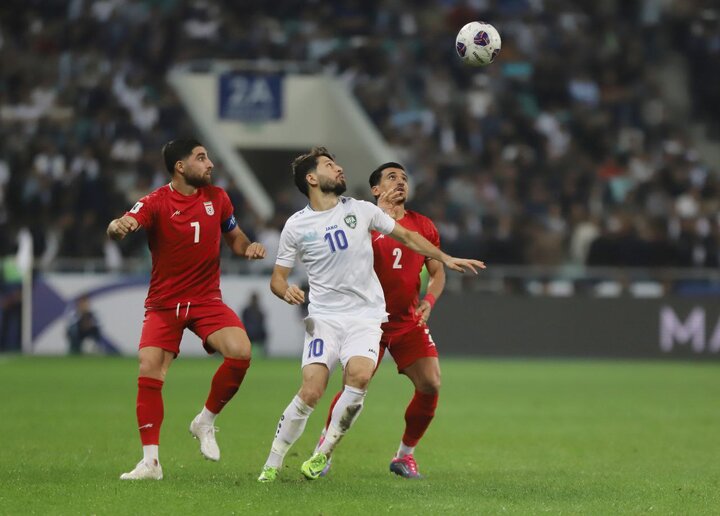
Uzbekistan, even at home and without Head Coach Srečko Katanec on the bench due to illness, was surprisingly tame and lacked adventure. After the dismissal of Hardani, Team Melli seemed to play better, having more ball possession and control of the field. However, it was a low-risk game overall. Iran lacked the desire to play offensively, with the Uzbek defenses tightly compact and not allowing the Iranian forwards much breathing space.

One reason for the lack of effectiveness in Team Melli’s forward line, which is usually its most powerful, is the familiarity of Iran’s forwards amongst the opposing coaches. Having played together for several years, opposing teams can easily analyze and counteract their game plan. Lack of tactical variety in the Iranian game plan makes the opposing job even easier.

Since Amir Ghalenoei took over, it has been evident that Team Melli relies on long balls from the defense to the forwards, bypassing the midfield. This “route one” football is simple but also easily defendable and has a low yield in modern football. This strategy is particularly ineffective for Iran, where forwards like Sardar Azmoun and Mehdi Taremi lack the pace to make it work.

However, with the introduction of Mehdi Ghayedi and Ali Gholizadeh in the second half, the formula changed. Both players have pace and skills, making the long balls to the flanks more effective in feeding the center of attack. Two very good chances were created this way, with Azmoun and Saeid Ezatollahi both having their shots saved by the Uzbek keeper.

Iran still lacks a creative midfielder and playmaker. With Saman Ghoddos suspended for the match against Qatar, it will be interesting to see if Gholizadeh can inject some energy into the game which is a home game but played in Dubai. If Ghalenoei opts for a more cautious defensive approach he will probably start with Milad Noorafkan for a more solid, defensive-minded midfield.

There are still options left in the squad to fill the gap left by Ghoddos’ absence. Alireza Jahanbakhsh, who has experienced a dip in form, and Mohammad Mohebbi, recently recovering from injury, could fill that gap despite both being rusty. If Ghalenoei feels adventurous, Javad Hosseinnejad could be a fitting choice to add the style and finesse that many of the current midfielders lack.

It remains to be seen what Ghalenoi has in mind. He certainly has not stuck to his word about introducing an entertaining Team Melli. Perhaps the circumstances dictate that Iran should tread carefully until the qualification to FIFA World Cup 2026 is assured before the team goes full throttle and play attractive football.

The match against Qatar is on Tuesday 15th October at Rashid Stadium, Dubai.