Tag: FFIRI

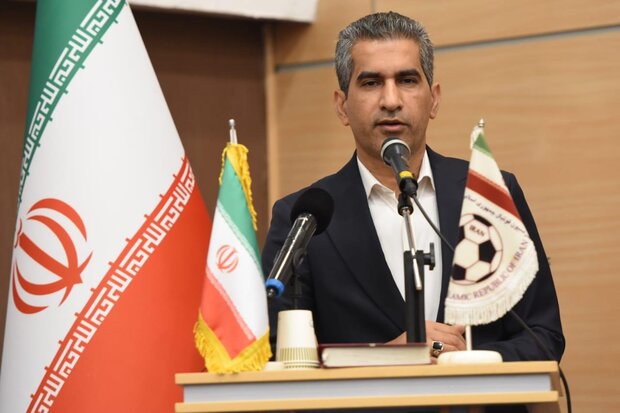
A shock in Iran football. Mehdi Taj selected as head of FFIRI!

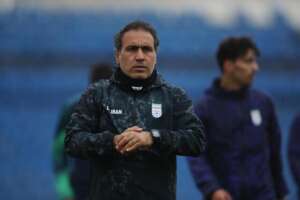
In the election of Iran’s Football Federation which was held this morning, rank outsider Mehdi Taj managed to win the presidency of this federation with more than double the votes of the incumbent acting head  Mirshad Majedi.

The man that left the federation under a cloud of accusations, claims of corruption, and nepotism and was legally pursued by several entities managed to dodge all the legal obstacles to his nomination. Reservation on his candidacy by clubs, a horde of managers, coaches, and players were all to no avail as Taj registered his name as a candidate for the presidency and comfortably won the hot seat about three years after he left it in tatters.  Shahabuddin Azizi Khadem who replaced Taj was fired from the post after less than a year in FFIRI.

The elections of the Football Federation started on Tuesday morning. Mehdi Taj, Azizullah Mohammadi, and Mirshad Majdi were the candidates for the presidency of the Football Federation. On vote counting, Mehdi Taj won 50 votes. The current acting head of FFIRI  Mirshad Majedi received 25 votes while Azizullah Mohammadi got 4 votes only.

On May 7, 2016, the last occasion where Mehdi Taj contested the elections, he won with 50 votes out of a total of 73 votes received at the Football Federation Assembly. He resigned from his post on December 29th, 2019 claiming health issues and a mild heart attack.
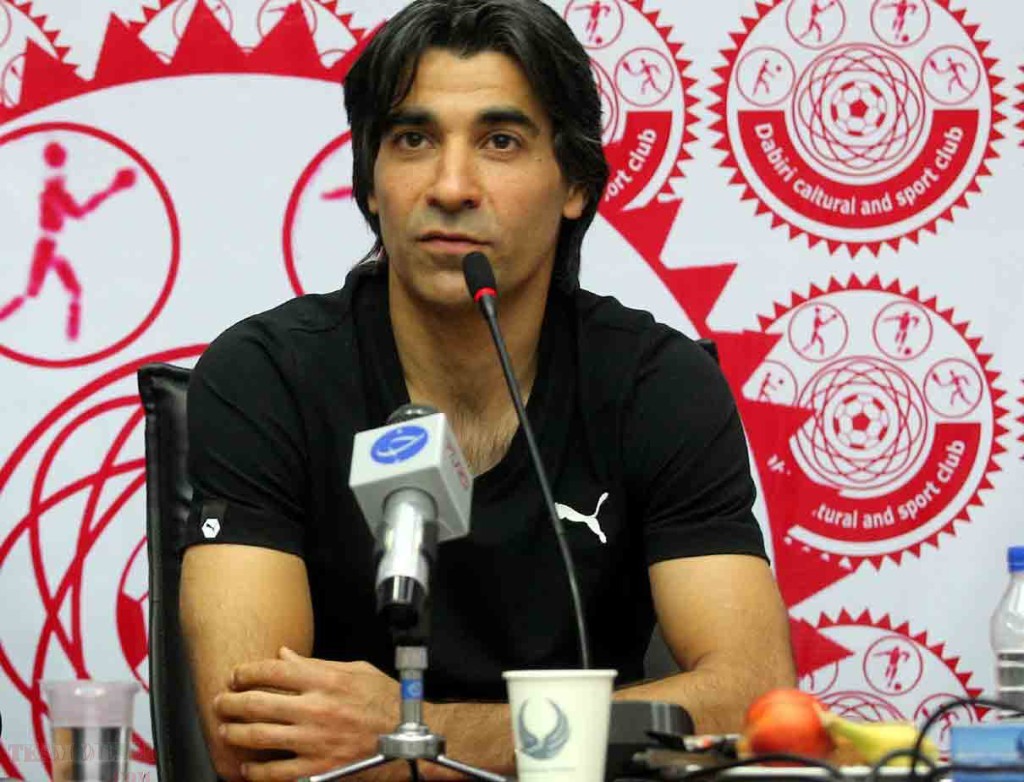
The first reaction to Taj’s return was the immediate resignation of the Head Coach of Team Melli’s futsal team.

Vahid Shamsaei that is in the midst of preparing the Futsal team to defend its Asian title in Kuwait, submitted his resignation in protest. Close associates informed the press that Shamsaei refuses to work with Taj and be associated with anything that Taj is involved in.

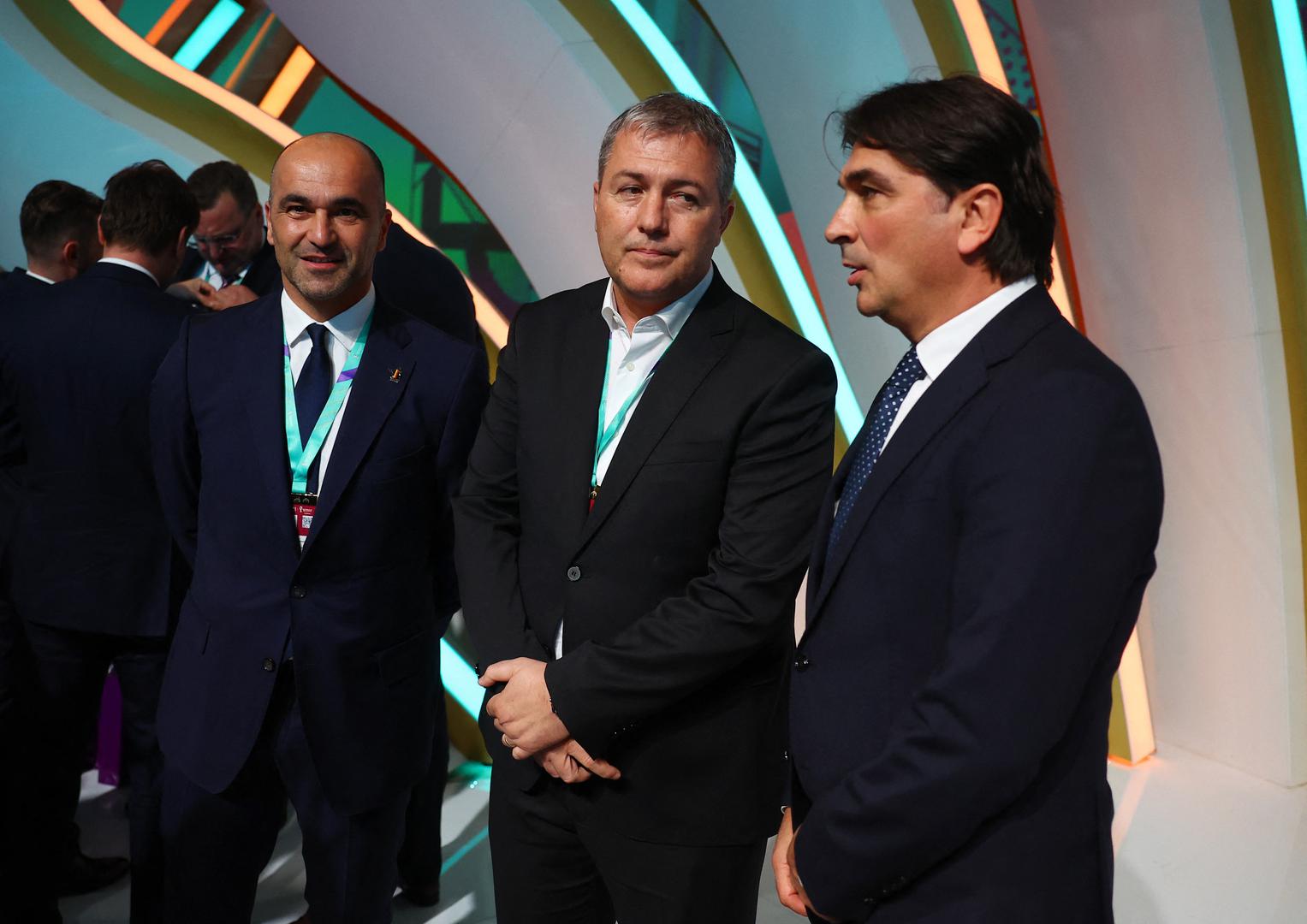
Skocic: ‘I didn’t expect the red carpet, but I did expect some respect.’

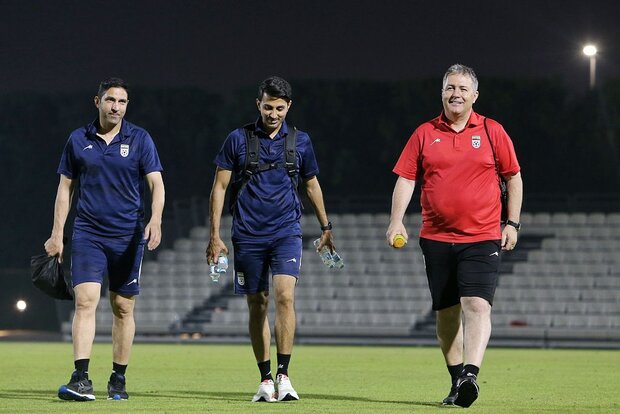
Dragan Skočić,  in an exclusive interview with the Croatian site Vecerenji List, said that many in Iran tried to devalue him after he managed a near-miraculous qualification to the FIFA World Cup.  Skočić took over when Team Melli was third behind Bahrain and Iraq and had to win all the matches away concentrated in one place in Bahrain losing home advantage with most of the opposition teams.

Skocic: ‘I didn’t expect the red carpet, but I did expect some respect. And some have tried to devalue everything I’ve done with the national team’

Hassan Haidar Diab,  Vecerenji List reporter in Tehran spoke to the Iranian coach, Rijeka’s Dragan Skokic, who took this Asian country sovereignly to the World Cup

On the streets of Tehran, whoever hears that you are from Croatia, immediately pats you with their hand and says – Skokić. How could he not when Dragan Skočić, the coach of Iran, made a historic success when he took the team to the World Cup in Qatar, a few games before the end of qualifying, winning first place in the group, which few expected. I spoke with Dragan Skočić in the Iranian capital Tehran at the Olympic Hotel.

Although it was an agreement that the interview would last an hour, we talked for more than three hours, and the reason is simple: on each answer, he had to break because he was interrupted by his many fans who asked for an autograph or photo shoot. What sounds amazing, even though women in Iran don’t go to stadiums, many of them stopped next to him, verbally praised him, and took selfies.

When Dragan Skočić became Iran’s coach in February 2020, the team was in an unenviable position in Qatar’s World Cup qualifiers. They managed six points only in their first four games and the previous coach, Belgium’s Marc Wilmots, left the helm. Iran had played in the previous two World Cups and in a country where football is extremely popular it was unacceptable not to make it to Qatar. That is why they decided to appoint 53-year-old Dragan Skočić, a former player and Coach of Rijeka who has led four teams in Iran since 2013 – Malavan, Foolad, Khooneh Be Khooneh, and Sanat Naft.

In an exclusive interview with The Sunday Vecernji list, Dragan Skočić talks about life in Iran, and expectations in Qatar, especially with an emphasis on the match with the USA, which already all football fans call the match of all matches due to political tensions and hostility between the two countries.

-There has been a lot of speculation about you leaving the Iranian national team, however, you remain the Head Coach and are about to start preparations.

– Generally, I’m not someone who’s burdened with his own importance and someone who expects a red carpet after a job well done, but at the very least I expect respect. Because it’s clear that I have credit for qualifying for this World Cup, too. There are people who are trying to devalue everything I’ve done so far out of different interests. They all have in common that they are resistant to facts. Throughout the qualifiers, they tried to create and multiply conflicts, thus creating problems around the national team. All of them should not ignore the fact that these were the fastest World Cup qualifiers for an Asian team in history, with the most wins and the most points scored. –

‘I did it because I’m focused on my job’ 

-Where will you have a camp to prepare the national team and with whom will you play friendly preparatory games?

– If there are no changes, the national team camp should be in Vienna and rivals Uruguay and Senegal.

You have made an incredible historic success with the Iranian national team, you have qualified for the World Cup in Qatar already a few games before the end of qualifying. How did you do that? This has not worked for any head coach before you, and it is known that on the Iranian bench sat before the likes of Carlos Queiroz, the former Real Madrid coach, and Marc Wilmots, the former Belgium coach.

– I succeeded because first of all I was focused only on my job, I neglected all other external aspects, and I excluded all that irrelevant that is distracting. It’s pretty hard work in Iran, but I learned my lesson a long time ago: either don’t heed the comments or take them as motivation. I didn’t pay attention to the comments, I think that was crucial. I didn’t compromise any guy. I started from never being able to satisfy everyone. I was always myself. I think that quality work was crucial. –

-Iran hired you after Marc Wilmots performed poorly in the first four games of the World Cup qualifiers and in 18 games you scored 15 wins, one draw, and two losses and led the team to first place in the World Cup qualifying group. Given that at that moment almost no one believed that Iran would make it, how much pressure did you feel about this impossible mission?

– It was really difficult at the beginning, the team was under a lot of pressure, because of previous bad results we were not allowed to drop a point in the next qualifiers. A lot of people have already written us off. I think my knowledge of the players, the circumstances, and the mentality of the players helped, and the players showed great stability and character in a stressful situation that was almost lost. In the turbulence, we all showed composure together.

– Given that politics always gets involved in sports, what do you expect from the U.S. game? How are you going to prepare the players for this game, given that there are high political tensions and animosity between the two countries on the political scene?

– We can’t ignore the political importance that game will carry with it. I’m sure my players will be highly motivated for that game because it will mean a lot for everyone in Iran. Emotions will certainly run wild, and the key may be precisely how to control these emotions and how to focus players on the game itself.

– Iran has never made it past the first round at the FIFA World Cup. At the World Cup in Qatar starting in November, Iran will be in Group B along with England, the USA and Wales. Do they expect you in Iran to succeed for the first time with the national team, is there already pressure on you?

– Such expectations, of course, exist because, as you said, Iran has not yet had the experience of passing the first round. My expectations also go in this direction, but it is clear that in all this there must be a dose of objectivity and humility. Only in this way can we achieve the highest level possible. After making it to the World Cup, which was our goal, of course we too are to revise our goals. I put pressure on myself because I want us to do something that no one has done before, although I am aware of how difficult it will be.

– In the past almost ten years you have coached four clubs in Iran, obviously, the results were good enough to offer you the position of coach.

– Without false modesty, I think I’ve done a good job on all the teams. There were people in the Iranian League who recognized it and believed in me. I think I gave them that trust back. Everyone was expecting a big name. It was an aggravating factor for me. When I came to the coach, I was first ignored by a part of the public, and later they started criticizing me, which was an evident improvement. Also, I’ve been in Iran a long time, and a lot of people have had the opportunity to meet me, I hope a lot of people appreciate me. –

What is your relationship with the media in Iran now?

– I have to say, I’ve been pretty timid in my relationship with the media lately, which is never good, but only because I thought my team needed peace and stability. Otherwise, I don’t like the pathetic endless pandering to the public and the media. It’s hard to get myself to say what other people would like to hear. I don’t spend much time tempting the environment and communicating my image, and I am aware, of course, of the influence of the media. That may be one of my flaws.

– Is there anything Iran’s team is better at than it was at the two previous World Cups when it came close to reaching the second round?

– It’s ungrateful to compare the Iranian national team then and now. In big games, most players play at their level, and I have witnessed during these years that Iranian players can go above that level. It is, I’m sure, a common trait for all generations. Some teams seem comfortable when they have the ball and others when they don’t have it. I think Iran in this World Cup needs to strive harder for the game, because that’s in its genetic code. That doesn’t mean we’re going to be naïve or we’re not going to respect pragmatism. –

What else will be important in the preparation for the World Cup? Will yo call Moharrami from Dinamo?

– Of course, we respect all opponents to the maximum, but we believe that our team has sufficient quality to stand up to everyone in the World Cup. It will be of great importance for us that in front of the World Cup as many players as possible play the same standard they play at their clubs, to be in good shape, and for everyone to be healthy in the World Cup itself because the preparations have never been shorter. We have a lot of players out there, it’s about their experience and the knowledge they bring and transfer from different backgrounds. Moharrami is a standard member of the team. He has played almost all the qualifiers and I expect a lot from him.

– What do you think of the stars on the teams, I don’t mean on your team in Iran, but in general?

– Some players think about what a team needs, and in most cases the so-called stars follow instinct and talent, have the capacity to improvise, they are ahead of what happens on the field. The team needs both control and chaos. You need both the stars and the ones that don’t define by that prefix. But sometimes you have a situation where you’re aware that an individual player is the best player, but you also understand that the team plays their best without him. All coaches have in common that they like the types of players who give everything they have to make the team good, like our Modric, and less those who take advantage of the team to make them look good. However, as I said, ingenious and creative players are always welcome with me.

– Besides you, which of the other Croatian coaches is on the staff?

– Recently, Krunoslav Rendulić, who used to be my assistant, joined the staff, and in recent years he worked independently, and previously there are assistant Marijo Tot and goalkeeping coach Mladen Žganjer. The small Croatian colony is complemented by Iranian coaches who are in extraordinary synergy with us and together we make a good team.

– While we were talking, we were often interrupted by your fans and wanted to take a picture with you…

– The Iranians love football, and Team Melli is important to the Iranian people, so it is, therefore, normal for them to take pictures with the Iranian coach here.

– You’ve been in Iran a long time, how do you like living in this country?

– I certainly want to dispel prejudices and myths about Iran as a negative country as suggestively offered by the superficial Western media by scaring the world with Iran and Iranians. I would like as many people as possible to visit and get to know Iran because I can promise them an authentic experience. Iranians love guests, people will win you over at the very first contact, in Iran, you can certainly expect a welcome. This is the country where you will most often be asked if you need help without asking for it. People are the best reason to visit this country.

– How do you like their food?

– I like the food because it is diverse, full of spices, it is a bowl of indispensable rice, kebab, and Iranians love to eat fruits and vegetables. Nevertheless, the Iranians need to know that they have a great competitor in our Mediterranean cuisine.

– Given that the Iranians believe that Croats are originally from Iran, does anyone talk to you on the subject?

– You mean Harahvatia, our likely great-grandfather from old Persia? I was often approached by people and tried to start a conversation on the subject. It seemed to them and me that the thesis was suitable for closer interconnections. I have talked about it several times and with our Ambassador Drago Štambuk, he would certainly be a much more grateful interlocutor than I am for deciphering the Croatian riddle of origin.

– How do you handle the heat, but also the collapse of traffic in Iran? Do you drive a car or do you have your driver?

– After all these years, I’m immune to the heat. As for the traffic, I have a driver, I once tried to drive in Tehran myself, but I quickly realized that it was not for me. Iranian traffic taught me how to find peace in the controlled chaos in which the Iranians are doing remarkably well. It is necessary to have a lot of patience, the Iranians seem much more relaxed than we do. In late afternoon I try to avoid it anyway, if I can’t already because of work, I shorten the traffic jams by listening to various podcasts.

– Are you following the Croatian national team?

– Of course, I’m following. I am especially pleased that the experience we have evidently recently has been added to the energy brought by new players within the team. I think it’s a date that can only result in a good one. –

Do you communicate with Zlatko Dalic?

– Not really. The last time we spoke was in Doha when there was a draw for the World Cup. I wish him and our national team all the best in the World Cup.

– As a coach, how do you look at the game of Luka Modrić, who has already entered the age of 37 and do you see in which young player his successor?

– It seems an unrealistic level at which Luke plays at that age. It’s hard to pronounce the name of his successor given everything he’s done throughout his career.

– Do people in Iran remember Stanko Poklepovic, Tomislav Ivic, Miroslav Blazevic and Branko Ivankovic and Cica Kranjcar?

– Croatian coaches are certainly embedded in the identity of Iranian football. With their successes, they opened the doors of this multifaceted football country to each other. I will not be pretentious if I say that for the Iranians, the first association with Croatia is the Croatian coaches.

– How different is it now to coach the national team compared to when you were coaching at the club?

– There’s a big difference. In the national team, there is not much time for the preparation itself on the field, in the club, you have players every day, and the impact on them is much greater. The national team doesn’t have time. In the national team, good selection and a good selection of the idea of the game are important. We spend a lot of time monitoring players and analyzing rivals. Our goal is to even out a team that’s heterogeneous. Each individual player comes from a different context, and we have to create communication for our team, perfect synergy, natural collaborations between players, and a common matrix. It is not necessary for players to receive the same stimulants, but stimulants must go in the same direction, they must be designed for the same model.

– Your coaching max?

– Have no doubts about losing and don’t relax in victory. Knowing why you lost and managing your coaching ego when you’re on an upward trajectory is of great importance to the coach. It is important not to get stuck twice on the same stone, and to learn from mistakes. It must be clear to you that applause quickly turns to whistle and vice versa, it’s just an important presenter.

– ‘My Rijeka always has the upper hand’

-What is crucial for you in the game?

– Understand the game from an advantage perspective. Identify where the benefits lie and take advantage of those advantages. It is not important to dominate possession, it is important to dominate the space. Rivals at the match require flexibility.

– What do you think of the policy of our clubs selling young players to survive?

– Someone once said that the paradox is to sell young promising players ahead of time, the moment they start to show authentic value, and then to buy bad players. Young people leave too soon for clubs and agents to meet their needs. Later, the clubs are in an attempt to generate value: buy cheap, and later sell expensively. Few do. It’s a tough road to revalue players who have lost value. But when we know that it’s hard for us to get the right sponsors and the TV rights revenues are low, there’s nothing left for them to do. Surely such a policy is on shaky ground, it is all uncertain incomes, and once talent production falters or there is fallout from European competitions, you are close to a bad scenario.

– In the end, would you return to Croatia if you were invited to coach Dinamo, Hajduk, or Rijeka?

– It is logical that one day I return to Croatian football, I am not thinking about it at the moment. Of these clubs, certainly, my Rijeka would always have the advantage. –

Kamaranifar claims FIFA will partly release some funds to FFIRI

According to Mehr reporter, Hassan Kamranifar, the Secretary General of the Football Federation, as a representative of the Iranian national team, attended the recent FIFA coordination meeting in Zurich, Switzerland, where all the 32 finalist teams sent delegates.

Terms, conditions, local laws, and other requirements for the World Cup competition including the number of players in each team and other requirements that the teams need to adhere to were communicated to the delegate.  FIFA officials also held bilateral meetings with all the finalist’s delegates. In the meeting held between FIFA and FFIRI representative, KamraniFar discussed with FIFA the issue of blocked funds that FFIRI has to receive as prize money for Iran’s qualification to the FIFA World Cup in which FIFA awards each finalist a lump sum months before the start of the competition. The Preparation money is a FIFA award of $2.5 million as a guaranteed payment to each and every 32 national teams participating in World Cup 2022.

The meeting was attended by officials from the legal and financial department of FIFA  who heard the FFIRI demands. After returning from his trip to Switzerland, the Secretary General of the Iranian Football Federation presented the outcome of the discussion with FIFA  to Mirshad Majedi and the members of the Board of Directors. In an informal meeting, Kamranifar said that he received the green light from FIFA for partial payment of the US$2.5 million using various methods through Banks before the start of the 2022 World Cup in Qatar. Therefore, intensive correspondence between FFIRI & FIFA has started in order to channel the funds through the banks of the Persian Gulf region and settle the current financial problems. Now, it remains to be seen whether Kamranifar’s good news to the officials of the Football Federation will come true soon, or whether the financial sanctions will still prevent the transfer of this money to the country.

Mehdi Taremi asks Vice President of Iran’s son for a tax exemption for his luxury car.

Is there a problem with the involvement of politicians in the luxury car entry permit?

The rebel group of players in the Team Melli camp led by Taremi has issued a public call on their social media pages demanding that the two most critical members of parliament cease interfering in football and Team Melli affairs!!

It is believed that this group has the backing of former FFIRI head Mehdi Taj, who has allegedly promised his followers in Team Melli that he will rid Team Melli of Skocic if he is elected.

While the statement lacks professional ethics and knowledge of how politics works, there is also a contradiction between the words and the deeds of those players, especially those supporting Mehdi Taj. Hassan Kamaranifar, hinted at this issue and demanded that players mind their own business and not interfere in what is not their job.

In yesterday’s statement by the players, parliamentarians and politicians have been asked to take care of people’s livelihood and attend to economic problems and leave football in the hands of football players, but there is no problem if the same MPs authorize funds from the public coffer to the Team Melli Players! Some of these players had recently joined politicians to advance their personal gains. One of them is Mehdi Taremi himself who admitted in his last interview that he held a meeting with the Vice President’s son to obtain a permit for the entry of his luxury cars without paying taxes and customs!!

In the midst of all the economic and livelihood problems of the Iranians, with a large percentage of them earning in a year what Taremi and other European-based players earn in a week, they have the audacity to ask for tax exemption for their luxury cars. It seems that such intervention is fine.


Team Melli is heating up within. The problems are far from over.

The publication of a statement by a group of Team Melli players headed by Mehdi Tarimi including Karim Ansarifard, Alireza Jahanbakhsh, Ezatollahi, and Ehsan Haj Safi, in connection with the state of the football federation and the national team coach, prompted a sharp reaction by FFIRI through its spokesperson Hassan Kamranifar, the Secretary General of this federation.

“First of all, it is necessary to mention that the football federation is governed completely independently in accordance with international rules and its own charter. At no time this federation has received orders from anyone. There is no interference in the affairs of the federation.  An example of this issue was the rumors about attempts to change the coaching staff of Team Melli, at the end,  you all saw that only the federation management makes such decisions independent of outside elements. Although I don’t want to talk about the elections, I just would like to point out that there is no interference in these issues.”

The Secretary General of the FFIRI said: “We should appreciate the supporting role of the Parliament in approving and allocating government aid, especially for the purpose of supporting the national team and pursuing the rewards of the national team players. When the parliament support allocating government funds to the federations, we also consider it our duty to answer to the parliament in the field of how we spend government grants, this is not intervention, but a supervisory duty of the people’s representatives.”

Kamranifar was asked about an alleged demand by several Team Melli players asking that two Members of Parliament Ghazizadeh Hashemi and Pejmanfar, cease their interference in football. However, Kamranifar did not respond to this statement.

The issue revealed the extent of differences and divisions between Iranian national team players once again which prompted Kamranifar to respond strongly. The General Secretary of the Football Federation said: “The explicit demand of the Federation from the members of the national team is to observe professional ethics and not to interfere in other departments and take a stand on issues that are not within the player’s responsibility. Division and partisan in Team Melli is our red line and we will not tolerate it at all.”

Kamranifar added: “National team players may have concerns, some of them could be legitimate, but these issues should be discussed in their own place and between family members not going public. There is a process for that.  Some actions and behaviors are not acceptable.”

In the end, the Secretary-General said: “The explicit request of the Federation’s Board of Directors is to establish complete discipline and stability in the national team and to stand against any division, split, and marginalization. The federation will fully support the national team with all its might, and of course, we will take action to identify external divisive agents of whom we are fully aware and who are trying to get close to the national team with these measures.”


COMMENTS ON FFIRI KAMARANIFAR STATEMENT

The disturbing part of this issue lies in the fact that a struggle is brewing among the members of Team Melli some of whom think that they are better equipped and qualified to run the federation and decide whom to appoint as Head Coach.  Led by Mehdi Taremi, a player who is notorious for lack of discipline and professional ethics, this group is making trouble by recruiting other players like Jahanbakhsh who is a key element in the squad and not the rebel type. FFIRI reaction says much about how much they are concerned hence the strong tone of Kamaranifar. However, besides the pseudo threats, there was nothing to deter the troublemaker.

Many feel that this Federation is standing  on weak ground at this period of time with a lack of legitimate leadership and the coming elections. Those who aim to sit at the top are non-commital to this serious issue. No one wants to take a stand just in case it is the wrong one therefore putting their election in jeopardy. No one is ready to make a decision against the rebels who are supported by outside elements including an influential football agent who would gain much by the change of the Head Coach with expected hefty commision. In the end, the more this conflict and division drag on, the worst it will become.

About the Federation’s independence, Kamaranifar lies up to his teeth. It is not even a secret that FFIRI is run by the government. Kamaranifar’s own admission that funds and grants are being received by the government proves it. The demand by the rebel players and FFIRI that the Parliament stops interfering in football sound quite unreasonable too. After all, the FFIRI and the Players are awarded funds from the public coffers from the money that can be spent on many other projects. What right have they to say to the Parliament “Shut up and Pay Up?”

An organization can only operate independently if it generates its own revenue and has a proper balance sheet. It is not the case with FFIRI which has always pleaded for handouts from the government and thereupon the government would have its own terms and condition. FFIRI and rightly so has to answer to people’s representatives for all the money that is being given to them freely. That is the rationale.

Shams calls for total detachment of FFIRI from government influence.

Hossein Shams, the former head coach of Iran’s national futsal team defined the upcoming elections of the football federation as crucial and demanded full independence of the federation from political institutions.

“In my opinion, the head of the federation should be strong and independent and not a servant of the minister, pressure groups, or the parliamentarians. Don’t let non-football personnel run the federation and do not allow decisions to be made by outsiders whose interests and objectives are not necessarily in tandem with the development and progress of football and futsal. Try to improve football and futsal yourself. He should not allow the interference of the minister, he should not let the parliamentarians and the Article 90 Commission make decisions for football, and he and his team alone should do all the work. “

“This football that we are witnessing now is the end result of continuous interference from outsiders that use all sorts of tactics to influence outcomes and systematically interfere in major decisions. The head of the football federation must be strong enough to withstand such pressure and be independent of the government and parliament. After all, this is the normal practice. This is the most important feature that a federation president should possess.”

Regarding the possible competition between Azizullah Mohammadi, Mehdi Taj, and Mirshad Majdi for the presidency of the Football Federation, Shams said: “I have no idea if they have been vetted and approved yet. It has not yet been confirmed and none of these 3 have presented a plan that one could decide which one to choose. I believe that someone should be elected whose plans are practical and doable. Regrettably, as soon as they win the office, they have achieved their objective which is primarily to win recognition and hold the office of president. “

“History tells us that most of them do not fulfill any of their promises”.

The football federation in Iran has historically suffered interference and pressure from the government with impunity. The fact that the federation is virtually bankrupt and depends a lot on government handouts, pressures the leadership of the FFIRI to abide by the government but that is all done under the table fearing FIFA Sanction.

Despite the constant denials of the Ministry of Sports, it is no secret that the head of FFIRI has to visit the ministry whenever a major decision needs to be taken. The latest episode with Dragan Skocic is one typical example.

The government owns two of the biggest and most popular clubs in Iran Esteghlal and Persepolis and refusing to let go despite decades of promises to do so.

ill discipline of Iranian players & coaches! The saga continues.

Iranian club football and to a certain extent, Team Melli, has been facing indiscipline, anarchy, and physical altercations at various levels in recent years. The FFIRI and other responsible organizations have not solved this moral and cultural problem. While the FFIRI Ethics & Disciplinary committee in particular seems to be ill-equipped for the job and proven to be a feeble body that suffers a lack of consistency and at times toothless to what is happening around.

This chaotic lawlessness has been out of control that even the pre-season camps have suffered from it.

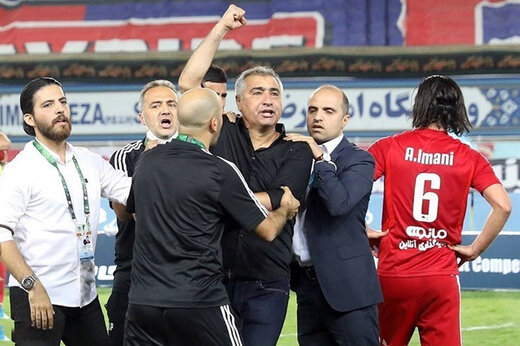
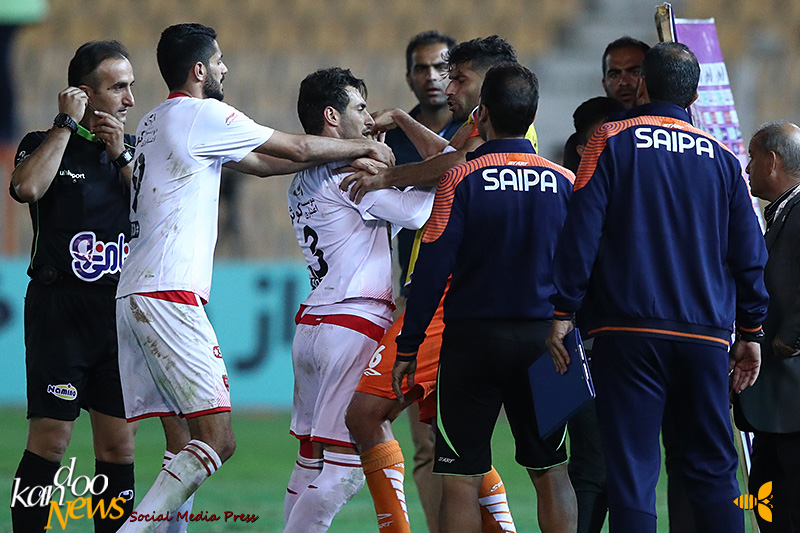
Saket Elhami, a controversial figure and one who has faced disciplinary action umpteen times, in the last few years and was frequently banned by ethics and disciplinary committees of FFIRI, once again caused controversy and made headlines. The new head coach of Havadar coaching his team in the Turkish camp had a physical fight with Hamid Motahari, his counterpart in Nasaji Mazandaran, to the amazement of the onlookers, tourists, and athletes present at the Green Park camp in Turkey.

The culture of violence and aggression among the Iranian coaches has replaced the culture of self-control, respect, and chivalry in Iran’s football. Instead of calming the players, some coaches entice them and display a bad example of behavior towards opponent coaches, referees, and even their own fans!  Needless to mention that such poor behavior creeps into Team Melli particularly if the team coach is lenient.

This is all occurring while there are no attempts by the organizations concerned to promote any cultural awareness in the Iranian League clubs. In the season when the clubs will witness the return of the fans into the stadiums, the teams create convulsions and have justified that ill behavior as seeking success by any means possible.

The physical altercation and fist fights were not limited to the Turkish training camps of Havadar and Nassiji clubs, either. Mes Kerman was forced to abandon its friendly match halfway through the game due to the violence and fights between its players and those of Gol Gohar Sirjan. The referee, Amir Arab Baraghi has to use his yellow and red cards many times while in charge of another match between Persepolis and Mes Kerman. And all these are friendly matches …!

It is not clear whether this toxic and volatile atmosphere created in the pre-season by the hands of football players and coaches will turn into a fear of football by fans. Even worst, if the fights on the pitch will creep into the stands with disastrous results.  Unless the intervention of ethics institutions to promote sportsmanship culture will reduce the severity of this amount of bad behavior.

The body which is really responsible, The FFIRI’s Ethics and the Disciplinary Committee needs to be sacked and replaced by competent and fast-acting personnel who do not fear Esteghlal and Perspolis influences and apply heavy sentences on the offenders.

Omid Team withdraws from the Islamic Solidarity Games!

The team that Mehdi Mahdavikia is managing in hope of qualifying for the Paris Olympic Games 2024, has announced its withdrawal from the Islamic Solidarity Games that are supposed to be held in Turkey.

These games, were part of a long-term project to qualify the young Iranian team for the Olympic Games in Paris.

After some disappointing showings including the elimination from the AFC U23 Cup in the group rounds, the latest results have indicated that this team is far from challenging for any kind of title and has a long way to go to be taken seriously. According to Mahdavikia himself, If these are the conditions that we have to work under, we will be lucky to make Mehrabad airport let alone Paris!
The difficulties that Mhadavikia, who has lost his foreign assistants and advisors, is referring to include but are not limited to the reluctance of the League clubs to release their players, many of whom are fixed, senior team players.

Omid Team foreign coaches left Iran after non-payment of their wages by the FFIRI or the Iranian Olympic Committee IOC, something which is quite normal in Iran. The breach of contracts between teams and coaches is affecting all levels of football in the country.

In the latest friendly match, the Omid team under Mahadavikia lost to Persepolis 4-2 with the reds playing some of the players that Mahdavikia picked for the U23 team. Kia claimed that he had only 14 to 16 players available to him and that number is quite insufficient for a team that is preparing for a major championship.

It has been quite a rough road for Mehdi Mahdavikia who reluctantly agreed to coach the Omid Team, while many others turned down this offer. The U23 or Omid Team has been a serious failing experience for the aspiring and even experienced Iranian coaches. All of them failed to achieve anything of worth for the team Melli of the future. Many of these coaches’ reputations were damaged beyond repair after experiencing failures with Omid, Mahdavikia is in danger of being added to that list too.

The FFIRI has not formally announced the withdrawal from the Solidarity games yet.

“Respect for values must be maintained by Team Melli players” says Yeke

In an interview with Mehr sports reporter, Morteza Yeke commenting on the current conditions of Team Melli these days, said: “Our football is going through difficult times. Every day we hear some sad news. I hope the management of the federation can fix this situation. ” The former Team Melli player continued: “The head coach of the national team should not allow players to dominate, he should have strong character and man management abilities in order to be successful in the World Cup.”

Criticizing the performance of the technical committee of the FFIRI, he said: “the so-called technical committee’s duties are clear and well defined. They should offer the best support for Team Melli, but unfortunately, we didn’t see any worthwhile action from the technical committee except for the sacking of Dragan Skočić, without offering the public any particular reason.”

Morteza Yeke expressed his regrets on the differences between the players of the national team: “Unfortunately, this has been happening in our football for several years. The player must know his limits. Understand why he is on the team and in what capacity. The jersey of the national team is sacred and should be worn by those who strive to serve the nation and work hard for the success of the national team, not to serve their self-interests.”  The Former Iranian football player also noted: “Now is not the time for differences. The opportunity is easily missed and with each passing day, we are getting closer to the World Cup. Therefore, the players should only focus on training hard to the start of the World Cup, any head coach should not allow the players to interfere in his work or comment on issues that do not concern them.”

“This trend is quite disturbing with Iranian players nowadays. Players who frequently protest at referees and get away with it, now dare to interfere with their coaches too”

What should happen now in Team Melli.

Mirshad Majedi and the rest of the board members of the federation, after a long and winding meeting , decided on the status quo and that the incumbent head coach of Team Melli shall remain in charge up to the FIFA World Cup 2022 and beyond.

That was the best decision possible under the circumstances and taken for the sake of Team Melli with crucial days left up to the world cup. Majedi did not succumb to pressure exerted mainly by the Minister of Sport and some other elements who were influenced by a group of Team Melli players.

To be clear, the categorical refusal of Ali Daei to take over from Skocic despite several attempts or pleas, was the catalyst in Skocic’s survival. There were no alternative viable options and the conditions of Team Melli would have been disastrous if Skocic was sacked.

Despite reaching the wisest decisions possible by the FFIRI leadership, the problem with Team Melli is far from over. There must be action by the FFIRI to eliminate the rebels in the squad else these disruptive elements will make the Croat job impossible in Qatar. There is no doubt among many experts that some players will not be happy with this decision while some begrudgingly will tag along.

Hamid Estili’s position

The man that should support Team Melli’s coaching staff has taken a side and worked against Skocic. He was a member of the Technical Committee that decided that the Croat is not qualified as a coach of Team Melli.  Hamid Estili must accept his poor insight and should resign his post immediately to save face. Estili however, is a man of thousand faces and changes positions in a blink. He will try to weasel his way out of this situation, however, it is better for the federation to sack him from the job before he inflicts damage.

The rebel players.

Including the rebel players who are led by Mehdi Taremi in the squad for the World Cup is a serious risk. In addition to Taremi, there are players such as Karim Ansarifard, Ehsan Haj Safy, and Saeid Ezatollahi, with some mention of Alireza Jahanbaksh being in this rebellion group.

No doubt that Jahanbakhsh and Taremi are key players and getting rid of them could be a disadvantage to Team Melli. Their experience and abilities are undeniable, however, much depends on how Skocic will perceive these players and likewise the player’s comfort level with the coach, especially after some bad feelings made publicly by some of them.

It is a difficult formula and there must be a middle-of-the-road solution. Keeping all the rebel players is certainly a risk. From the track record,  Skocic does not score high in the discipline department. He is not like Daei or Queiroz both of who are no-nonsense coaches and have no time for indiscipline. So, controlling the rebels and their effect on the whole squad could be a difficult task for him. The leadership of the football federation must come to his support and coordinate with the coaching staff and in consultation with Karim Bagheri, who was an assistant coach until lately when Persepolis pulled him back,  should come up with the right decision.

One school of thought believes that some of the rebel players are dispensable and could be thrown out as an example to the rest, while the two most valuable of them should be kept under strict behavioral restrictions and maintained discipline. The reputation and name of Iran especially at such a level of competition are far greater than the interest of some players never mind what European league they are playing in.

If a player is selected to represent his country, he has no right to decide who the coach is and must give 100% to the team under whichever coach is appointed, period.