Steve Price
The Asian Football Confederation has reportedly banned Iran from hosting international matches based on safety fears over the current tensions in the region. Iranian club sides have responded by planning to withdraw from the AFC Asian Champions League. The clubs have said Iran is “safe”, while Iranian media and fans have claimed that politics, rather than security, is behind the AFC’s decision.
Iran are one of the top nations in the Asian Champions League and has some of the best-supported clubs in Asia. Iranian clubs had a poor campaign last year, but the year before that, Persepolis reached the final of the competition. They, along with Esteghlal, Sepahan and Shahr Khodro, will withdraw from the competition should the AFC’s fixture ban not be reversed.
Iranian sides played their matches against Saudi Arabian sides on neutral territory last season, so the move by the AFC isn’t completely unprecedented. But playing any games on neutral territory is damaging to the competition’s reputation. When over 40,000 people turn up in Tehran to watch Estaghlal or Persepolis, it’s a much better advert for the Asian Champions League than when a thousand fans turn up in Doha to watch Estaglal’s ‘home’ match against Al-Hilal.
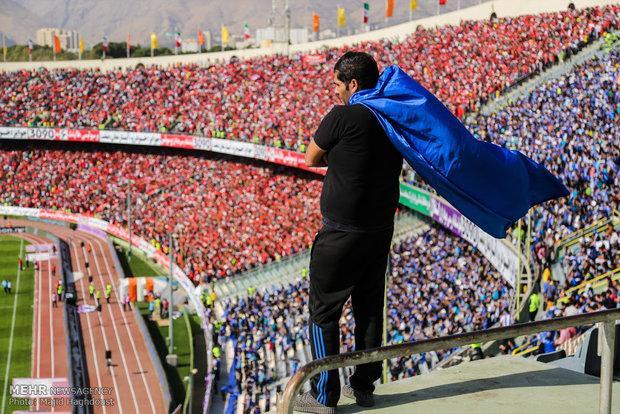
The absence of Iranian clubs in the competition would be similar to Italian clubs deciding to boycott the UEFA Champions League. Few other Asian countries can match Iran’s top clubs in terms of fans. The Asian Champions League is struggling to grow, with low attendance and regular scandals or other embarrassments, so having one of its most important members boycott the competition is the last thing the AFC needs.
But as well as damaging Asia’s main club competition, the current tensions could also damage the United Arab Emirates’ and Qatar’s attempts to bolster their sporting credentials.
The UAE and Qatar have benefited in the past from their relative stability compared to other countries in the region, often hosting ties that can’t be played at the home country’s stadium for security reasons. If Iran is banned from hosting international matches, then it is possible that Iran’s ‘home’ games would be played in the UAE or Qatar.
But it seems the current tensions in the Middle East have finally caught up with Dubai, Abu Dhabi and Doha, as other soccer teams are staying away.
The USA men’s soccer team canceled its camp in Doha earlier this month due to the “developing situation in the region”, holding it in Florida instead. And last week Manchester United scrapped plans for a training trip to the Middle East in February, while Arsenal have said they are assessing security measures before deciding whether to head to Dubai for warm weather training.

Qatar and the UAE have been popular destinations for these winter training camps in the past few seasons, with many of Europe’s top clubs heading there for the warm weather and high-quality facilities. Qatar’s FA says that “time and again, these teams return to AZF [Aspire Zone Foundation] to benefit from Qatar’s perfect outdoor training weather at this time of year.” This year, Bayern Munich, Ajax and PSV Eindhoven all used the Aspire facilities, apart from Ajax’s US international Sergino Dest who said he “didn’t feel comfortable” due to the tensions.
While showcase events like the Qatar 2022 World Cup or the Club World Cup might grab the headlines, these camps have been like a dripping tap, helping to slowly establish the two countries as reliable regional soccer hubs. With the teams come media, agents, sponsors and so forth, over time making the countries a good place for related businesses to set up offices, helping the local tourism sector, and boosting these countries’ soft power.
The Qatar 2022 World Cup and other showcase events are unlikely to be affected unless things really escalate in the region, but should the security situation in the region remain tense, top European clubs might decide to switch their future winter plans to Florida or to Spain and Portugal where many other clubs from around the world hold their winter training camps, putting a major dent in Qatar and the UAE’s aspirations to boost their global standing through sports.

 However, like many things after the 1979 revolution, with Iran's major change of political ideology, the two countries experienced less than a cozy relationship, football naturally suffered from this cold relation and the two countries cut off their football connection. Neither side showed any interest in playing friendlies against the other, no doubt politics playing a major role in the break of footballing relationship.


 The team finished the World Cup qualifiers unbeaten and Daei, 49, is expecting the form to be carried into the AFC Asian Cup UAE 2019, with Iran lifting the trophy.
The last of Iran’s three triumphs in the AFC Asian Cup was in 1976, meaning that it will be 43 years since Team Melli last won the title by the time the action in UAE 2019 kicks off next January.
“I am confident that Iran will win this time around. We have always been a force to be reckoned with in the AFC Asian Cup but the recent results give me confidence that we will win the title for the fourth time,” said Daei.
The AFC Asian Cup may have eluded Daei as a player but it is a tournament which is dear to his heart, as it paved the way for his big move to Germany in 1996.
In emerging top scorer in the 1996 AFC Asian Cup, also hosted by the UAE, Daei hit four of his tournament haul of eight goals in the 6-2 win over South Korea in the quarterfinals.
“There was a Korean player who was playing in Germany at that time and he convinced several coaches to scout for players during the 1996 AFC Asian Cup. The four goals I scored in that match played a pivotal role for me signing with Arminia Bielefeld.”
His stay in Germany also saw stints with Bayern Munich and Hertha BSC.
Plying his trade in Europe brought much success to one of Iran’s footballing sons and Daei is hoping that come the AFC Asian Cup 2019, not only will more of his compatriots secure moves to the big European leagues but Iran lift a long overdue title.
“I missed a penalty in the semifinal against Saudi Arabia and we lost, but I know that it can be different this time around,” he added.
The team finished the World Cup qualifiers unbeaten and Daei, 49, is expecting the form to be carried into the AFC Asian Cup UAE 2019, with Iran lifting the trophy.
The last of Iran’s three triumphs in the AFC Asian Cup was in 1976, meaning that it will be 43 years since Team Melli last won the title by the time the action in UAE 2019 kicks off next January.
“I am confident that Iran will win this time around. We have always been a force to be reckoned with in the AFC Asian Cup but the recent results give me confidence that we will win the title for the fourth time,” said Daei.
The AFC Asian Cup may have eluded Daei as a player but it is a tournament which is dear to his heart, as it paved the way for his big move to Germany in 1996.
In emerging top scorer in the 1996 AFC Asian Cup, also hosted by the UAE, Daei hit four of his tournament haul of eight goals in the 6-2 win over South Korea in the quarterfinals.
“There was a Korean player who was playing in Germany at that time and he convinced several coaches to scout for players during the 1996 AFC Asian Cup. The four goals I scored in that match played a pivotal role for me signing with Arminia Bielefeld.”
His stay in Germany also saw stints with Bayern Munich and Hertha BSC.
Plying his trade in Europe brought much success to one of Iran’s footballing sons and Daei is hoping that come the AFC Asian Cup 2019, not only will more of his compatriots secure moves to the big European leagues but Iran lift a long overdue title.
“I missed a penalty in the semifinal against Saudi Arabia and we lost, but I know that it can be different this time around,” he added.
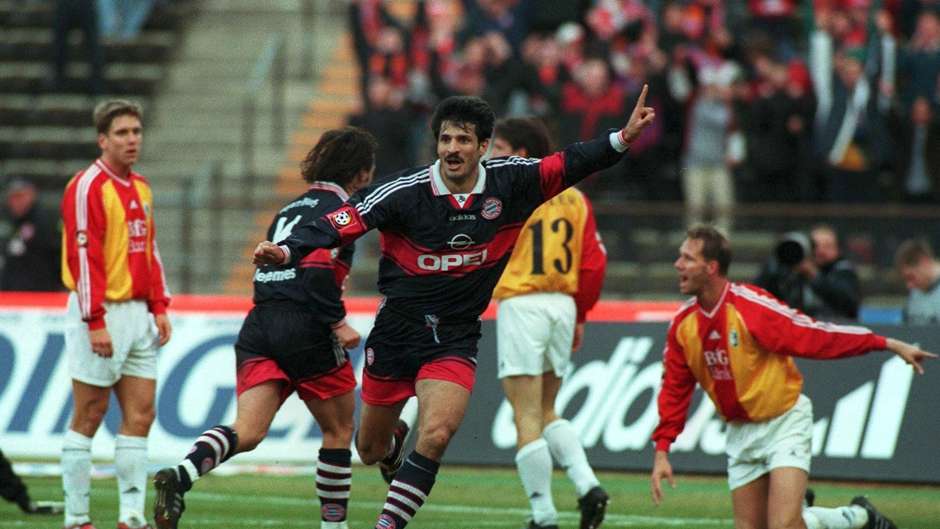 Daei holds the record for the most goals in international football with a total of 109 goals he scored in 149 games for Team Melli (from 1993-2006).


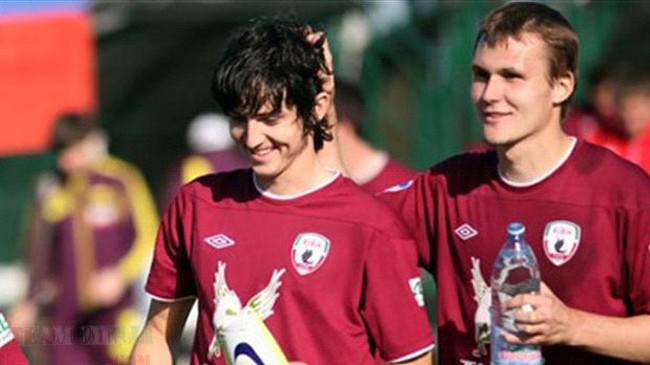
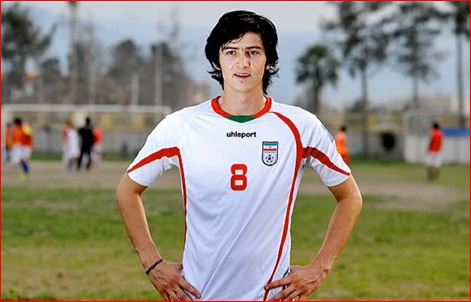

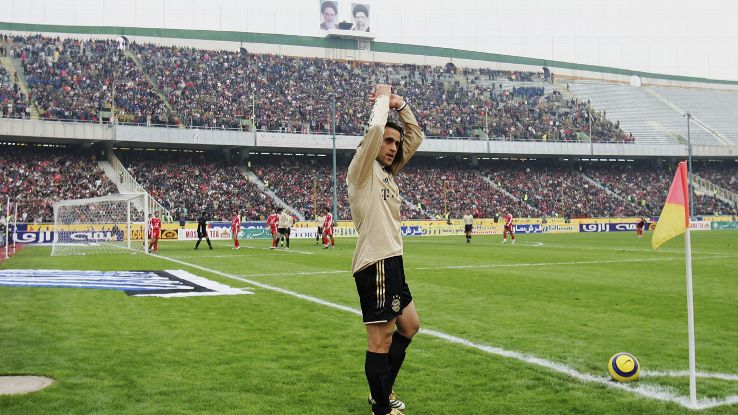
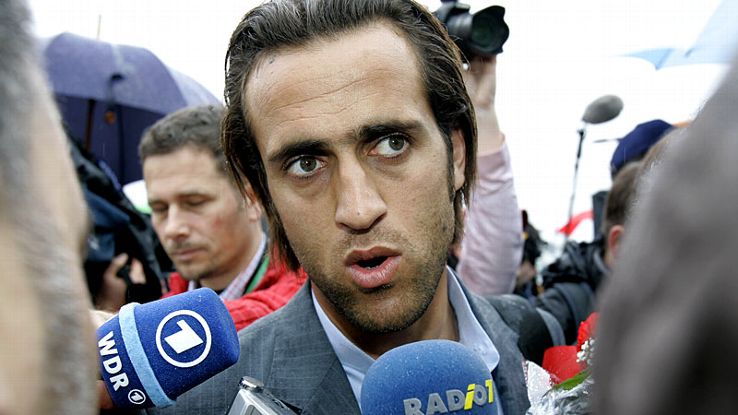
 AFC Player of the Year 2004, Ali Karimi, who recently announced the end of his compelling playing career, kicks-off the first of the-afc.com's 'Asian Icons' series as we build up to the AFC's 60th Anniversary celebrations in November by profiling the individuals and incidents that have impacted on the Asian game over the years.
The charismatic Karimi will undoubtedly go down as one of Iran's greatest footballers who, on his day, could dazzle Iranian and Asian football fans with his silky passing, unbelievable imagination and light feet as he orchestrated attacks for club and country.
Standing proudly alongside other Iranian football legends such as former team-mates Ali Daei, Mehdi Mahdavikia and Karim Bagheri, Karimi is third in the all time Team Melli scoring chart with 38 goals from 127 matches in an international career that was not without its tensions as major disagreements between strong personalities were not uncommon in Iranian football over the years.
Top scorer as Iran finished third at the 2004 AFC Asian Cup, Karimi has also helped Team Melli win the 1998 Asian Games gold, two WAFF Championships and a 2003 AFC/OFC Challenge Cup title in which he scored twice in a 3-0 win over New Zealand and was named MVP.
The Karaj-born attacking midfielder was even more successful at club level and after winning two league titles with Persepolis and two UAE Cups with Al Ahli, Karimi followed in the footsteps of compatriots Bagheri, Daei, and Mahdavikia and made the move to the German Bundesliga.
Karimi, nicknamed 'the Asian Maradona' by fans in Iran, won the 2005/06 league and cup double with Bayern Munich before winning his second DFB Cup winner's medal with Schalke 04 following a brief spell back in Germany in 2011 following a stint in Qatar with Qatar Sports Club and Al Siliya and two seasons back in Iran with Steel Azin.
AFC Player of the Year 2004, Ali Karimi, who recently announced the end of his compelling playing career, kicks-off the first of the-afc.com's 'Asian Icons' series as we build up to the AFC's 60th Anniversary celebrations in November by profiling the individuals and incidents that have impacted on the Asian game over the years.
The charismatic Karimi will undoubtedly go down as one of Iran's greatest footballers who, on his day, could dazzle Iranian and Asian football fans with his silky passing, unbelievable imagination and light feet as he orchestrated attacks for club and country.
Standing proudly alongside other Iranian football legends such as former team-mates Ali Daei, Mehdi Mahdavikia and Karim Bagheri, Karimi is third in the all time Team Melli scoring chart with 38 goals from 127 matches in an international career that was not without its tensions as major disagreements between strong personalities were not uncommon in Iranian football over the years.
Top scorer as Iran finished third at the 2004 AFC Asian Cup, Karimi has also helped Team Melli win the 1998 Asian Games gold, two WAFF Championships and a 2003 AFC/OFC Challenge Cup title in which he scored twice in a 3-0 win over New Zealand and was named MVP.
The Karaj-born attacking midfielder was even more successful at club level and after winning two league titles with Persepolis and two UAE Cups with Al Ahli, Karimi followed in the footsteps of compatriots Bagheri, Daei, and Mahdavikia and made the move to the German Bundesliga.
Karimi, nicknamed 'the Asian Maradona' by fans in Iran, won the 2005/06 league and cup double with Bayern Munich before winning his second DFB Cup winner's medal with Schalke 04 following a brief spell back in Germany in 2011 following a stint in Qatar with Qatar Sports Club and Al Siliya and two seasons back in Iran with Steel Azin.