

Tag: Graham Arnold

Iran and Iraq's friendly ends in a draw; Team Melli lifts the title.

Iran and Iraq played out a 1-1 draw at the Basra International Stadium in a match full of early drama, tactical experimentation, and missed opportunities. Iraq struck first with the fastest goal ever conceded by Iran, as Hussain Ali found the net after just 28 seconds. Iran's equalizer came late in the match, when Amin Hezbavi rose to head home a corner.

Team Melli lined up with a different starting XI from their previous match, as head coach Amir Ghalenoei continued his rotation policy, testing all his players. Australia's Graham Arnold—now in charge of Iraq—was on a similar mission, though he fielded the strongest side available to him, including Aymen Hussain, who was making his second appearance of the century.

The match was frequently interrupted by substitutions, but that did little to diminish the excitement or the crowd's enjoyment.
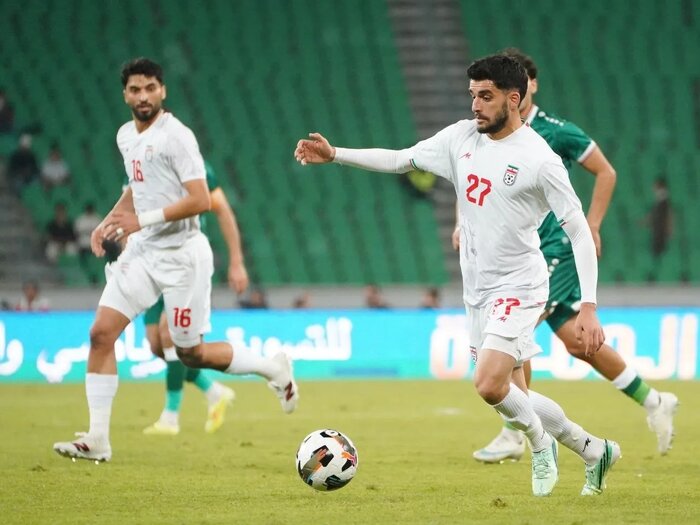
Iran were the dominant side in both halves; however, as has become customary in recent matches, their profligacy in front of goal proved costly. Dennis Dargahi squandered a one-on-one with the goalkeeper, hitting the bottom of the post, and later missed the target from a similar situation.

Iraq, however, were not giving up so easily, and their counter-attacks created plenty of problems—especially on Saleh Hardani's side. Yahya, one of Iraq's best players, beat Hardani every time a counter-attack developed. Hardani's ventures forward and lack of pace to recover nearly resulted in a penalty, as he fouled Yahya just outside the box.

Once again, Ghalenoei opted for long balls and crosses—a tactic that does not seem to suit the abilities of the players up front. There were no attempts to change the approach or introduce other attacking options.

The overall impression was positive in the sense that the players need experience and must learn to recognize their teammates' abilities and skill sets. The early goal does not in any way tarnish the solid and commanding defensive line, which has been totally rejuvenated—except for Ali Nemati. The Lusail player was the most senior defender on the pitch and played a commanding role in breaking Iraqi attempts, while also being one of the best Team Melli players of the match.

Iran won the tournament title with four points: a win and a draw.

The team's initial lineup (Starters)
Iraq lineup: Kumail Saadi, Adam Talib, Akam Hashim, Ahmed Yahya, Ibrahim Bayesh, Amir Al-Ammari, Amar Sher, Marco Faraj, Hussein Ali Jasim, Hiran Ahmed, and Aymen Hussein.
Head coach: Graham Arnold.

Iran lineup: Payam Niazmand, Saleh Hardani, Saman Fallah, Ali Nemati, Hossein Goudarzi, Saeid Ezatolahi, Mohammad Ghorbani, Aria Yousefi, Amirhossein Hosseinzadeh, Mohammad Mohebi, and Dennis Dargahi.
Head Coach: Amir Ghalenoei

Mirror Images in Basra: Iran and Iraq Under Similar Clouds

Iran vs Iraq in Basra: A Four-Nation Tournament Decider Between Two Kindred Spirits

Iran and Iraq meet face to face in Basra as part of the Barah International tournament. This is the second match for both teams—and the fixture that will determine the winner of the four-nation competition. Iran has three points from a win against Palestine on Saturday, while Iraq has a goalless draw against Lebanon.

Parallel Struggles

Both teams are experiencing strikingly similar difficulties and challenges. Iraq, like Iran, has issues with its coach, its players, and its federation management. Graham Arnold, the Australian head coach who has built a brilliant track record in Asian football, has come under heavy criticism in the Iraqi media—a press corps with no mercy for coaches and an unrelenting focus on results. At the slightest setback, the coach finds himself under fire.

The Iraqi Football Federation, headed by the legendary Younis Mahmood, has been another target for the media and fans alike. Some of the chief's statements have irritated the media, which has called for his ouster—and for the head coach to depart alongside him. The Iraqi team is also undergoing major changes, with Arnold attempting to harness the energy of youth rather than depending on senior players, some of whom have reached the point of being unable to deliver on the field.

A Familiar Picture

All of this feels quite familiar to Iranian football: a head coach in Ghalenoei who is far from convincing, a federation that lacks professionalism and organisation, and a new-look team that remains a work in progress. It promises to be an intriguing match in Basra, as both teams share a similar style of game plan—with Iran's major focus being play from the flanks.

The Lessons of the Palestine Match

The positive takeaway from the Palestine game was the creativity of the midfield and the effectiveness of the left flank. Two players made the difference in the result: Javad Hosseinnejad and Hossein Goudarzi at left-back. The negative aspect was the poor finishing of the likes of Mohebi, Hosseinzadeh, and company. In the second half, it took the skill and sharpness of Azmoun to open the scoring and break the deadlock, with Hardani following in a similar style.

The Tactical Question

Ghalenoei needs to think seriously about his options in this match. Arnold has surely studied Iran, and his flanks will not be as accommodating as Palestine's. Ghalenoei must introduce another option—something he has struggled to produce in the many matches that have demanded thinking outside the box. Against a well-drilled Iraqi side, the one-dimensional cross-heavy approach that sufficed against a depleted Palestine will not suffice; the coach's ability to vary his attacking plan and conjure a genuine Plan B is likely to be the decisive factor in Basra.