Asian team needs to stamp itself on the world stage

By John Duerden

The Korea Times

 A European team has never won the World Cup when in South America. An Asian team has never actually won a game on the soccer-crazy continent ― although 1978 was the last time the tournament was held there.

Both trends could be broken over the next few weeks.

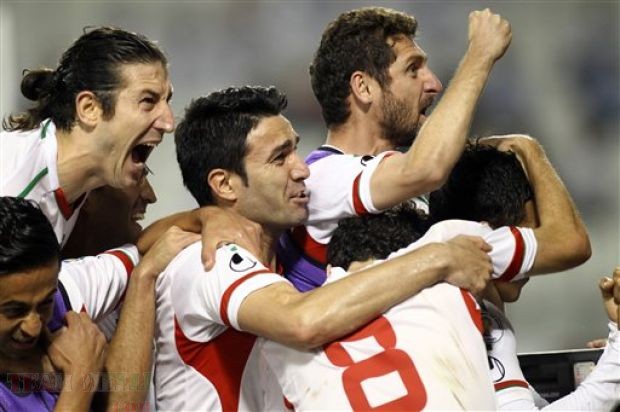
South Korea is joined by fellow Asian Football Confederation (AFC) members Japan, Iran and Australia in Brazil, four teams that carry the hopes of more than half of the world’s population. For Asia’s reputation as well as its hopes of being allocated more World Cup spots in the future, the continent needs to make a good showing ― two teams, preferably more, need to survive the group stage and reach the round of 16.

Japan looks the best bet. The Samurai Blue is Asian champion and is full of players active in Europe’s big leagues. Keisuke Honda of AC Milan and Manchester United’s Shinji Kagawa may not have had the best domestic seasons, but they are at least fresh ahead of games against Cote d’Ivoire, Greece and Colombia.

Lining up alongside the famous duo is an unsung player who may be ready for international stardom. Shinji Okazaki scored 15 goals for FSV Mainz 05 in the just completed German season.

 Coached by respected Italian tactician Alberto Zaccheroni, Japan’s attack has been scoring plenty of late. In June, it scored a 3-1 win over Costa Rica, and then beat Zambia 4-3. However, as the scores suggest, Japan is not quite as strong at the back, but should have the talent to get at least into the second round.

“Because Japan is little known in world football, we want to play good football and make a huge impact so the world will recognize the presence of the Japan football team,” Kagawa said this week.

Japan’s prospects look much better than Australia’s. Under new coach Ange Postecolou, the Socceroos are in transition from a team of experienced veterans from the 2006 and 2010 campaigns.

The new-look team has one of the toughest groups imaginable.

Having to face champion Spain is tough enough, but then there is the small matter of 2010 runner-up the Netherlands, another star-studded opponent featuring the likes of Manchester United hitman Robin Van Persie and the supremely talented Arjen Robben of Bayern Munich. Australia’s opening game is against Chile, a dark horse, but playing on its own continent and with Alexis Sanchez of Barcelona in its ranks.

In some ways, being in such a tough group has taken the pressure off Australia. Nobody expects the team to progress to the second round, making it easier for the coach to regenerate the roster. And any points picked up will be greeted with delight down under. It is almost a no-lose situation.

Then there is Iran. The Persians finished above South Korea in qualification but have been pretty quiet since, struggling to arrange preparation games because it is not always easy to lure teams to Tehran


Former Real Madrid and Portugal coach Carlos Queiroz will need all his considerable tactical ability to get the team out of a group containing Argentina, Nigeria and Bosnia. It is a tough group, but it could have been worse. Iran’s best hope may lie in being underestimated.

In some ways, Korea’s preparation has been worse. The team has had a good deal more games than Iran, but losing four out of the last five ― the latest last week’s 4-0 thrashing by Ghana ― has everyone talking of impending doom against Russia, Algeria and Belgium.


Perhaps some solace can be taken from Japan. Four years ago, the Samurai Blue lost four out of its final five warm-up games, with leading coach Takeshi Okada offer his resignation.

Yet, this all changed at the World Cup, with Japan within a penalty shootout for a place in the final eight.

With the possible exception of Japan, Korea and the rest of Asia would settle for that.

John Duerden is writing for  about Korea’s campaign at the World Cup in Brazil. ― ED.

The World Cup is here and Team Melli is set to go

After all the clamors, the excitement, the thrills and the expectation where the world media was virtually littered with stories about the World Cup. The day of the reckoning is here and now.

Stories from the downright silly and ridiculous like the one about the turtle that predicts the World Cup winner ( it can’t get more sillier than that , can it ?) to the more serious side of the World Cup where a plethora of football experts have made life easy for you by predicting the winning teams, before a ball has even been kicked! Mixed with real life stories of calamities, unfinished work on Stadia , violence, robberies, industrial disputes and incredible traffic jams in major cities of the host nation.

This should have been a red card.

In the opener the 20th FIFA World Cup 2014, Brazil defeated Croatia 3-1 after the East Europeans stunned the host with a goal. In fact it was a friendly own goal by the recent European Cup winner defender of Real Madrid,  Marcelo. However , young  Neymar stole the show as Brazil came from behind to score two goals, one a of which was a controversial penalty. The Croats are still devastated and feel grieved because Neymar should have been sent off for elbowing Modric in the first half.

A controversial start, no doubt we have not seen the end of those.

Own goal by Marcello

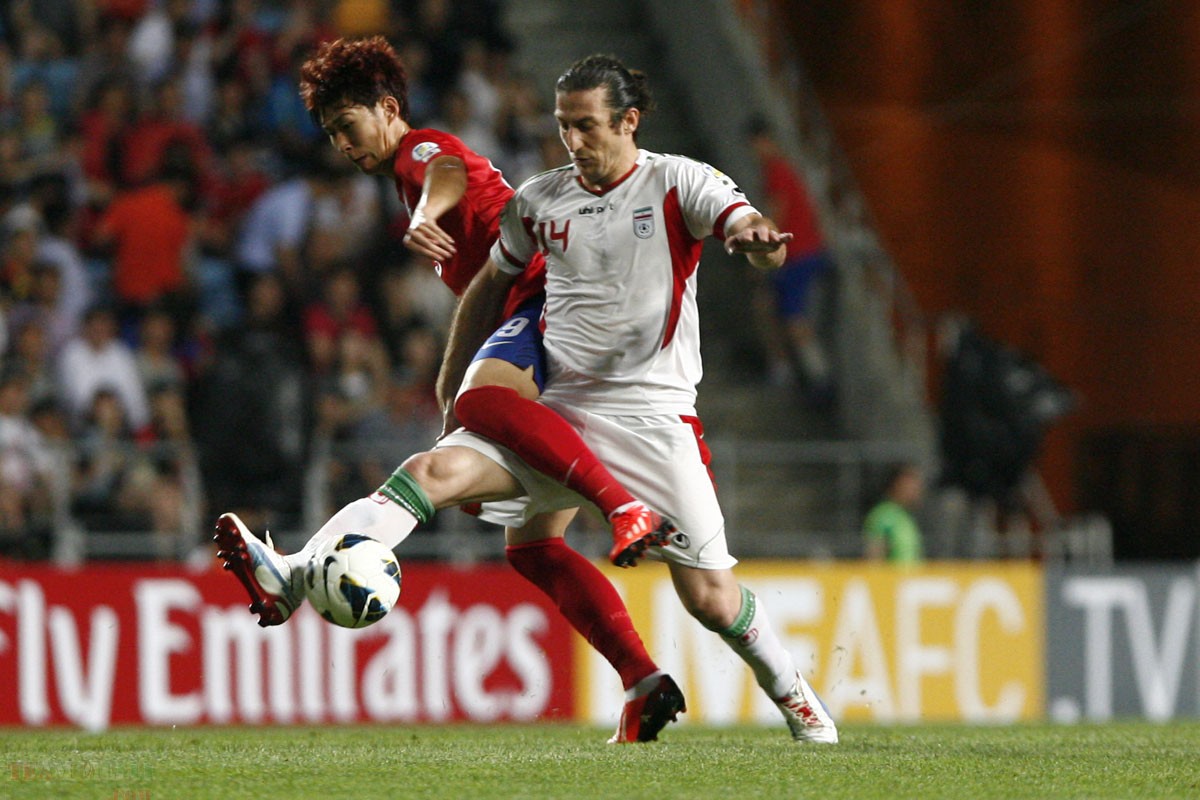
Team Melli will be there amongst the elite. We will be hearing and seeing Hajsafy mingle with Di Maria,  about Dejagah tackling Messi , while Hosseini will be stopping Aguero from scoring and Ghoochannehad passing Zabaleta on his way. Names that increases the adrenaline on hearing them , oppositions at the highest level of football,  a far cry from hearing the names of Guinea or Thailand or  Belarus or Angola that Team Melli has been sparring with in their way to the Word Cup. This is the real thing, people.  The match in 4 days against Nigeria will be the decider, according to Queiroz. No time for losers.

Ashkan Dejagah

From the pulse of the Team Melli fans, we see that the majority will not be satisfied with anything less than qualification to the next round. While that is genuinely a legitimate wish and within the full right of the aspiring fans, it is perhaps a bit of unrealistic expectation considering the less-than-optimum preparations and acute lack of high level friendly games by Team Melli.    

All this is water under the bridge now. The reality is that Team Melli will be facing Nigeria and it is well within the capability of the boys to beat them. Then they have to face one of the title contenders in Argentina. A totally different proposition, a quality at the highest level and in Messi , they have the greatest football player on earth. HosseinKazerani , the solid defender of Pas and a member of Team Melli 1978 World Cup team, speaking recently on a TV show about memories of 1978 World Cup,  countered  the fear of some his teammate playing against the might of Holland with  household name players, Kazerani said in a simple term “Their players have one head two legs and two hands, same as we do, what are you frighten of ?”. Simplistic logic it might be, but no denying that it is very much a true statement. It is about who dares win and who is hungrier for glory. About the stronger mentality and better motivation.

Let us hope Team Melli plays with the passion and pride that they are famous for. Let us hope that the skills of the players yields the optimum result and finally , let us hope that Team Melli impresses the fans across the globe with a display of valor , sportsmanship and skills worthy of the name of Iran.

Brazil World Cup 2014: Clashes at Sao Paulo protest

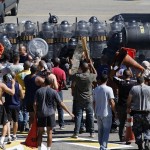
Riot police using tear gas and rubber truncheons to disperse about 50 protesters near a metro station on the route to the Arena Corinthians

Police in the Brazilian city of Sao Paulo have used tear gas to break up a protest against the football World Cup, hours before the opening match.

At least one person was arrested and five others were injured, three of them journalists. Protesters had tried to block a road leading to the stadium where the opening ceremony will take place.

Further protests are planned in other Brazilian cities over the expense of hosting the tournament.

In another development, striking airport workers in Rio de Janeiro blocked a road outside the airport, demanding a wage increase and a World Cup bonus.

The strike was to have lasted for 24 hours but union leaders called it off early for legal reasons.

Striking teachers also staged a rally in Rio city centre, further disrupting traffic.

Chanting

BBC correspondents in Sao Paulo said police charged with batons and riot shields, firing rubber bullets over heads of scores of protesters near a metro station on the route to the Arena Corinthians.

CNN journalist injured in clashes. 12 June 2014
A CNN producer was one of three journalists injured in the clashes

Police moved in after the demonstrators refused to clear the road.

The demonstrators had been chanting “there won’t be a Cup”.

A tweet from CNN presenter Alex Thomas said Sao Paulo producer Barbara Arvanitidis was among those injured, suffering a suspected broken arm.

The violence happened about 13km (8 miles) from the stadium where Brazil will play Croatia at 20:00 GMT.

Last year, more than a million people joined protests across the country to demand better public services and highlight corruption and the high cost of staging the World Cup.

Since then, other smaller anti-World Cup protests have been staged in Brazil, with some descending into violence.

Queiroz outlines the team facing Nigeria among unprecedented presence of Iranian journalists.

Entourage of about 40 professionals from the local press arrive in São Paulo to cover the World Cup. Technical, finally, displays likely team

For Rodrigo Faber Sao Paulo

Globoesporte.globo.com

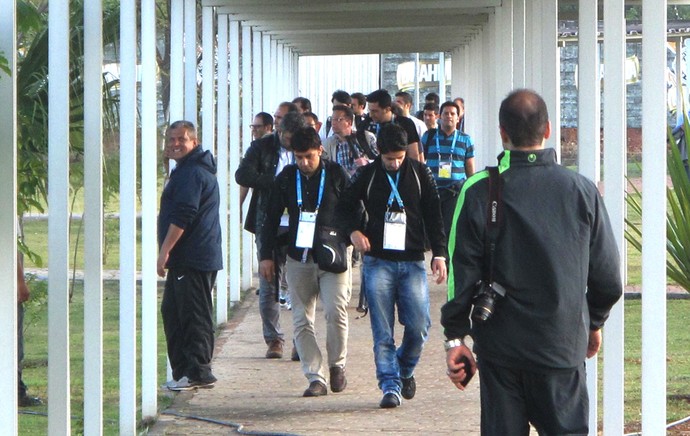
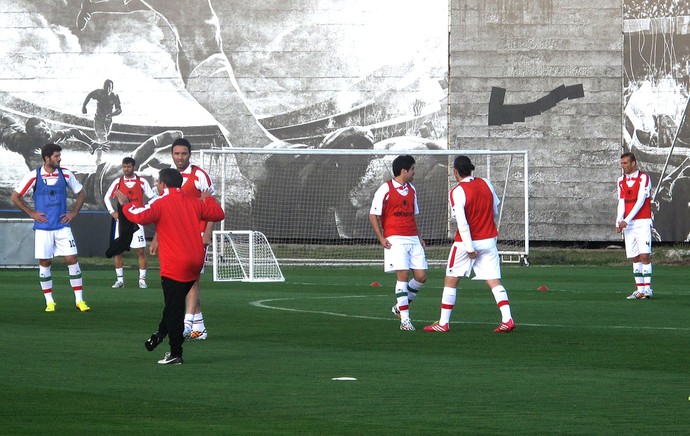
 over The Corinthians Training Center which has been a place with a remarkably low presence of journalist from Iran to cover their country’s team progress, suddenly experienced a large number of them turning up for training this Wednesday. During this afternoon’s activity led by coach Carlos Queiroz, an entourage of about 40 professionals Iranian press men arrived to begin the coverage of  the Asian national team during the World Cup. Coincidentally, it was the first time the coach outlined a starting lineup for the opening game against Nigeria, 16th in Curitiba.
  
Training journalists in Iran (Photo: Rodrigo Faber)
Iranian journalists were out in force in the training of the Asian team in São Paulo (Photo: Rodrigo Faber)

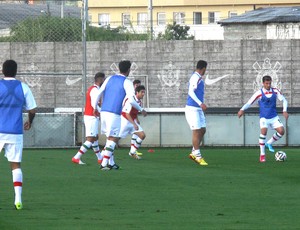
Queiroz positioned players in reduced space and then closed the training session – as is usual with coaches – trying to hide secrets from the preying eyes of the press..The goalkeeper remains the main mystery, since the three (Rahman Ahmadi, Alireza Haghighi and Daniel Davari) were tested in recent friendly matches. In the 2-0 victory over Trinidad and Tobago on Sunday, Haghighi remained the keeper during the whole game.   

players in training in Iran (Photo: Rodrigo Faber)
Iran won the starting lineup on Wednesday outline (Photo: Rodrigo Faber)

As the three goalkeepers worked separately, the Portuguese coach attended to the rest of the team in a 4-4-2 formation with: Montazeri, Amirhossein Sadeghi, Jalal Hosseini and Pooladi; Nekounam, Timotian, Haji Safi and Dejagah; Heydari and Goochannejad. The team still train twice in the CT Corinthians before the trip to Curitiba, scheduled for the afternoon of Saturday. The last practice session before the match will be conducted at the Arena da Baixada, the venue of the game.   

From the outside, the Iranian journalists were quite animated in their first contact with the team. Aided by the local federation, all traveled together to São Paulo, where they landed in the early hours of Wednesday. They monitor all matches of Iran on the spot. Apart from Nigeria, the Asian team faces Argentina on 21 June in Belo Horizonte, and Bosnia, the 25th, in Salvador.   

The Iranian press has a close relationship with the squad. Some players, when sighting known journalists in the CT Corinthians, greeted them from afar. The best bets of local professionals for the World Cup are three players who play in Europe: Ashkan Dejagah, Fulham (England), Reza Ghoochannejad, Charlton (England) and Alireza Jahanbakhsh, NEC (Netherlands) – 

players in training in Iran (Photo: Rodrigo Faber)
Training of Iran was closely followed by coach Carlos Queiroz (Photo: Rodrigo Faber)

Susic: We won’t sacrifice a player to man-mark Messi

No Miralem Pjanic, no Edin Dzeko, no problem for Bosnia and Herzegovina. Even without the mercurial Roma midfielder and the €32m Manchester City striker, Safet Susic’s side comfortably saw off Brazilian club Santos U-21s 5-1 in an unofficial friendly on Monday – their last before the 2014 FIFA World Cup Brazil™. It was the Bosnians’ fourth successive victory and will send them into Group F high on confidence.

Following the game, FIFA.com caught up with Susic to discuss the performance at the Vila Belmiro, the fitness of Pjanic and Dzeko, and his plans to combat Lionel Messi in Bosnia and Herzegovina’s opener against Argentina.

Safet, were you pleased with your team’s performance in the victory over Santos U-21s?
Safet Susic: 
I think it wasn’t bad at all. It was a good match, with many opportunities for both sides, many goals, many beautiful pieces of play. I think we should be satisfied.

Have the recent results boosted Bosnia and Herzegovina’s confidence? 
Definitely, definitely. The self-confidence we had lost after the two defeats has come back. The boys are now, evidently, in a very good mood. During the matches they even tried out some things that they had previously practised with fear. It is evident that they played in a relaxed way, that the [recent] results have helped to regain self-confidence, to bring the morale to a high level.

It is a dilemma for me, but to sacrifice a player just to man-mark Messi, I don’t think it would be good for us.

Bosnia and Herzegovina coach Safet Susic

What is the state of Pjanic’s and Dzeko’s fitness? 
Nobody is seriously injured. The four players I spared was to not take any risks. Dzeko is not even injured, he is just a bit tired. The other three players, they have minor injuries. If the match against Argentina was tomorrow, everybody would be ready.

Do you plan to man-mark Lionel Messi? 
It is a dilemma for me, but to sacrifice a player just to man-mark Messi, I don’t think it would be good for us. We have a player who would be ideal for man-marking Messi – this player is [Muhamed] Besic – but this guy is so well prepared physically that it wouldn’t be good for us to make him track Messi. Messi sometimes stands for several minutes, not participating in the match. It would therefore be a shame to sacrifice a player [to mark him]. Messi will probably enjoy plenty of freedom, but each time he gets the ball, somebody needs to be near him. But I don’t think we have ever played a match having dedicated a player to man-mark a specific opponent, and it’s going to be the same [against Argentina].

Mullahs in the Midfield

How sanctions and politics scuttled Iran’s World Cup ambitions. – John Duerden

Ghoochannejad-vs-Qatar-WCQ14-Doha

[row]
[column size=”1/2″] Last June, Iran and South Korea qualified for the 2014 World Cup within seconds of each other. Yet just a month out from the tournament, Korea had played 14 warm-up games while Iran had only managed to arrange one, a March defeat to Guinea — hardly a major soccer power. The light schedule is not the product of choice. Rather, U.S.-led sanctions aimed at curtailing Iran’s nuclear ambitions have taken their toll on the country’s football program — which is why the footy faithful are watching Iran’s negotiations with the group of world powers known as the P5+1 with almost as much interest as the start of the big tournament itself.

If Iran and the West can hash out a comprehensive nuclear agreement in the coming months, it will be great news for football fans, even if it’s too late to boost the Iranian squad’s prospects in this World Cup. “None of the promises turned into realities,” said Javad Nekounam, Iran’s captain, in May. “If we did not have good preparation games until the games start, there shouldn’t be any expectations. Whatever happens, the authorities must be held responsible for the results.”

Isolation from the international community has cost the Islamic Republic when it comes to the sport it cares about most. Forget wrestling — it’s soccer that the majority of Iran’s 80 million citizens really get excited about. On Monday, June 16, the country’s national squad will kick off its fourth World Cup, aiming to reach the second round for the first time. To do so, it must finish second in a group containing Argentina, Bosnia, and Nigeria — tough, but not impossible.

The road has been tougher than it needed to be. The Iranian Football Federation (IFF), the body that oversees all football activity in the country, has struggled to collect funds owed to it by international organizations due to a ban on financial transactions that were part of a tightened sanctions imposed by the EU and the United States in February 2012, which included expelling Iranian financial institutions from SWIFT, a global international banking system.

In July 2012, IFF head Ali Kafashian complained about being unable to receive over $1 million from the Asian Football Confederation (AFC), claiming that “there is no basis whatsoever for the American Government to block our money.” Said Kafashian: “We are a NGO and have nothing to do with politics. We have approached the AFC and several other organizations to persuade the Americans to release our money, which we are desperate to have, to no avail.”

Despite the reigning climate of austerity, the Iranians did approve one significant expense: the hiring of well-known Portuguese manager Carlos Queiroz in 2011. An experienced coach with stints in charge of Spanish powerhouse Real Madrid and as an assistant manager of Manchester United, Quieroz took charge of his own national team, Portugal, for the 2010 World Cup. Since arriving in Iran, however, he has been repeatedly frustrated by the lack of resources at his disposal, saying in May: “Those who think Iran’s national team will be successful with only 14 days of preparation, are either crazy or are living in Disneyland.”

For financial reasons, he was forced to cancel a planned training camp in Portugal in August 2013, that was to include a vital test against Ghana, one of Africa’s best teams. The IFF claimed it could not afford the trip. Perhaps spurred by the (minimum) $8 million that FIFA hands out in prize money to each of the 32 World Cup teams, there was a spurt of activity this May with a training camp in Austria and friendly games arranged in quick succession against low-ranked teams Belarus, Montenegro, Angola, and Trinidad and Tobago. Though money appears still tight: Iran’s stars reportedly will not be able to swap shirts at the end of each World Cup game — as they will be given only a limited number of kits.

If it sounds like football is a little too close to politics in Iran, that’s because it is.

If it sounds like football is a little too close to politics in Iran, that’s because it is. Popular passion for the game is such that no leader can afford to ignore it. One of the first international figures that President Hassan Rouhani met after taking office last August was Sepp Blatter, the controversial chief of the International Federation of Association Football (FIFA), football’s international governing body, who backed Iran’s bid to host the 2019 Asian Cup. If Rouhani hadn’t immediately grasped the power of the game, it was made abundantly clear soon enough. Just one week after his historic election inspired thousands to take to the streets, crowds of roughly equal size turned out to celebrate Iran’s qualification for the 2014 World Cup. By scoring political points in his meeting with Blatter, however, the new Iranian president was just following the example set by his predecessor. According to a diplomatic cable published by Wikileaks, Mahmoud Ahmadinejad “has staked a great deal of political capital in Iranian soccer … in an effort to capitalize on soccer’s popularity with constituents.”

Ahmadinejad’s glamour shots of himself playing soccer may not rival those of Vladimir Putin hunting and fishing on the manly-man scale, but they do portray a leader who knew how to play the game. The former president visited national team practices on a regular basis, handing out advice to the stars. In 2009, he lent his personal jet to the team so that it could return home from North Korea as quickly as possible and prepare for another vital game. Ahmadinejad even reportedly got involved with the hiring and firing of coaches and the selection of certain players. Political meddling is all well and good when the team wins, but patience starts to wear thin when the losses are piling up. Indeed, after Saudi Arabia scored the decisive goal in a fiery March 2009 match in Tehran shortly after Ahmadinejad entered the stadium, the Iranian leader became known as a jinx.

That was nothing compared to what happened in June of that year. With millions of angry demonstrators on the streets protesting what they saw as Ahmadinejad’s fraudulent re-election victory over popular challenger Mir Hossein Mousavi, the national team flew to South Korea for a vital qualifying game for the 2010 World Cup.Iran victory June 2013[/column]  [column size=”1/2″]

As the starting 11 took the field in front of 66,000 fans at Seoul World Cup Stadium, six members of the Iranian team, including Karimi, were sporting green wristbands — the color of Mousavi’s movement and of the Green Revolution that was then underway. Despite the official explanation that the wristbands had a religious and not political meaning, the gesture was seen by millions back home as support for the opposition. The players emerged for the second half free of wristbands.

In the end, Iran just missed out on qualification; there was no triumphant homecoming, though that may have presented its own set of difficulties for the regime. In November 1997, after the team won a ticket to the 1998 World Cup with a dramatic playoff victory in Australia, it was instructed to delay its return by three days because the regime was concerned about the number of people, especially women, celebrating on the streets of Tehran. When the heroes eventually landed in the massive Azadi Stadium via helicopter (a motorcade was too risky), women forced their way in to pay homage to their heroes — a team that would eventually defeat the United States 2-1 the following summer in a game that remains Iran’s only World Cup win.

Despite their daring appearance at the 1998 celebration, women remain persona non grata at Iranian soccer stadiums, the official reason being that their presence may provoke the males to misbehave. (A fine movie called Offside tells the story of a soccer-crazed Iranian girl who disguises herself as a man in order to gain entrance.) Ahmadinejad did lift the ban in 2006 to allow women a special section, but this move was swiftly reversed by the supreme leader, Ayatollah Ali Khamenei.

But Iranian politicians have done more than just try to score points with the public by associating themselves with the game. After a poor showing at the 2006 World Cup, Mohammad Aliabadi, head of the governmental body that runs all athletics in Iran, fired the head of the IFF — a clear violation of FIFA rules, which prohibit governmental interference in the running of the game. The fact that Aliabadi, who also happened to be one of Ahmadinejad’s vice presidents, subsequently announced his intention to run for the IFF post made it all the more blatant. FIFA responded by banning Iran from all international soccer activity in November 2006, forcing Aliabadi to withdraw in 2007. The ban was then lifted. 

In 2008, the mild-mannered Kafashian was elected unopposed, and while most expected him to follow the Ahmadinejad line, he eventually showed a surprising amount of independence When he came up for re-election in 2012, Ahmadinejad tried again to install a surrogate atop the IFF. Four years of infighting and underachievement on the field gave the president an excuse to insert his own man into the post, but he wasn’t the only one playing politics behind the scenes. 

The Revolutionary Guard, loyal to the supreme leader, has played a growing role in Iranian soccer — inserting former commanders into influential posts in the country’s club teams, and in 2012 fielding a member of their old guard, Aziz Mohammadi (also the head of Iran’s soccer league), as an IFF candidate. But Kafashian surprised all with his political skills in maneuvering between the two parties — no doubt aided by threat of another round of FIFA sanctions if the government was seen as interfering once again in the federation’s elections. The Revolutionary Guard, confident that Kafashian had become independent of Ahmadinejad (who was by then seen as a wild card), withdrew its man and supported the incumbent. Faced with the risk of defeat, the president followed suit and Kafashian was returned unopposed.

Even so, playing politics had diverted Kafashian’s time and attention away from the actual business of soccer. With U.S. and European sanctions reducing governmental revenue, this had a direct impact on the local league, which is relatively strong in Asian terms but lagging behind the continent’s leading lights: South Korea and Japan.

The vast majority of Iranian clubs are owned — directly or indirectly — by the state. After decades of government support, few had incentives to find independent revenue sources or professionalize and modernize operations off the field. In 2011, an AFC investigation team found that only three of 18 teams in the top tier of the league could be classified as professional. That said, salaries are not low, with top players able to earn as much as $700,000 a year — thanks to government subsidies. Tehran’s finance ministry said early in 2014 that it was becoming harder to bankroll the two biggest clubs in the country, Esteghlal and Persepolis. Both clubs have serious debts but also millions of fans — and few believe that talk of privatization will amount to anything. The clubs are simply too important, especially when politics is involved.

Given its troubles in arranging games, Iranian soccer would surely benefit from greater engagement with its immediate neighbors. While it plays against other Asian teams, Iran refuses to participate in West Asia’s biennial tournament, the Gulf Cup of Nations, because of the competition’s name. (Tehran refuses to refer to the body of water that separates it the Arabian Peninsula as anything other than the Persian Gulf, and its domestic soccer league is called the Persian Gulf League.) In May, the United Arab Emirates changed the name of its league to the Arabian Gulf League — a move which angered many in Iran, including Houshang Nasirzadeh, head of the Legal Committee and Regulations of the IFF, who said that the federation “will send a letter to the FIFA ethics committee. It regards the UAE’s behavior as politically-tainted and racist.”

Relations between Iran and the UAE were already poor thanks to a territorial dispute. Both lay claim to three islands in the strategic Straits of Hormuz, currently administered by Iran. A visit to two of them by Ahmadinejad in April 2012 caused a planned soccer game with the UAE to be cancelled. 

At least for the moment, the attention is on the game itself — as Iran’s opening World Cup fixture with Nigeria draws closer. Much depends on the tactical acumen of coach Queiroz and a well-organized, defensive-minded team. Indeed, they may even benefit from being underestimated. A final warm-up game, against Trinidad and Tobago, at Iran’s Sao Paulo base, ended in a confidence boosting 2-0 win, Iran’s first victory in a World Cup warm-up.

It may be a case of too little, too late but despite the politics and the problems, the whole country is excited and looking forward to the events of the next few weeks. Iran would go crazy if the national team could manage a draw against the mighty Argentina or, inshallah, somehow makes it to the second round. Of course, the ayatollahs might be less pleased if the team does too well, sparking mass celebrations in Tehran. Soccer in Iran is never simple. [/column][/row]

Omid Namazi urges cautious Iran FIFA World Cup approach


Omid Namazi believes defending in numbers will be essential for Iran to impress at the FIFA World Cup.

Namazi aided the Iranian’s qualification for the showpiece in the role of assistant coach before leaving to take up a position with the United States women’s national team.

However, he will no doubt be a keen observer as Carlos Queiroz’s men attempt to make an impact on the biggest stage.

“Iranian players are very skilful but they’re not all great defenders,” he said.

“Carlos is not stupid. Going to the World Cup as the 31st or 32nd team in terms of level, you’re probably going to have to defend a lot. He needs players who can defend.”

While Iran enter the tournament with few expectations, being drawn in one of the less challenging groups – they are alongside Bosnia-Herzegovina, Nigeria and Argentina – means the passion of their supporters could be rewarded.

Namazi added: “It’s a strange, strange world in Iran. Yes, the passion is there. The people live and die with soccer.

“Everyone ” everyone ” on the streets talks about soccer. But they haven’t been able to translate this passion into performance.”

Knowing Team Melli stars: Andranik Teymourian


Andranik_teymourian EsteghlalAndranik Teymourian affectionately known to the Iranian fans as “Ando”.

Teymourian is the holding midfield player  in both his club and Team Melli. Andranik Timotian-Samarani , the Tehran born Armenian-Iranian , started his football in the famous Ararat club of Tehran.  A club with a pedigree which has produced many top level footballers in Iran such As  Mansour Amirasefi ,  Garnik Mehrabian , Karo Haghverdian ,  Andranik Eskandarian, Vazgen Safarian,  , Mais Minasian , Markar Aghajanian, Edmond Akhtar,  Samson Petrosian,  Fred Malekian , Edmond Bezik and Ando’s own brother Serjik Teymourian. Many of them played for Team Melli and where champions.

Financial problems left Ararat in disarray and their football school has dried up with the team falling all the way to the third division.

Andranik had to leave Ararat to pursue his fortune somewhere else and the first professional club he played for was Abomolenm Khorassan. His remarkable display of football attracted the attention of many clubs, but it was he English club Bolton Wanderers who managed to lure him into the English Premiere league in 2006 where he played 20 matches and scored two goal before moving on to Fulham. His stay in London was brief and after a loan period with Barnsley, Ando returned back to Iran where he played for Tractorsazi for a season , then Esteghlal , Al Kharaitiyat in Qatar before returning to Esteghlal.

From the onset of his career, Teymourian was all guts and bravery. He has never feared a challenge, never went into a tackle halfhearted and never gave anything less than 100% for his team. His dedication, commitment and  valor won him many admirers. A true fighter whose stamina is second to none. Despite being a gentleman with exemplary demeanor outside the game and fans favorite for his love to mingle with them, sign autographs and chat, when it comes to playing football Ando is a different character. A “Lion heart” who has time and again displayed a fearless attitude in the most difficult circumstances.  The tough tackling midfielder is not all bravery though , as he has ample skills,  exceptional ability for close marking,  robustness, and exceptional ability to turn into a pseudo striker  on counters with his vicious strike producing some spectacular long range goals. The ones against Bahrain and against Burriram of Thailand were momentous and unforgettable.ando EZA5547

If there is a player in Team Melli that has no fear of any player in the World, it has to be Ando “Lionherat” Teymourian.

Although Ando’s role as a defensive midfielder is not a glamorous one, his work rate and situational awareness makes him an essential and highly important part of Team Melli. He has a vital role to play in FIFA World Cup 2014. He is probably one of the most underrated players in the team. The tough marking Midfielder is an inspiration for Iran, an inspiration that is needed at the highest level of football.

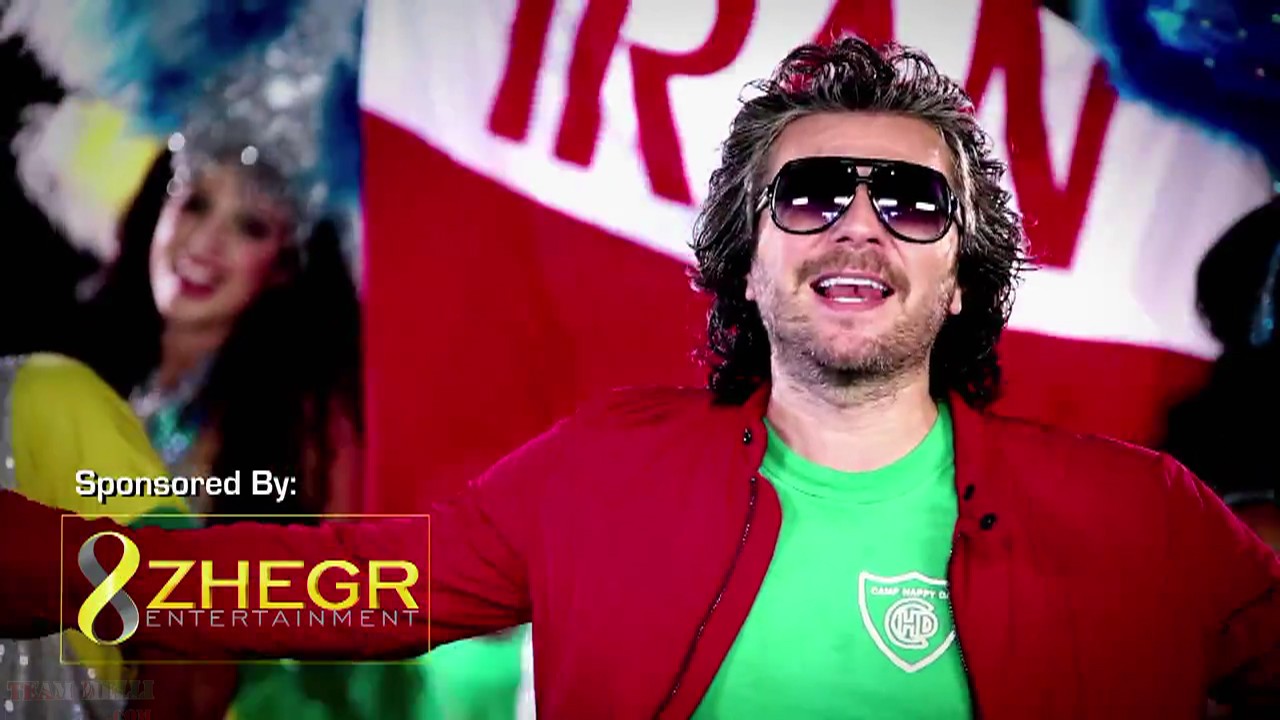
Mansour Team Melli World Cup Song.


Pump up the volume ..Listen to Mansour’s Team Melli song.


Mansour


Mansour---Football-OFFICIAL-D-(03)


عاشقه فوتبالیم فوتبالیم

عاشقه ایرانیم ایرانیم


میرسی بچه های ایران   برای جامه جهانی

ما بشماها مینازیم          بعنوان یه ایرانی

   تو قلبه ما تیم ملی ایرانه….برای ما قهرمانه

   تو قلبه ما تیم ملی ایرانه….برای ما قهرمانه ….یه قهرمانه

عاشقه فوتبالیم فوتبالیم……ایران ایران ایران

به شما میبالیم میبالیم……ایران ایران ایران

FIFA World Cup 2014 Group ‘F’ News [3]


Iran’s only concern is Nigeria, says assistant coach

Carlos Queiroz’s side beat Trinidad and Tobago on Friday and his assistant is confident they are ready for the challenge of the summer showpiece Iran assistant coach Oceano Cruz was quick to switch the country’s focus to their World Cup opener with Nigeria after the2-0 win over Trinidad and Tobago on Friday.Carlos Queiroz’s side had been on a four-match winless run before Sunday’s friendly victory in Sao Paulo.And assistant coach Cruz is happy to be heading to Brazil on the back of a victory, but is keen not to dwell on the result and instead urged the squad to concentrate on the Group F clash against Nigeria next Monday.’It was a game that has fulfilled our expectations,’ Cruz told Globo esporte.’We are preparing for the first match against Nigeria. Our only concern is Nigeria at the moment.’Victory is always important to create a culture of winning. This only happens with results like this.’As well as Nigeria, Iran also face Argentina and Bosnia-Herzegovinain Group F.

[divider]

Team Melli continued the training on Monday in preparation for the Nigeria game. After the long coach journey is Sao Paulo\s heavy traffic , coaching staff opted to give the players a break and mainly light training. Ashkan Dejagah , who received a knock in the Trinidad & Tobago’s match was rested and watched his teammate on the sideline. Hashim Beikzadeh , on the other hand, continued regular training with the squad.

The training ground was different from the usual one , Corinthians Club CT, as this one is situated in  Guarulhos , 43 km North east of São Paulo, and close to the Sao Paulo international airport. The news of Team Melli being in Guarulhos traveled fast and soon the local football fans flocked to the training ground to watch Team Melli Training.  A limited number of  them were allowed to enter the stands to watch the practise. The Iran flag waving crowds were thrilled to experience a piece of World Cup in this football mad nation, as reported by the local journalists .

At the end of the practice, Carlos Queiroz invited some of the fans , mainly the children to mingle amongst the players and get their autographs.

Kids in Guarulhos seeking Team Melli players autographs.
Brazilian fans in Guarulhos waving Iran’s flag

[divider]


Argentina

Messi stepping of the plane.
Argentina’s Lionel Messi arrives at the Tancredo Neves International Airport in Belo Horizonte, Brazil, on June 9. Argentina’s team arrived in Brazil for the 2014 World Cup
Belo Horizonte, June 10: Argentina’s national football team arrived in the southeastern Brazilian city of Belo Horizonte amid a huge security cover. FIFA World Cup 2014 Schedule; News Lionel Messi and company were escorted from the airport Monday to the team’s hotel by a fleet of military and federal police cars, private security vehicles and ambulances, reports Xinhua. The team will be based at the Cidade do Galo training centre belonging to Atletico Mineiro, the club of Messi’s former Barcelona teammate Ronaldinho. The squad is expected to train for the first time Tuesday and will hold an open training session for 4,000 fans Wednesday. Alejandro Sabella’s team will begin their World Cup Group F campaign against Bosnia and Herzegovina at Rio de Janeiro’s Maracana stadium June 15. That clash will be followed by matches against Iran June 21 and Nigeria June 25.

[divider]

Bosnia-Herzegovina

World Cup – Bosnian coaching staff ‘escape armed robbery’ in Brazil

Bosnia’s coaching staff were being tracked by three armed robbers in Brazil before police finally drove the robbers away, a report claims.

Eurosport

Bosnia’s coach Safet Susic (Reuters)

Bosnian news outlet Reprezentacija says that manager Safet Susic and his coaching staff went for a walk near their base in Guaruja, Sao Paulo when three armed robbers on bicycles started following them.

The report claims that the robbers followed the Bosnians for “several hundred metres” before being driving away by local police sirens “at the last moment.”

All the robbers fled in different directions and no arrests were made.

The coaching staff were believed to have taken the whole incident in good humour when they returned to the hotel, saying that they had seen much worse on the streets of Bosnia and Herzegovina.

All World Cup teams have been offered constant protection from both the Brazilian police and army but it is believed the Bosnian staff did not inform either of their plans to go for a walk along the beach which led to the situation.

Bosnia – playing in their first World Cup – open their campaign against Argentina in Rio on Sunday night.


For Bosnia-Herzegovina Even a World Cup Defeat Will Mark a Huge Victory

Bosnia national soccer team
Bosnia national soccer team players take part a training session in Hrasnica, near Sarajevo, May 24, 2014, in preparation of the 2014 World Cup in Brazil. Dado Ruvic/Reuters

Nothing is ever simple in Bosnia. Visitors to this beautiful country will hear that phrase – or a variation on it – time after time, accompanied by a heavy sigh or rueful chuckle.

Now, as Bosnia-Herzegovina prepares to take part in its first World Cup finals, there’s a temptation to imagine that soccer might succeed where world leaders have failed and bring some sort of stability to a country ravaged by war, bruised by riots and battered by fatal flooding.

But that is not how it looks from the east side of the Old Bridge in Mostar. Far from being a unifying force or source of joy, Bosnia’s World Cup qualification has served to emphasise the deep divisions among the country’s three main ethnic groups.

Here in southern Bosnia, Sabrija Selimovic entertains visitors in the bar which bears his nickname, Zika. This area suffered some of the heaviest destruction of the entire conflict in the 1990s, as Croat, Bosniak (Muslim) and Serb fought ferociously. Both the Catholic and Orthodox cathedrals were reduced to rubble – and so, infamously, was the Old Bridge, one of the finest feats of Islamic architecture in the entire Balkans.

Zika serves drinks and also takes visitors on walking tours. “I show them the former front line and go to a cemetery where many of my friends are buried,” he says. “I was only 17 during the siege of Mostar. Half of my class from high school died and I was wounded twice myself.”

His story sounds uncannily similar to some of the tales that Bosnia’s talented World Cup footballers tell. Star striker Edin Dzeko, who plays for Manchester City, had a lucky escape when his mother refused to let him go to a Sarajevo playground where, later the same day, children died in an explosion. Fellow forward Vedad Ibisevic had to flee as his home village went up in flames – a victim of “ethnic cleansing.” Midfielder Haris Medunjanin managed to escape to the Netherlands, but his father died in the conflict.

Zika is an enthusiastic supporter of all these players – but following the national team is not without its hazards. The majority of the squad are Bosniaks. Ethnic-Serbs and ethnic-Croats tend to play for Serbia and Croatia respectively – and supporters in Bosnia are split on similar lines. “If I went into the west part of Mostar wearing a Bosnia jersey, hooligans would attack me,” says Zika. “It would be the same in eastern Bosnia where the ethnic-Serbs live. The World Cup should bring people together – but the nationalists are still very strong in this country.”

Zika had been hoping to set up public viewings of Bosnia’s matches on big screens in Mostar. But, he says, the tensions between the ethnic groups have made it impossible. Still, the stereotypes do not always hold true. The main cheerleader for the national side’s historic World Cup qualifying effort was in fact an ethnic-Serb.

The rasping delivery of TV commentator Marjan Mijajlovic accompanied every goal in the team’s spectacular campaign, as Bosnia scored 30 times in just 10 matches. He happily claims the credit for coining the side’s nickname – the Dragons – as well as handles for individual players. The prolific Dzeko is the Diamond. “I love Bosnian players,” says Marjan. “I think sometimes they hear my voice in their heads when they play.”

Everybody in the capital, Sarajevo, heard Marjan’s voice on New Year’s Eve, when his commentary proclaiming Bosnia’s World Cup qualification was replayed as the midnight chimes rang out.

Those celebrations followed wild scenes last October as the national side returned victorious from their final qualification match. Hundreds of thousands of people welcomed them home. Now, as Bosnia prepares for its opening match against mighty Argentina, there are many who insist that football may be the best way to rekindle the spirit of tolerance for which Bosnia once was famous.

Ivica Osim is certainly among the best-placed to judge. He was the last person to serve as head coach of Yugoslavia, guiding them to the quarter finals of the 1990 World Cup before quitting two years later as his hometown, Sarajevo, came under siege.

Three years ago, he pulled Bosnia back from the brink of expulsion from international competition, as ethnic elements squabbled within the football (as soccer is called here) federation. Osim – who has always rejected ethnic labelling himself – whipped the organisation back into unified shape, setting the scene for World Cup qualification.

“The only team which works is the Bosnian national football team – which is in effect Bosnia’s brand,” says Osim.

“World Cup qualification has brought an enormous amount of good. Every win or success brings us a lot of joy, especially for the people who left because of the war. The only thing to reunite us is football – it has given us a spirit we haven’t known until now.” Osim even suggests that World Cup qualification has eased political tensions – despite the anti-government riots that erupted across the country in February and the devastating floods last month, which added to the sense of a country still under siege.

Yet when the tournament starts, Sarajevo is at least one place in Bosnia sure to experience football fever. The World Cup trophy has already made a tantalising visit to the capital, patriotic stickers are on sale everywhere and big screens have been erected in the city centre.

No one expects Bosnia to advance far in the tournament. But football is often called a “funny old game.” Dzeko and his team mates have already made history. All they have to do now is confound history.