

A controversial incident involving captain Mehdi Taremi has overshadowed Iran’s penalty shoot-out defeat to Uzbekistan in the final of the Al-Ain International Cup. Contrary to the coaching staff’s explicit plans, Taremi unilaterally decided not to take the team’s fifth and crucial penalty, instead assigning it to defender Milad Mohammadi, who subsequently missed with an amateurish kick.
While a loss in a friendly match is often dismissed as inconsequential, Taremi’s act of insubordination—overriding the coach’s direct orders—has raised significant alarms within the national team. The financial implication of forfeiting the tournament’s prize money further compounds the seriousness of the defeat.
According to an ISNA report, the conflict erupted immediately after the match when a furious head coach, Amir Ghalenoei, confronted Taremi on the pitch. The confrontation escalated in the locker room, where Ghalenoei severely criticized his captain for what he deemed an arbitrary and costly decision.
In an attempt to justify his actions, Taremi stated to the media in the mixed zone that his reason for not taking the penalty was to “give other players a chance to gain experience.”
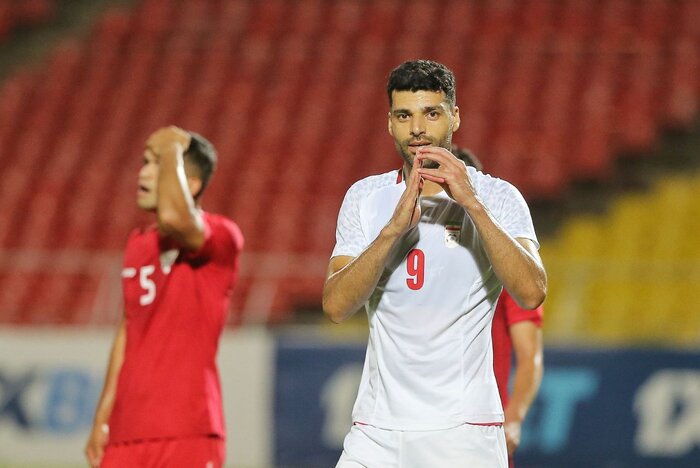
However, this justification has been met with widespread skepticism. Even if well-intentioned, it is widely viewed as a feeble, poor judgment and an unreasonable excuse for such a critical, game-deciding moment. Making a significant tactical change without the coordination and approval of the head coach is a clear breach of protocol. The established procedure in football grants the head coach and his staff the final say on penalty takers, a decision based on training data, player psychology, and in-game conditions. While a captain may offer input, the ultimate authority rests unequivocally with the coach.
Taremi’s actions constitute a direct challenge to the coach’s authority. This move not only undermines the credibility of the technical staff but also sets a dangerous precedent for player insubordination, creating a crisis of leadership that extends far beyond the result of a single friendly.
In light of this incident, Taremi’s captaincy is now seriously in question. His blatant insubordination against Uzbekistan, coupled with a perceived general lack of leadership on and off the field, has eroded his standing. With Taremi’s own form also a subject of widespread media criticism, the under-pressure and reportedly furious Ghalenoei may have no choice but to consider an alternative for the captain’s armband to reassert his authority and stabilize the squad.