Tag: Persepolis

Ali Karimi Pashaki

Asian football is all the poorer for the retirement of a genuine legend.

Asia loses a legend as Karimi retires


JOHN DUERDEN

espnfc.com


Ali Karimi has finally hung up his boots after a fine career.


Not many football players were mentioned by name in those diplomatic cables released to the world by WikiLeaks a few years ago but Ali Karimi was. Even Iranian president Mahmoud Ahmadinejad found the time to get involved in the career of the man they called ‘The Wizard Of Tehran” who finally pocketed his wand and hung up his boots earlier this week. Having threatened to quit before, this time it is for real and Asian football has lost a little of its sparkle as a result.

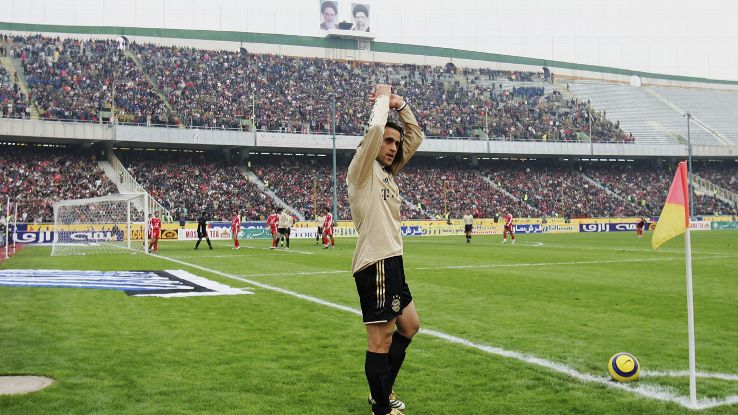
His 117 caps for Iran, Bundesliga success with Bayern Munich and three separate spells with his beloved Persepolis in Tehran don’t tell anything like the full story. Karimi is one, some say the best, of the most talented players Asia has ever produced.

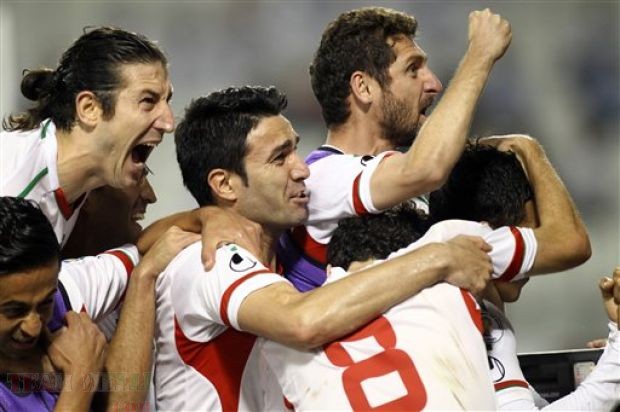
Special barely begins to describe the quarterfinal of the 2004 Asian Cup against South Korea, almost exactly a decade ago. Jinan is one of the grittier Chinese cities but if you wanted beauty and magic, it was the place be on that sticky Saturday night as it hosted one of the greatest individual performances ever seen on the continent. Scoring a hat trick in a 4-3 win was always going to grab the headlines but there was something different about his performance that only a true great can claim. Iran coach Branko Ivankovic recalled later on how he realised early in the game that his star man was in special form; the instructions from the bench and the half-time team talk were basically to give it to Karimi.

Some of the Korean defenders were still shaking their heads an hour after it all finished and the tormentor is still talked about and respected in Seoul. Karimi was more than the difference between the two teams, he was the difference between witnessing an exciting game of knockout football in a major competition and something unforgettable. A few months later, he was named Asia’s player of 2004.

It was almost a perfect year with the only frustration that he was still playing for Al Ahli in a UAE league where he lingered too long. It was like Park Ji-sung starring in the 2002 World Cup and deciding to stay at Kyoto Purple Sanga for another season or two instead of heading to PSV Eindhoven, the latter stages of the Champions League and then Manchester United. In typical Karimi fashion however, when the move came, it was a big one as he left Dubai for Bayern Munich, just weeks before Park was pictured holding the famous red shirt at Old Trafford in July 2005.

Karimi’s first game against Bayer Leverkusen was watched by millions back home. It is hard to think of an Asian player who had managed such an impressive big league debut after a direct switch from east to west and the midfielder basked in the plaudits after helping his new club to a 5-2 win.

He continued to look solid over the next six months or so, before an ankle injury in arctic conditions against Hamburg in March 2006 ended his first campaign. He never really got going again, perhaps it was being injured a long way from home, perhaps it was the fall-out of that summer’s World Cup, perhaps it was issues behind the scenes at FC Hollywood, but the injury as good as ended his time with Bayern. It was made official in May 2007 and, soon after, he returned to the Middle East and Qatar. Apart from the briefest of spells with Schalke, his European career was over.

There will be regret that the wider world outside Asia didn’t get to see much of what he could do. 2006 should have been the time but the World Cup was a disaster for both player and country. Karimi was still not match fit after the Hamburg injury and was taken off on the hour of the opening game against Mexico. Shortly after, a 1-1 scoreline became a 3-1 defeat. Worse was to follow. He was one side of a major split in the dressing room opposite Ali Daei, a legend who was past his best by the time the tournament kicked off, and for Iranian football, the lack of unity off the pitch was more painful than results on it.

Controversy was never far away from Karimi — given the tag “Asian Maradona,” the nickname was accurate in more ways than one as he was not afraid to speak out about some of the issues in Iranian football, a trait that won him enemies as well as public affection. In 2008, the Iranian FA banned him from the national team after he publicly criticised the federation for incompetence. He was reinstated thanks to the efforts of President Ahmadinejad.
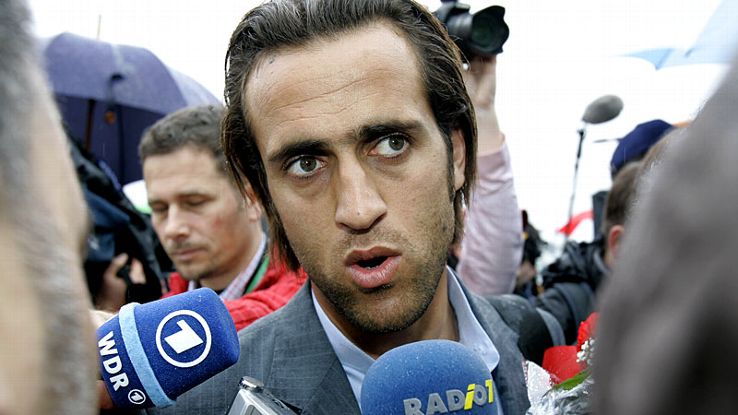
 

Ali Karimi: The deep-lying forward has played 112 times for Iran
Karimi was never one to hold his tongue.


Perhaps, however, Iran’s leader regretted the intervention the following year. In June 2009, Karimi headed to South Korea as part of a team needing to win to keep hopes of automatic qualification for the 2010 World Cup alive against a backdrop of major protests back home. The president had just won re-election but the opposition claimed their man, Mir Hossein Mousavi, as the real winner. The favoured colour of the challenger during the election was green, and six of the Team Melli XI took the pitch in Seoul sporting wristbands of the same colour. Whatever the official explanation soon given — namely that the gesture was a religious one — it was certainly interpreted by many as support for the opposition.

Many thought that was it for Karimi in terms of the international stage, especially when in 2010, his club Steel Azin banned him from playing after he was reportedly seen drinking water in a training session during Ramadan. The ban didn’t last long though and he was soon back playing for his country but, in truth, his best years were behind him.

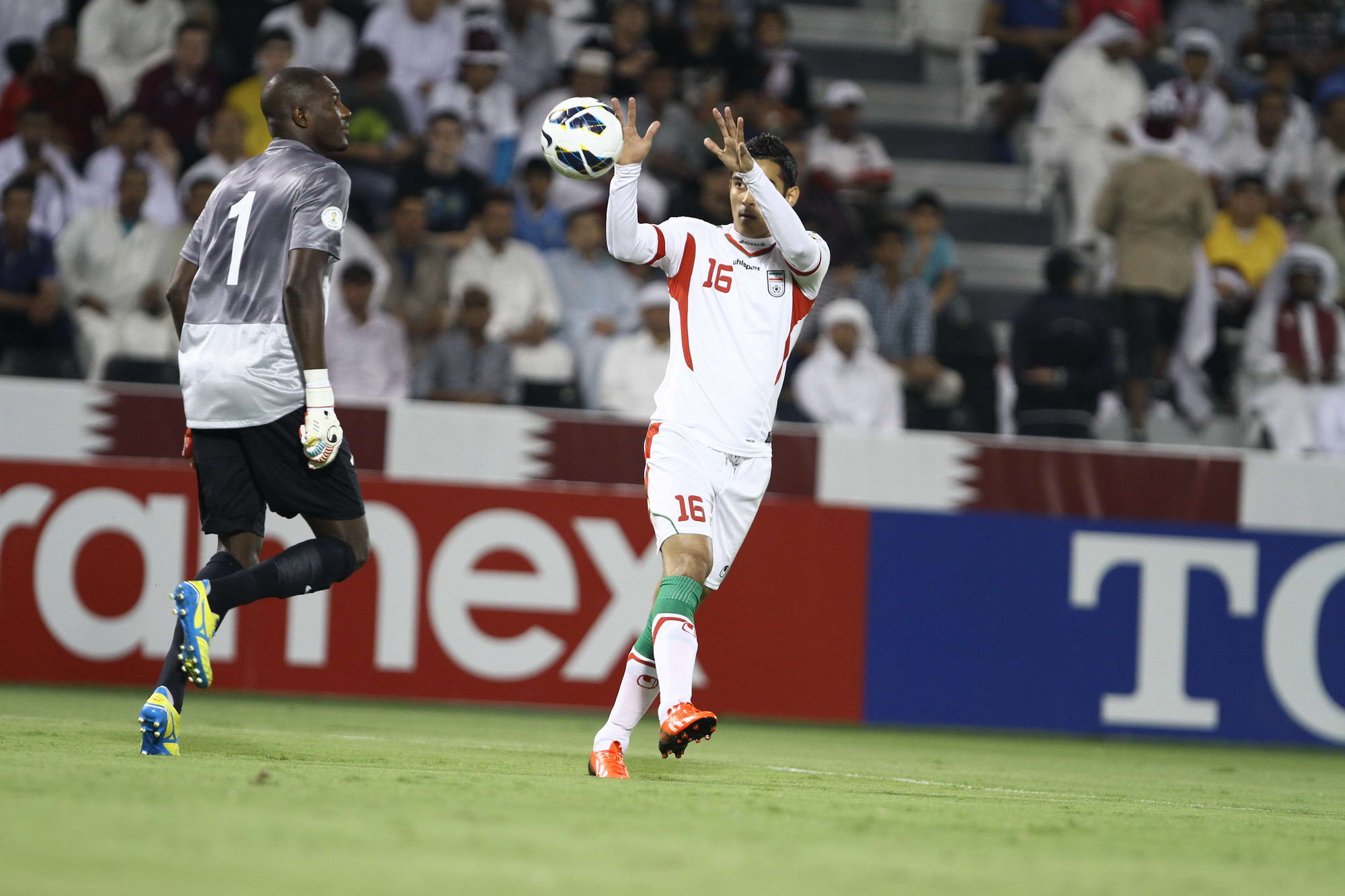
Even so, he managed to play a sizable part in Iran’s successful qualification for the 2014 World Cup until the historic defeat to Lebanon midway through the final stage. Many fans campaigned for him to be summoned to Brazil but it was not to be, though coach Carlos Queiroz reserved some special words for the player when naming his final squad, who took the omission with the kind of grace he often showed on the playing field. In the end, it was hard to imagine the 35 year-old matching younger compatriots in their defensive discipline against Argentina but then, perhaps, it is easy to imagine him coming up with the goal that Iran deserved against the eventual runners-up too.

Karimi wasn’t perfect. He upset plenty and his performances didn’t always match his skill but that was part of his charm. He divided opinion as easily as he divided a defence with a deft backheel, but surely all can agree that Asian football is all the poorer for the retirement of a genuine legend.
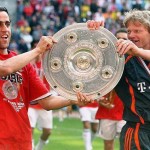
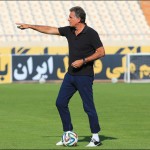
Ali Karimi announces his retirement from football.

One of the stars of Iranian football, Mohammad Ali Karimi , has announced his retirement from football.

 This is not the first time that Karimi (35years) has announced his retirement from club or/and National team activities, however Karimi in an emotional letter declared that his decisions this time is final and irreversible. 

Ali Karimi Born in Shahryar on 08th November 1978 , became one of the most skilful players of his generation. He came to fame with Persepolis , after recruiting him from Fath club where Karimi started playing regular football.  Despite calling Persepolis his home club, Karimi spent most of his professional career outside his beloved team starting in 2001 with Al Ahli of Dubai, Bayern Munich (2005-2007),  Qatar FC (2007-2008) , returning to Iran with Persepolis (on Loan) 2008-2009 , Esteel Azin (2009-2011) including a loan period with Schalke 04 in 2011, Persepolis (2011-2013) and finally Tractorsazi in Tabriz (2013-2014).

As famous as his dribbling skills, Karimi was well-known for his temperament.   His career was in jeopardy early on when he was suspended from all football activities for one whole year by AFC for kicking a referee in Vietnam is some youth tournament. Karimi’s problems with authorities and coaches continued throughout and reached its peak with his now famous confrontation with Ali Daei.  

Many critics believe that Karimi would have been one of the best in the world if he had the right temperament and balanced approach to the game.

After finishing the season with Tractorsazi in a disappointing fashion, Ali Karimi was hoping for a recall to Team Melli, that he already announced his retirement from. However, despite Carlos Querioz talking highly about his skills and calling him one of the best footballers, the Team Melli coach elected to ignore Karimi for the World Cup although the Tractorsazi midfielder played several games in the qualifying rounds of the 2014 World Cup to help the team.

With Karimi being out of contract with Tractorsazi , and the Tabriz team not showing clear interest in  signing him for another term , Karimi looked for a suitable club and found none to his interest. Going back to Persepolis was very much out of question, not with Ali Daei at the helm. Between the disappointment of missing on the World Cup, not being able to return to Persepolis and not getting the attention of other clubs that Karimi thinks he still deserves, the “Wizard of Tehran” has finally announced his retirement.

Ali Karimi has played 128 times for Team Melli , scoring 38 goals.  He is a holder of Asian Games Gold medal in 1998, was part of the World Cup 2006 squad and played in there AFC Asian Cups, 2000, 2004 and 2007. On personal level, he won the AFC player of the year award in 2004.

 Karimi is the third highest Team Melli player in international appearances, after Daei (149) and Nekounam (146) . Ali Karimi is also the third highest goal scorer after Daei’s World Record 109 goals and Bagheri’s 50 goals.

 Karimi will leave a legacy that is difficult to repeat in the near future.

Memeber of FFIRI Technical Committee declares his support of Queiroz

A member of FFIRI technical committee and football development, said that he supports  the federation’s decision to extend the contract of Carlos Queiroz . “Of course it is a bit of a complicated issue, that involves Financial situation and technical appraisal but from Technical viewpoint , I agree with the extension” Fereydoon Moeini said in an interview with ISNA.

“During his 3 ½ years with Team Melli , Queiroz has achieved good results and managed to qualify for the world cup. In the Finals , Iran played very good games against powerful nations”

“There has to be a detailed appraisal and analysis of his work , although I think it is positive.”  Moeini said. “Continuation with Queiroz is the best option that the federation can take since we have gained a lot of experience by qualifying for the World Cup “

The technical committee and football development  of FFIRI, has not produced any reports nor conducted a detailed analysis of Queiroz work , yet one of its member publicly declare his support based on technical viewpoint which has not been provided yet.

Moeini was one of the people accused of failure to conduct his duty when Iran was declared a loser after using a suspended player against Iraq in the Olympic Games football tournament qualification game against Iraq. Iran subsequently had a mountain to climb in the return match which it lost and failed to qualify for the 2012 London Olympic Games.

Moeini who was a player in Persepolis , pursued a coaching career after retirement but never managed to  succeed at the top level in Iran. He has been given various duties in the FFIRI structure in the last few years. 

Mullahs in the Midfield

How sanctions and politics scuttled Iran’s World Cup ambitions. – John Duerden

Ghoochannejad-vs-Qatar-WCQ14-Doha

[row]
[column size=”1/2″] Last June, Iran and South Korea qualified for the 2014 World Cup within seconds of each other. Yet just a month out from the tournament, Korea had played 14 warm-up games while Iran had only managed to arrange one, a March defeat to Guinea — hardly a major soccer power. The light schedule is not the product of choice. Rather, U.S.-led sanctions aimed at curtailing Iran’s nuclear ambitions have taken their toll on the country’s football program — which is why the footy faithful are watching Iran’s negotiations with the group of world powers known as the P5+1 with almost as much interest as the start of the big tournament itself.

If Iran and the West can hash out a comprehensive nuclear agreement in the coming months, it will be great news for football fans, even if it’s too late to boost the Iranian squad’s prospects in this World Cup. “None of the promises turned into realities,” said Javad Nekounam, Iran’s captain, in May. “If we did not have good preparation games until the games start, there shouldn’t be any expectations. Whatever happens, the authorities must be held responsible for the results.”

Isolation from the international community has cost the Islamic Republic when it comes to the sport it cares about most. Forget wrestling — it’s soccer that the majority of Iran’s 80 million citizens really get excited about. On Monday, June 16, the country’s national squad will kick off its fourth World Cup, aiming to reach the second round for the first time. To do so, it must finish second in a group containing Argentina, Bosnia, and Nigeria — tough, but not impossible.

The road has been tougher than it needed to be. The Iranian Football Federation (IFF), the body that oversees all football activity in the country, has struggled to collect funds owed to it by international organizations due to a ban on financial transactions that were part of a tightened sanctions imposed by the EU and the United States in February 2012, which included expelling Iranian financial institutions from SWIFT, a global international banking system.

In July 2012, IFF head Ali Kafashian complained about being unable to receive over $1 million from the Asian Football Confederation (AFC), claiming that “there is no basis whatsoever for the American Government to block our money.” Said Kafashian: “We are a NGO and have nothing to do with politics. We have approached the AFC and several other organizations to persuade the Americans to release our money, which we are desperate to have, to no avail.”

Despite the reigning climate of austerity, the Iranians did approve one significant expense: the hiring of well-known Portuguese manager Carlos Queiroz in 2011. An experienced coach with stints in charge of Spanish powerhouse Real Madrid and as an assistant manager of Manchester United, Quieroz took charge of his own national team, Portugal, for the 2010 World Cup. Since arriving in Iran, however, he has been repeatedly frustrated by the lack of resources at his disposal, saying in May: “Those who think Iran’s national team will be successful with only 14 days of preparation, are either crazy or are living in Disneyland.”

For financial reasons, he was forced to cancel a planned training camp in Portugal in August 2013, that was to include a vital test against Ghana, one of Africa’s best teams. The IFF claimed it could not afford the trip. Perhaps spurred by the (minimum) $8 million that FIFA hands out in prize money to each of the 32 World Cup teams, there was a spurt of activity this May with a training camp in Austria and friendly games arranged in quick succession against low-ranked teams Belarus, Montenegro, Angola, and Trinidad and Tobago. Though money appears still tight: Iran’s stars reportedly will not be able to swap shirts at the end of each World Cup game — as they will be given only a limited number of kits.

If it sounds like football is a little too close to politics in Iran, that’s because it is.

If it sounds like football is a little too close to politics in Iran, that’s because it is. Popular passion for the game is such that no leader can afford to ignore it. One of the first international figures that President Hassan Rouhani met after taking office last August was Sepp Blatter, the controversial chief of the International Federation of Association Football (FIFA), football’s international governing body, who backed Iran’s bid to host the 2019 Asian Cup. If Rouhani hadn’t immediately grasped the power of the game, it was made abundantly clear soon enough. Just one week after his historic election inspired thousands to take to the streets, crowds of roughly equal size turned out to celebrate Iran’s qualification for the 2014 World Cup. By scoring political points in his meeting with Blatter, however, the new Iranian president was just following the example set by his predecessor. According to a diplomatic cable published by Wikileaks, Mahmoud Ahmadinejad “has staked a great deal of political capital in Iranian soccer … in an effort to capitalize on soccer’s popularity with constituents.”

Ahmadinejad’s glamour shots of himself playing soccer may not rival those of Vladimir Putin hunting and fishing on the manly-man scale, but they do portray a leader who knew how to play the game. The former president visited national team practices on a regular basis, handing out advice to the stars. In 2009, he lent his personal jet to the team so that it could return home from North Korea as quickly as possible and prepare for another vital game. Ahmadinejad even reportedly got involved with the hiring and firing of coaches and the selection of certain players. Political meddling is all well and good when the team wins, but patience starts to wear thin when the losses are piling up. Indeed, after Saudi Arabia scored the decisive goal in a fiery March 2009 match in Tehran shortly after Ahmadinejad entered the stadium, the Iranian leader became known as a jinx.

That was nothing compared to what happened in June of that year. With millions of angry demonstrators on the streets protesting what they saw as Ahmadinejad’s fraudulent re-election victory over popular challenger Mir Hossein Mousavi, the national team flew to South Korea for a vital qualifying game for the 2010 World Cup.Iran victory June 2013[/column]  [column size=”1/2″]

As the starting 11 took the field in front of 66,000 fans at Seoul World Cup Stadium, six members of the Iranian team, including Karimi, were sporting green wristbands — the color of Mousavi’s movement and of the Green Revolution that was then underway. Despite the official explanation that the wristbands had a religious and not political meaning, the gesture was seen by millions back home as support for the opposition. The players emerged for the second half free of wristbands.

In the end, Iran just missed out on qualification; there was no triumphant homecoming, though that may have presented its own set of difficulties for the regime. In November 1997, after the team won a ticket to the 1998 World Cup with a dramatic playoff victory in Australia, it was instructed to delay its return by three days because the regime was concerned about the number of people, especially women, celebrating on the streets of Tehran. When the heroes eventually landed in the massive Azadi Stadium via helicopter (a motorcade was too risky), women forced their way in to pay homage to their heroes — a team that would eventually defeat the United States 2-1 the following summer in a game that remains Iran’s only World Cup win.

Despite their daring appearance at the 1998 celebration, women remain persona non grata at Iranian soccer stadiums, the official reason being that their presence may provoke the males to misbehave. (A fine movie called Offside tells the story of a soccer-crazed Iranian girl who disguises herself as a man in order to gain entrance.) Ahmadinejad did lift the ban in 2006 to allow women a special section, but this move was swiftly reversed by the supreme leader, Ayatollah Ali Khamenei.

But Iranian politicians have done more than just try to score points with the public by associating themselves with the game. After a poor showing at the 2006 World Cup, Mohammad Aliabadi, head of the governmental body that runs all athletics in Iran, fired the head of the IFF — a clear violation of FIFA rules, which prohibit governmental interference in the running of the game. The fact that Aliabadi, who also happened to be one of Ahmadinejad’s vice presidents, subsequently announced his intention to run for the IFF post made it all the more blatant. FIFA responded by banning Iran from all international soccer activity in November 2006, forcing Aliabadi to withdraw in 2007. The ban was then lifted. 

In 2008, the mild-mannered Kafashian was elected unopposed, and while most expected him to follow the Ahmadinejad line, he eventually showed a surprising amount of independence When he came up for re-election in 2012, Ahmadinejad tried again to install a surrogate atop the IFF. Four years of infighting and underachievement on the field gave the president an excuse to insert his own man into the post, but he wasn’t the only one playing politics behind the scenes. 

The Revolutionary Guard, loyal to the supreme leader, has played a growing role in Iranian soccer — inserting former commanders into influential posts in the country’s club teams, and in 2012 fielding a member of their old guard, Aziz Mohammadi (also the head of Iran’s soccer league), as an IFF candidate. But Kafashian surprised all with his political skills in maneuvering between the two parties — no doubt aided by threat of another round of FIFA sanctions if the government was seen as interfering once again in the federation’s elections. The Revolutionary Guard, confident that Kafashian had become independent of Ahmadinejad (who was by then seen as a wild card), withdrew its man and supported the incumbent. Faced with the risk of defeat, the president followed suit and Kafashian was returned unopposed.

Even so, playing politics had diverted Kafashian’s time and attention away from the actual business of soccer. With U.S. and European sanctions reducing governmental revenue, this had a direct impact on the local league, which is relatively strong in Asian terms but lagging behind the continent’s leading lights: South Korea and Japan.

The vast majority of Iranian clubs are owned — directly or indirectly — by the state. After decades of government support, few had incentives to find independent revenue sources or professionalize and modernize operations off the field. In 2011, an AFC investigation team found that only three of 18 teams in the top tier of the league could be classified as professional. That said, salaries are not low, with top players able to earn as much as $700,000 a year — thanks to government subsidies. Tehran’s finance ministry said early in 2014 that it was becoming harder to bankroll the two biggest clubs in the country, Esteghlal and Persepolis. Both clubs have serious debts but also millions of fans — and few believe that talk of privatization will amount to anything. The clubs are simply too important, especially when politics is involved.

Given its troubles in arranging games, Iranian soccer would surely benefit from greater engagement with its immediate neighbors. While it plays against other Asian teams, Iran refuses to participate in West Asia’s biennial tournament, the Gulf Cup of Nations, because of the competition’s name. (Tehran refuses to refer to the body of water that separates it the Arabian Peninsula as anything other than the Persian Gulf, and its domestic soccer league is called the Persian Gulf League.) In May, the United Arab Emirates changed the name of its league to the Arabian Gulf League — a move which angered many in Iran, including Houshang Nasirzadeh, head of the Legal Committee and Regulations of the IFF, who said that the federation “will send a letter to the FIFA ethics committee. It regards the UAE’s behavior as politically-tainted and racist.”

Relations between Iran and the UAE were already poor thanks to a territorial dispute. Both lay claim to three islands in the strategic Straits of Hormuz, currently administered by Iran. A visit to two of them by Ahmadinejad in April 2012 caused a planned soccer game with the UAE to be cancelled. 

At least for the moment, the attention is on the game itself — as Iran’s opening World Cup fixture with Nigeria draws closer. Much depends on the tactical acumen of coach Queiroz and a well-organized, defensive-minded team. Indeed, they may even benefit from being underestimated. A final warm-up game, against Trinidad and Tobago, at Iran’s Sao Paulo base, ended in a confidence boosting 2-0 win, Iran’s first victory in a World Cup warm-up.

It may be a case of too little, too late but despite the politics and the problems, the whole country is excited and looking forward to the events of the next few weeks. Iran would go crazy if the national team could manage a draw against the mighty Argentina or, inshallah, somehow makes it to the second round. Of course, the ayatollahs might be less pleased if the team does too well, sparking mass celebrations in Tehran. Soccer in Iran is never simple. [/column][/row]

Condemning report by auditors on Persepolis and Esteghlal activities.

General Accounting Office of the Government of Iran submitted its final report after a six monthly regular audit on the activities of the government ministries. This report included the auditing of both Persepolis and Esteghlal clubs as part of government properties. The eagerly awaited audit report on the Tehran clubs takes prominence after the parliament and public outcry created following the public exposure of players and coaches contracts with these two clubs. The astronomical figures that the clubs were paying their staff have shocked the nation that has suffered immense financial difficulties due to economic sanctions. Members of parliaments accused the two clubs of corruption and wastage of public funds while fingers were also pointed at some of the Ministry of Youth & Sport personnel accused of collusion with the management of the two clubs to deceive the public.

The audit report accuses both clubs of financial irregularities, shoddy dealings , unauthorized expenditure , payments to unknown bank accounts for unspecified services , lack of documentation on several large payments ,  violation of the state laws ,   accounting & bookkeeping practices that does not meet the public accounts standards , creating shadow accounts illegally depositing funds from club revenues, and several other minor violations.

 The extensive report which covered the activities of many ministries, including the Ministry of Youth and Sport, as the responsible ministry for both of the government owned sport clubs Esteghlal & Persepolis. The ministry has ordered these two clubs to generate their own revenue instead of depending on government handout and claiming public money at the time when the whole government is exercising belt-tightening policies.

 The damning report cast a shadow on the activities of both clubs that have been for years under poor authority’s oversight resulting in huge financial difficulties. Uncontrolled or unaccountable expenditures left both club in critical debt situation exceeding their ability to pay the creditors or balance the books in the forthcoming years. It is difficult to see how they can survive without a bail-out by the government.

The report included accusation that some of the clubs revenues from commercial activities like advertising and merchandise , were being deposited to unauthorized bank accounts not belonging to the official club bank account(s) on records.

The GAO was also critical about the fact that of those millions of public funds that two clubs have siphoned, little or none was channeled towards infrastructure, building facilities such as football pitches for the younger generation to utilize.  

This is not the first time that GAO has produced such critical reports. It is not clear if any action , will be taken against the culprits  apart from the customary changing of the guards  (chairmen and board members) of both clubs, which has already been carried out with the exit of previous chairmen of Persepolis and Esteghlal,  preempting the GAO report.

All bank accounts belonging to Persepolis Club has been suspended by a court order as a result of creditors’ claims and long over-due nonpayment of various bills including tax due by the government itself.

Olympic team coach start delayed due to legal complications.

Nelo Vingada, the Olympic team head coach was supposed to have started work with the Olympics squad preparing for the competitions ahead especially the Asian Games 2014 Incheon. However , the Portuguese coach has hit a snag.

Explaining the delay in Vingada’s commencement of work with the Olympics team, the Deputy head of the FFIRI , Seyed Hadi Ayttollahei said ” Because of Vingada’s previous stint as the head coach of Persepolis , there is some outstanding taxes that have not been paid. When we reviews the contract between the two parties, it clearly stipulates that Vingada had a two year contract with Persepolis and all taxes for the two years period should have been paid to the government on signing the contract by the club. Therefore Persepolis should have respected this clause and paid its due. This did not happen. Vingada only stayed 5 months with Persepolis and left. The Managers of Persepolis failed to clear the taxes issues and did not contact the appropriate authorities to resolve the issue. Now, the liabilities are even greater, because there is a penalty for non-payment and delays which will cost the club dearly. Persepolis have been very lax  and complacent and this has resulted in issues with Vingada’s current work permit and legal status”

“Unless Persepolis resolves this tax issue with the authorities, Vingada cannot commence his work in Iran. We urge Persepolis to act fast as delays will affect our preparation for the Asian Games.”

Currently , the squad is training under Human Afazeli who is working as a caretaker until the arrival of Vingada.

As if Persepolis does not have enough financial problems , this one regarding Vingada’s tax non-payment , is  added on the rest the club’s complex and crippling financial issues.  Persepolis, one of the most popular teams in Iran , has been struggling to pay it debts , wages , hotel bills and many outstanding bills accumulated through the years. Persepolis has up to today to pay Ajman club for Khalatbary’s remaining transfer fee, else the UAE club will file a suit with FIFA, and finally the tax man in Iran is in hot pursuit of the club for non-payment of many taxes.


Persepolis and Khalatbary on the brink of FIFA Sanctions.

Mohammad Reza Khalatbary and his club Persepolis are on the brink of suspension after the Club failed to pay the UAE League club Ajman the reminder of the payment for the player’s transfer.

Ajman has given Persepolis one week ( 15th April) to fork out US$ 250,000 outstanding from the player’s transfer deal. Ajman has claimed that the amount is already six month overdue and will not tolerate any further delays by the Iranian club.

Khalatbary signed a 1.5 Million dollar contract with Ajman last year, however before he even played a single match for Ajman, Persepolis came calling for the Team Melli Midfielder and on the assertion of the former CEO Mohammad Rouyanian , they managed to strike a deal with Ajman for his transfer back to Iran.

The deal raised many questions in the football circles, mainly because Persepolis had acute financial difficulties which were well publicized and known among all concerned. Somehow Persepolis managed to pay the transfer fee for Khalatbary , but the club refused to disclose the source of the transfer fee. This transfer occurred at a time when many Persepolis players and staff wages were not paid for several months. The Khalatbary transfer created some discontent in the dressing room.

Now, it has been disclosed that Persepolis has not paid the full transfer fee to Ajman.  The balance of US$ 250,000 must be paid within 1 week else Ajman will file a complaint with FIFA. If Persepolis fails to adhere to the clause of the transfer agreement, FIFA can rule to suspend Persepolis from football activities, ban it from transfer market (selling or buying players) , deduct points or impose a heavy fine.

While Persepolis is in a perilous position, Khalatbary may also be suspended if FIFA deems it necessary. That would be a severe blow to Carlos Queiroz who is preparing the squad for the World Cup. The rest of the Persepolis players with Team Melli should not be affected by any FIFA ruling against their club and will be allowed to play for Team Melli.

Zamani, the agent of Khalatbary , shed some light on the transfer details. He said that the agreement between the two clubs required Persepolis to initially pay US$ 500,000 then the second payment of US$300,000. Persepolis paid US$ 400,000 initially and then with a lot of delay, it paid US$ 150,000 , which was half the agreed amount it should pay to Ajman. Eventually , Hossein Hedayti , paid the remaining US$ 150,000 “

“However , there is still US$ 250,000 remaining and an additional US$ 50,000 as interest fees due to delays in payment,”

Zamani said that “FIFA usually makes quick decisions when it is faced with cases of nonpayment of contracts. All evidence and document shows that Ajman Club has the full right and as such Persepolis might face heavy penalties from FIFA and might regret delaying the payment.”

Persepolis Club on the edge of disbandment

A panic has ensued in the corridors of power in Persepolis club  as possibilities of Persepolis Club seizing activities has surfaced as result of financial difficulties and default on payments.

Persepolis , like Esteghlal, the two most popular clubs in Iran by far , are owned and run by the government. Both have been facing financial difficulties for many years. Although the government has been tolerant with the clubs demands , in the recent years and especially under the general difficult economical situation of Iran , the government has been reluctant to bankroll their activities, accusing the clubs of failing to generate revenues and operate within a reasonable budget. Although the government has promised for decades to privatize the two clubs, it has failed time and again to stand by its promise. The most obvious and clear calls to privatize the clubs came during the reign of  the ex-President Mahmoud Ahmadinejad, who  during his two terms has strongly promised to act upon the privatization , but he left the office without delivering on that promise.

In a series of developments , an official from the government’s Finance Ministry has recently declared that “the country cannot keep pouring money into the two Tehrani clubs who have failed for years to generate a sizable revenue to sustain their operation.” According to  government official , both clubs situation are getting worse every year with Persepolis facing several court cases due to failing to honor their financial commitments and contractual obligations. Following the public outcry and demand for investigation  fueled by the refusal of Persepolis players to train , the government has sent auditors to Persepolis club. Question of mismanagement , misappropriation of funds and corruption has been previously raised by some members of parliament who pressed the government to act much positively this time. The other motive for the audit was to check on the level of debts. The recently departed  club CEO , Mohammad Rouyanian , has publicly announced that he left the club with an equivalent of  US$ 2 million in debts , but the auditors have discovered that the actual debts of Persepolis, arguably the most highly supported club in Iran , is far higher that what the ex-CEO has claimed and is more like US$ 25 million and getting worse.    This figure, which has not been officially confirmed by the auditors nevertheless, conveniently leaked , is sending shock waves in the entire Persepolis organization and slowly reaching its large fan bases in Iran and abroad. 

While Persepolis player have gone on strike by refusing to train as the result of non-payment of their wages, Ali Parvin , the recently appointed Chairman of Persepolis, did not inject much confidence when he announced in public and private , that he is not promising anything to anyone and has no solution for the financial difficulties of the club!.  With such a statement and the discovery of the larger than expected debts of Persepolis , the situation has reached a critical stage. The bleak situation has lead to rumors of club defaulting on payments to staff and suppliers and hence announcing bankruptcy. The situation will prevent the club from completing its last 4 matches in the league, especially the matches away from Tehran. The only possibility for Persepolis to recover from such a dire situation is a government bail out.

With only a few months left to the World Cup , there is some hope that the government might find the will to help the struggling club,  as a face saving exercise. However , this same government has failed to properly support Team Melli program and inject funds in FFIRI despite all the public support and statements by the ministers and government officials , so what are the chances that Persepolis will be bailed out?

For the good of football in Iran and Team Melli , we hope that a quick solution is reached , else Persepolis and most probably Esteghlal , might seize to exist in this form. The clubs could be disbanded and re-formed into a new entity and very possibly with a new names.