
As many had predicted and expected, Asia's crown jewel, the AFC Asian Cup, originally scheduled for January 7 to February 5, 2027, will now take place from December 23, 2027, to January 21, 2028. This decision remains pending final approval by both the FIFA and AFC executive committees.
While the AFC's official statement cited logistical concerns and the "current exceptional circumstances" of the host country, the underlying reason for the postponement is the ongoing conflict between Yemen's Ansar Allah and the Saudi government, with Riyadh's airport still suffering attacks and only partially open to special flights. To complicate matters further, teams such as Japan, South Korea, and Australia would almost certainly have withdrawn following their governments' advisories against travel to the Middle East. Iran, on the other hand, suffering under all manner of sanctions and embargoes, has proven resilient enough to make its way anywhere in the world despite the threats and risks.
So, what does this mean for Team Melli?
It is, without a shadow of a doubt, a blessing in disguise on many fronts, and the most significant one is the fact that Amir Ghalenoei will no longer be in charge, as his contract is set to expire in February 2027. This is a development that should be welcomed by anyone who cares about the future of Iranian football.
The Ghalenoei Era: A Missed Opportunity
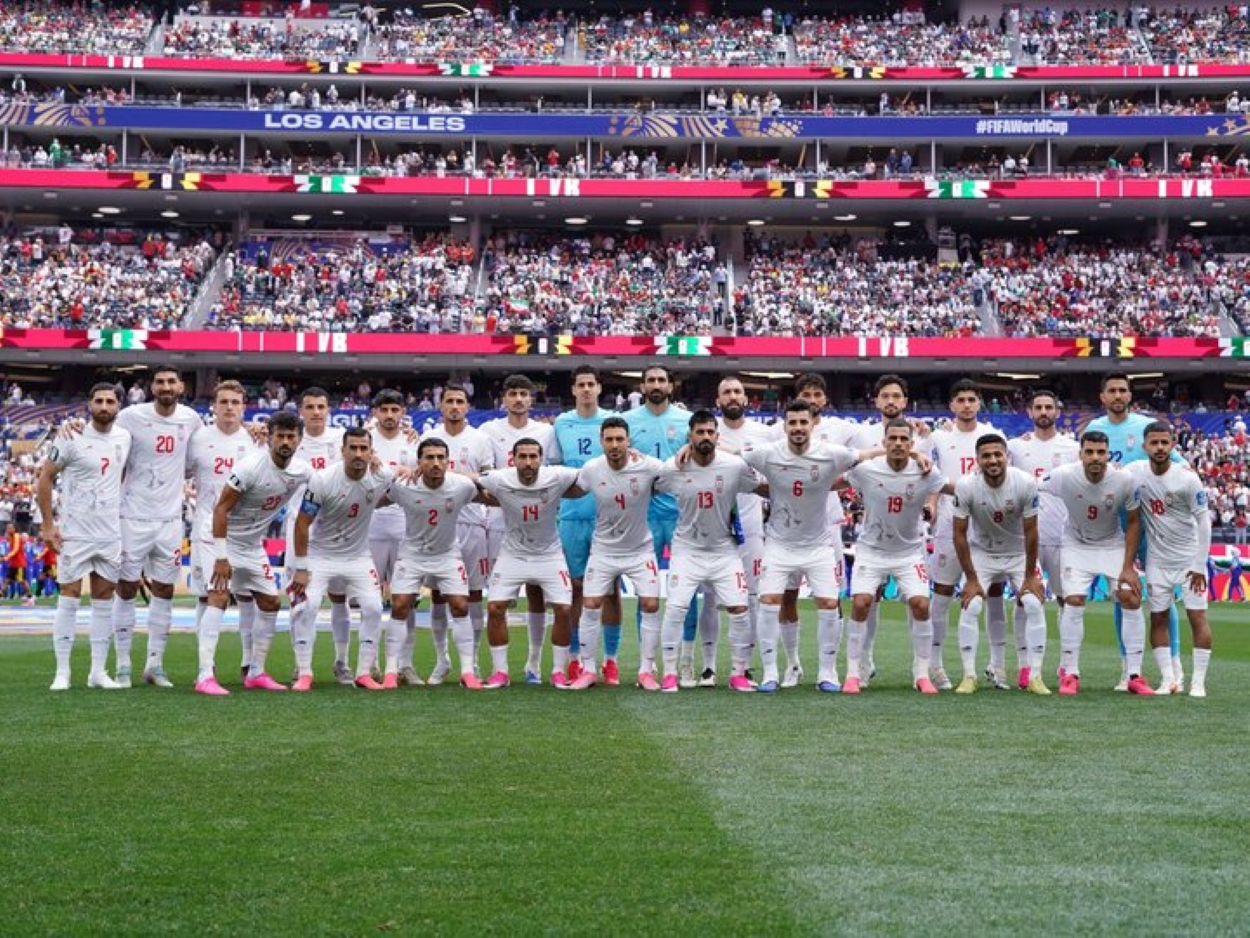
Ghalenoei's tenure has been marked by a stubborn resistance to renewal. The team has grown dangerously old, and the continued exclusion of younger talents has left many fans in dismay and increasingly disinterested in Team Melli. The aging squad has become an embarrassment on the continental stage, and the fact that promising young players are continuously ignored by Ghalenoei has alienated a significant portion of the fanbase. His tactical rigidity and reluctance to blood new talent have stifled the natural evolution of the national team, leaving Iran trailing behind regional rivals who have embraced youth development.
His departure, therefore, is not merely a contractual formality—it is a necessary reset. A year is more than enough time to overhaul the team, provided a competent coach is selected at the helm. The postponement of the Asian Cup effectively gifts Iran a full twelve-month window to rebuild, experiment, and integrate the next generation of talent. This is an opportunity that would have been impossible under Ghalenoei's leadership, as his contract would have carried him through the original tournament dates, leaving no room for the systemic changes the team so desperately needs. For the first time in years, the expiration of his contract aligns perfectly with a natural break in the football calendar—a coincidence of timing that Iran must exploit to the fullest.
The Mayeli-Kohan Precedent: A Blueprint for Success
Very few people expect a young Iranian team to lift the trophy in Riyadh come 2028, but we should remember the 1996 edition, when a fearless coach in Mayeli-Kohan built a fantastic team full of young, talented players—a team that became the cornerstone of Iranian football for many years. Unlike Ghalenoei, Mayeli-Kohan trusted the best of the young players, and his adventurous approach paid dividends in a big way with two incredible results: a 3-0 win against eventual champions Saudi Arabia and a stunning 6-3 thrashing of Asian powerhouse South Korea.
That 1996 team was not built on reputation or seniority; it was built on courage, vision, and a willingness to take risks with youth. Ghalenoei's approach has been the antithesis of this. His insistence on relying on aging stalwarts and his inner circle of favorites has suffocated the development of players who could have been the backbone of the national team for the next decade. The twelve-month window before the rescheduled Asian Cup is the perfect opportunity to replicate the Mayeli-Kohan model—to identify, trust, and empower the next generation. The lessons of 1996 are clear: when Iran dares to invest in youth, the rewards can be extraordinary. Ghalenoei's departure removes the single biggest obstacle to that investment.
The Hurdle: FFIRI Leadership
One hurdle remains in this God-given gift of tournament postponement: the FFIRI will still be led by the old guard, who have been the Achilles' heel of football's progress in Iran. Mehdi Taj is far from a competent director of football. His lack of vision and ideas, plus his insistence on relying on his circle of loyalists, has hardly served the country. Taj and his men could be a stumbling block to the very reforms that Ghalenoei's departure makes possible. If politics, nepotism, and corruption interfere, the opportunity will be squandered—and the sacrifice of Ghalenoei's exit will have been in vain.
Conclusion: A Defining Moment for Iranian Football
If politics, nepotism, and corruption do not interfere, Team Melli is in an ideal situation for the Asian Cup 2028. The postponement has handed Iran a rare gift: the natural expiration of Ghalenoei's contract, a full year to rebuild, and a clear precedent—the 1996 Mayeli-Kohan revolution—to guide the way. Ghalenoei's departure is not just the end of an era; it is the opening of a door. For the first time in years, Iran has the chance to build a team that reflects the depth and dynamism of its footballing talent—a team that trusts its youth, plays with courage, and rediscovers the identity that once made Team Melli a force to be feared across Asia. The question is whether the FFIRI will have the courage to walk through that door—or whether it will remain shackled to the old guard, squandering yet another golden generation before it has even begun.
The postponement of the Asian Cup is a blessing in disguise. Ghalenoei's departure is the key that unlocks it. Now, Iranian football must ensure that the door does not close again.