
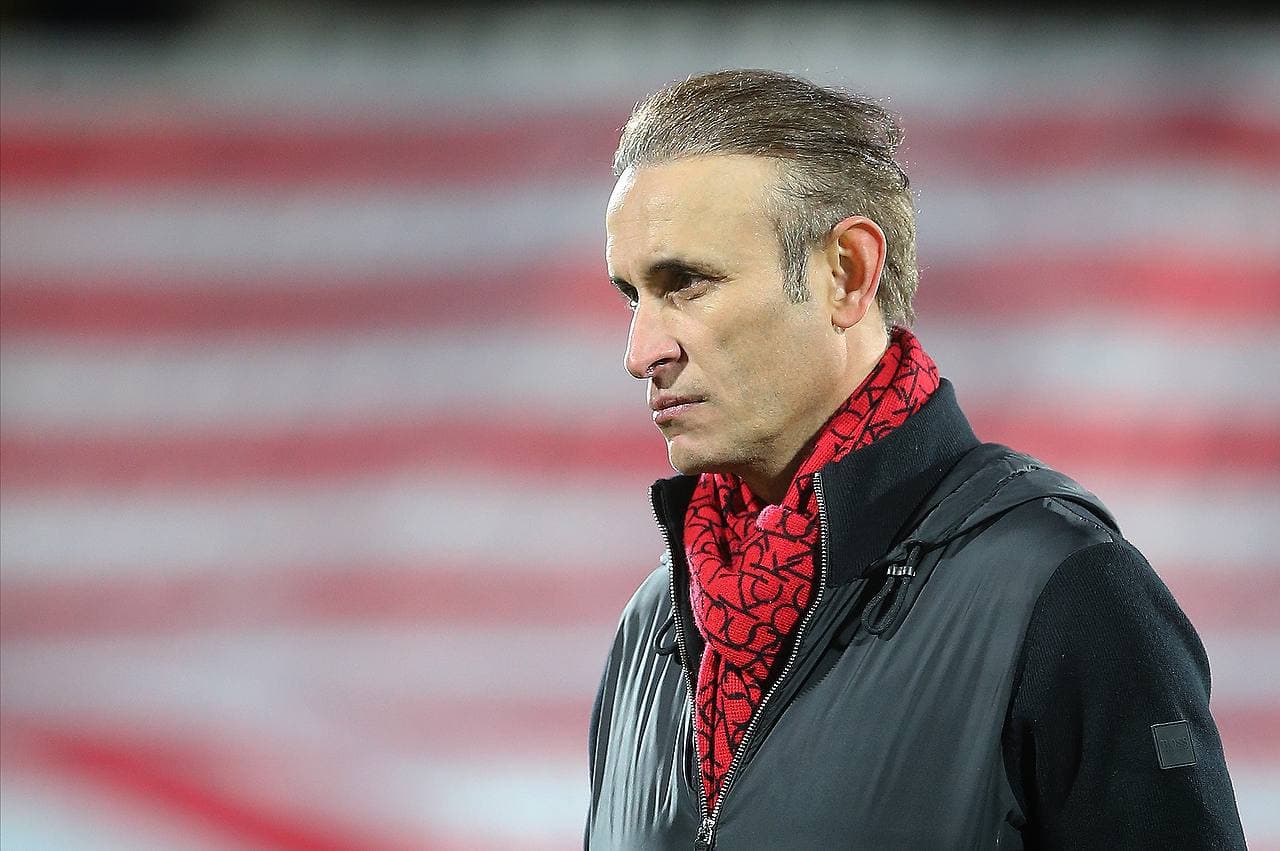
A preliminary agreement has been reached in negotiations between Football Federation Islamic Republic of Iran (FFIRI) President Mehdi Taj and Yahya Golmohammadi over the latter taking charge of Iran’s U-23 (Omid) national football team, according to Mehr News Agency. After several rounds of talks, the two sides have established an initial understanding, and Taj has signaled that the negotiations are nearing a final outcome, with details of the collaboration expected to be announced soon.
The talks are centered not only on the appointment itself but also on the conditions Golmohammadi believes are necessary to build a competitive team. The federation president is now expected to address the coach’s requirements directly, overseeing efforts to create the environment needed for the prospective head coach’s plans. According to the latest discussions, a significant portion of the negotiations involves reviewing Golmohammadi’s requests and securing the resources he deems essential.
Two key issues remain; the duration of the partnership and the scope of Golmohammadi’s authority in planning for the U-23 side. The agreement under discussion reportedly envisions a long-term collaboration extending to 2028, a framework that, if finalized, could give Iran a sustained opportunity to pursue Olympic qualification. For Iranian football, ending the long wait for an Olympic return would be a major achievement, and a long-term mandate would allow the coach to plan across qualifying cycles rather than operate on a short-term basis.
However, a definitive contract has not yet been signed. Financial matters, details regarding training camps, and the team’s required facilities still need to be settled in the final stages of negotiation. These issues could prove decisive, as they will shape the working conditions and resources available to the U-23 program.
Another significant hurdle is Golmohammadi’s current contract with the Iraqi club Duhok. The federation must facilitate the terms of his departure from the club. Although his exit from the Iraqi side is not believed to pose an obstacle to an agreement over the U-23 role, it remains a logistical and contractual matter that must be resolved before any final deal can be completed.
The next step will involve the federation’s board of directors, which is scheduled to meet next week. Taj is expected to present his final choice for the U-23 coaching position. It remains to be seen whether Taj and Golmohammadi will reach a final agreement during the ongoing negotiations—with the former Persepolis head coach taking charge of the U-23 team—or whether disagreements over the terms of cooperation will steer the federation in a different direction. If the latter occurs, the federation president’s final selection could be delayed, leaving the U-23 project in a state of uncertainty.
For now, the talks appear to be progressing, but the coming days will determine whether a preliminary understanding can be converted into a formal and workable partnership.
For decades, Iran’s Olympic football team—commonly known as the Omid team—has endured a long trail of failures at various levels of competition. Despite appointing reputable foreign coaches, providing full support, and securing the backing of Iran’s National Olympic Committee, the team has failed to qualify for the Olympic Games since 1980. Its most recent campaign also ended in failure at the AFC U-23 Asian Cup, where the side coached by Hossein Abdi failed even to advance from the group stage. That early exit added another chapter to the Omid team’s prolonged struggle and underscored the scale of the challenge facing any coach—including Golmohammadi—who hopes to revive Iran’s Olympic qualification hopes.