
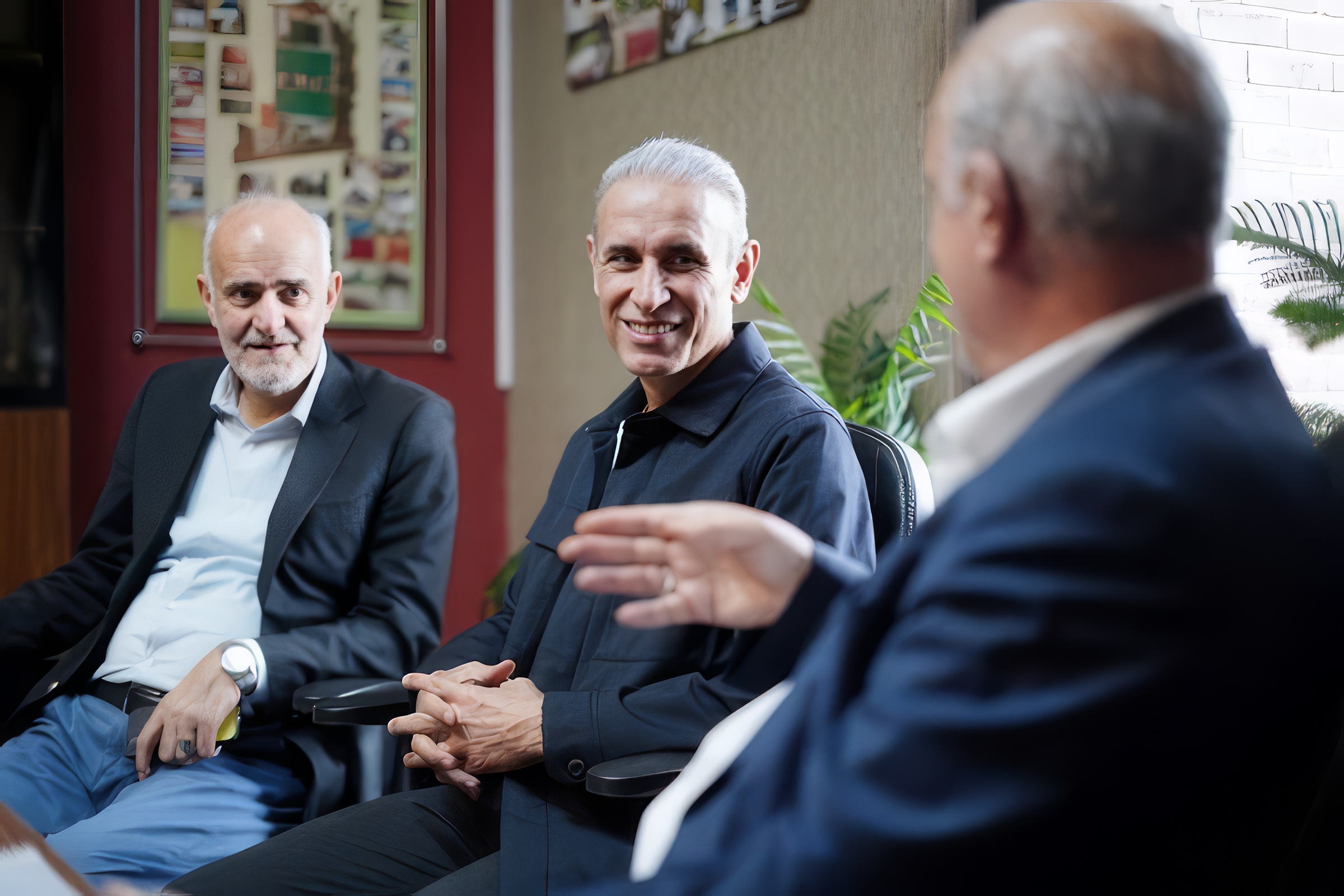
Speaking at the ceremony confirming his appointment as head coach of Iran's U-23 (Olympic) football team, Yahya Golmohammadi was unequivocal: "The moment the offer was put to me, I accepted it—immediately and with all my heart." The weight of the role, he made clear, is not lost on him: "I know full well how much this position demands and how heavy the responsibility is. I am honoured to carry it. This country is bursting with extraordinary talent—countless young players, both across the nation and within Iranian football, who have simply never been given the chance to be seen."
Golmohammadi then set out his ambitions, and they extend well beyond the immediate prize: "Qualifying for the Olympics is our primary goal, but our larger and more important mission is to build the future of football in this country. The doors of the U-23 team are open to everyone. I firmly believe that not one talented player should slip through our fingers." That mission, he acknowledged, cannot be carried out alone: "It demands foundational, substantive work—work I cannot do single-handed. I need to expand my staff so that we can identify and unearth all the footballing talent this country has to offer." He also turned to the media, whose role in that search he regards as vital: "The media, too, must help create an environment in which talented young players are brought to our attention—so that we can find those who, until now, have never had the opportunity to be seen."
And a bright spot is precisely what Golmohammadi's appointment represents—a rare one in an Iranian football landscape that is otherwise chaotic and in decline. Yet the post he has taken on remains one of the most undesirable in Iranian football, rejected by many candidates who were offered the job before Golmohammadi. Since the 1980 qualification for the Moscow Olympic Games, no coach and no federation have managed to reach the Olympics—a drought of 48 years, counting down to Los Angeles. Nor can those failures always be laid at the door of coaches, federations, or players. The failure is systemic, and no federation president has managed to confront it. Even with the Iranian Olympic Committee stepping in, several generations of Iranian footballers have been denied the glory of Olympic football.
Golmohammadi may well bring a breath of fresh air to the Omid team, but he appears under no illusion that his skills, his man-management, and his pragmatic character will be enough on their own. Perhaps the biggest obstacles are the clubs that consistently refuse to release players to Omid Teams. Qualifying for the LA Olympics ought not to be harder than Iran qualifying for the World Cup. The reality, however, is that while the Omid team's head coach has changed for the better, the surrounding factors have not improved—and may well have deteriorated further—making Golmohammadi's task that much harder.