
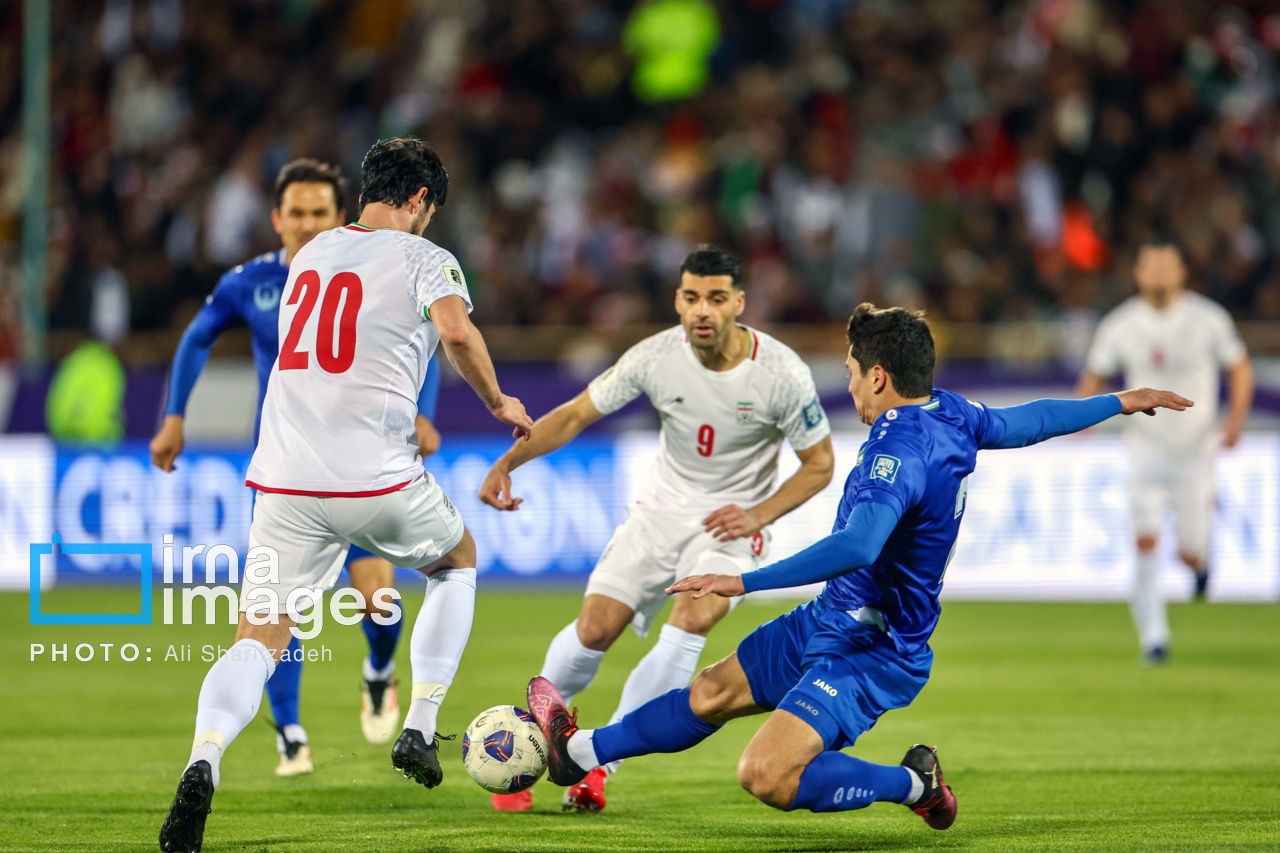
For years, Team Melli's attack has been defined by two names: Mehdi Taremi and Sardar Azmoun. Between them, the pair have accounted for a substantial share of the national team's goals. Yet their current form suggests that the peak of this celebrated duo now belongs to the past.
Since joining Al-Wasl in the UAE—after spells at Inter and Olympiacos—Taremi has yet to recapture the consistency and impact expected of him. This season he has made five appearances for the club across all competitions, logging 318 minutes and scoring twice: once in the UAE Pro League and once in the League Cup. In Al-Wasl's opening fixture against Shabab Al-Ahli, he featured for just 24 minutes.
His international record tells a similar story. Taremi has turned out eight times for Team Melli in 2026, scoring four goals, but his most recent goal for his country came on 29 May against Gambia. He played the full 90 minutes in the team's latest outing against Russia but drew a blank. Sardar Azmoun's situation is scarcely different. The Shabab Al-Ahli striker—once among Team Melli's all-time leading scorers—last found the net for Iran on 20 March 2025 against the UAE and has not scored for the national team since. At club level, injuries have also taken a heavy toll: during the 2025–26 season he was sidelined for a total of 248 days across two separate injuries, missing 23 matches, with a broken leg keeping him out of action for more than four months. Although Azmoun has returned this season and scored for Shabab Al-Ahli in the UAE league, his ability to stay in the lineup and rediscover his best form remains a central concern for the national team's attack.
The problem, however, extends beyond a simple shortage of goals. Taremi in particular has failed to complete several passes that could have created opportunities for his teammates; his predictable style makes him easy for opponents to contain, and his lack of pace is a further handicap. Azmoun, for his part, needs time—and time is a luxury Iran can ill afford. At club level, a coach has no shortage of replacements for Azmoun and no emotional attachment to him. In the Team Melli setup, Ghalenoei's mindset appears very different: his veteran players remain a priority regardless of current form.
Against this backdrop, attention is increasingly turning to younger strikers—highly motivated and eager to earn a national team shirt. Players such as Saeid Saharkhizan, Amirhossein Hosseinzadeh, Allahyar Sayyadmanesh, and Pouria Shahrabadi may lack the international experience and track record of Taremi and Azmoun, but national team camps could offer them the chance to train alongside seasoned forwards and steadily raise their level.
Amir Ghalenoei has attempted to refresh the squad, calling up promising young players such as Amirhossein Mahmoudi—yet he has rarely given them playing time, reducing them in effect to passengers on the team's travels. Such decisions lend weight to his critics' charge that his invitations to young players serve to blunt criticism rather than reflect a genuine tactical plan.
This situation persists as the national team builds toward the AFC Asian Cup 2027, still searching for a reliable, prolific striker to succeed Taremi and Azmoun—a challenge that has drawn considerable criticism toward the coaching staff, and toward Ghalenoei in particular. It remains to be seen what decision the head coach—who has repeatedly spoken of making fundamental changes to the squad—will make to ensure he has viable attacking alternatives for both favorable and difficult matches.