
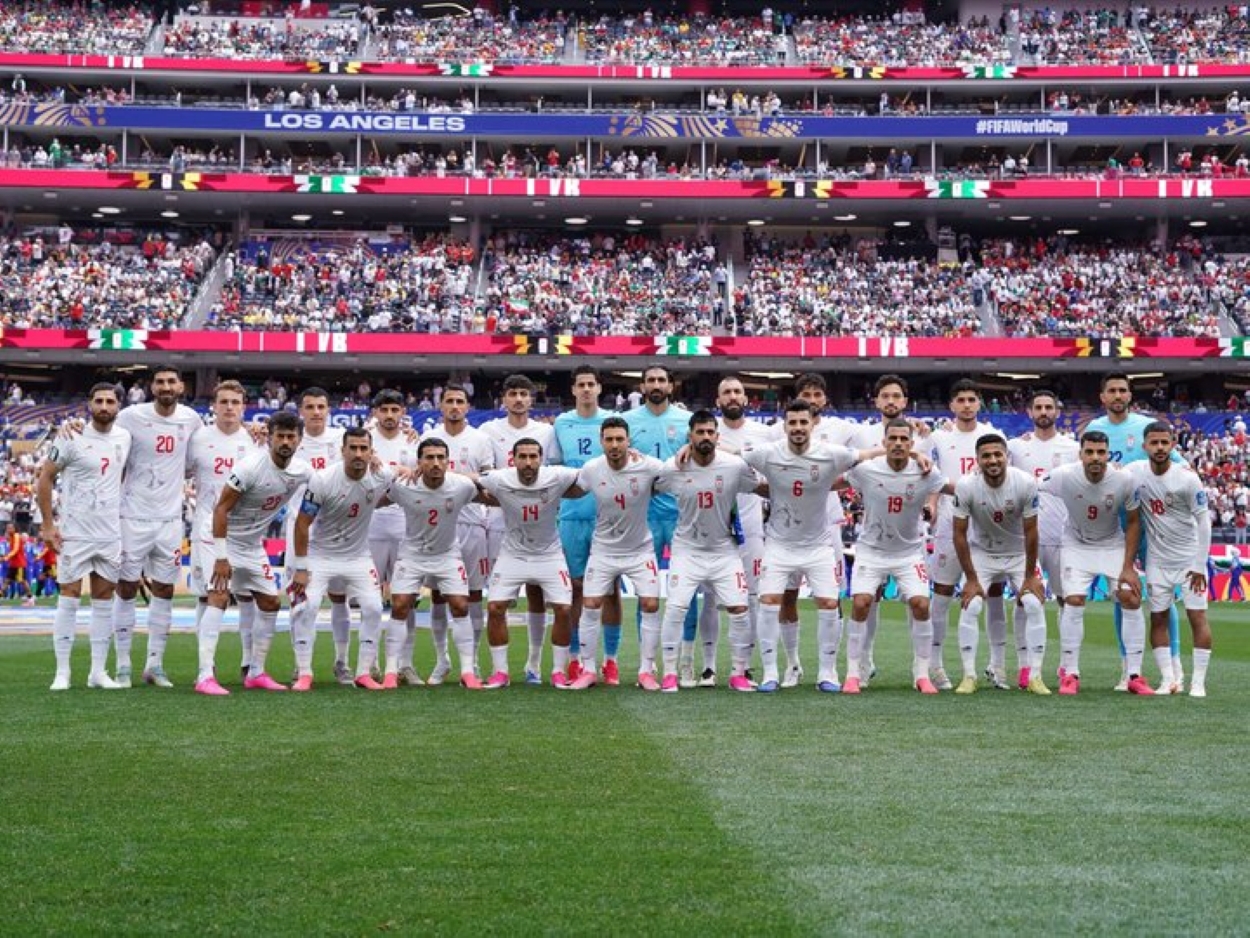
As is customary in global football, failure at a FIFA World Cup almost always triggers accountability. Consequently, coaches resign, federations sack managers, and administrators step aside. Even so, although the 2026 edition is still ongoing, we already have 15 departures — a clear sign that many nations take their shortcomings seriously.
However, what stands out is that almost every manager on that list performed better than Team Melli, yet Iran once again appears immune to change. Despite this, and despite failing to qualify from one of the weakest groups in the tournament, there is no indication of introspection, responsibility, or even basic acknowledgment of failure.
In fact, although not officially announced, the head of FFIRI has already hinted that Amir Ghalenoei will continue leading Iran into the AFC Asian Cup 2027 and beyond. Ultimately, continuity is not the problem — blind continuity is.
The Illusion of Success
The hope for fundamental change in mentality, player selection, or tactical evolution remains remote. Moreover, what has improved, ironically, is the federation’s ability — along with the head coach — to manipulate public perception. As a result, a clear failure has been reframed as a “respectable performance,” a narrative that is repeated so often it begins to sound like truth.
Therefore, this is not football analysis; it is political messaging.
The Media’s Role in Manufacturing Consent
Furthermore, another striking element is the behavior of the domestic media. Almost all major outlets are state-controlled, and the football federation itself is under the same umbrella. Consequently, the result is predictable: full‑fledged support for the team, regardless of performance, wrapped in nationalistic rhetoric and political justification.
Instead, of honest evaluation, we get excuses. Instead, of accountability, we get slogans. Instead, of progress, we get stagnation.
Ultimately, the missed opportunity of this World Cup — a tournament where Iran genuinely had a chance to advance — is buried under layers of propaganda.
A Contrast: Saudi Arabia’s Example
Among the many departures worldwide, one stands out: Saudi Arabia’s football federation president, Yasser Al‑Misehal, resigned after his team failed to reach the knockout stage.
His statement was simple, direct, and refreshing:
“The failure of the national team to qualify for the next round of the World Cup is a result that falls short of all our ambitions, and I bear full responsibility for it. I offer my apologies to everyone who hoped to see our team in a better position.”
He continued:
“A sense of responsibility requires giving the opportunity to open a new chapter, and I have decided not to continue until the end of my current term.”
Clearly, this is not just a resignation — it is a culture of accountability. It also signals a country seeking progress, acknowledging shortcomings, and making room for improvement.
By contrast, such honesty is almost alien within FFIRI’s current culture and its political backers.
The Core Problem
Iran’s footballing stagnation is not due to lack of talent, resources, or passion. Rather, it is due to a system that:
- refuses to admit mistakes,
- punishes criticism,
- rewards loyalty over competence,
- and treats football as a political tool rather than a sporting project.
Until this changes, Iran will continue celebrating imaginary achievements while other nations — even those who performed better — take real steps toward improvement.
📌 Summary Count
Across all sources, at least 15 managers and coaches left their positions after the 2026 World Cup — roughly 25–27% of all head coaches, according to The Guardian and beIN SPORTS.
🟦 Post–World Cup 2026 Departures (Managers + Federation Chiefs)
Resigned / Sacked / Mutual Termination
| Country / Team | Name | Role | Reason / Notes | Source |
|---|---|---|---|---|
| Saudi Arabia | Yasser Al‑Misehal | President, Saudi Arabian Football Federation | Resigned after Saudi Arabia’s group‑stage exit | beIN SPORTS |
| Tunisia | Sabri Lamouchi | Head Coach | Sacked after 5–1 loss to Sweden | CAF / beIN |
| Tunisia | Hervé Renard | Head Coach | Resigned 18 days after appointment | AFP / Arab News |
| Ghana | Carlos Queiroz | Head Coach | Resigned after Round of 32 exit | Ghana FA |
| Senegal | Pape Thiaw | Head Coach | Sacked following elimination in the round of 16 | AP Sports |
| South Korea | Hong Myung‑bo | Head Coach | Resigned after group‑stage elimination | NDTV / Guardian |
| Czechia | Miroslav Koubek | Head Coach | Resigned after winless group stage | Czech FA |
| Scotland | Steve Clarke | Head Coach | Resigned after failing to reach knockouts | BBC |
| Netherlands | Ronald Koeman | Head Coach | Resigned after Round of 32 loss to Morocco | Dutch FA |
| Germany | Julian Nagelsmann | Head Coach | Left role after Round of 32 elimination to Paraguay | DFB |
| Portugal | Roberto Martínez | Head Coach | Resigned after Round of 16 defeat to Spain | Portuguese FA |
| Croatia | Zlatko Dalić | Head Coach | Resigned after Round of 32 defeat to Portugal | beIN |
| Mexico | Javier Aguirre | Head Coach | Departed as part of federation transition after elimination | FMF |
| Uruguay | Marcelo Bielsa | Head Coach | Left role after group‑stage elimination | CONMEBOL |
| Ecuador | Sebastián Beccacece | Head Coach | Departed after Round of 32 loss to Mexico | Ecuador FA |
📌 Total Count
15 confirmed departures (14 head coaches + 1 federation president)
.