
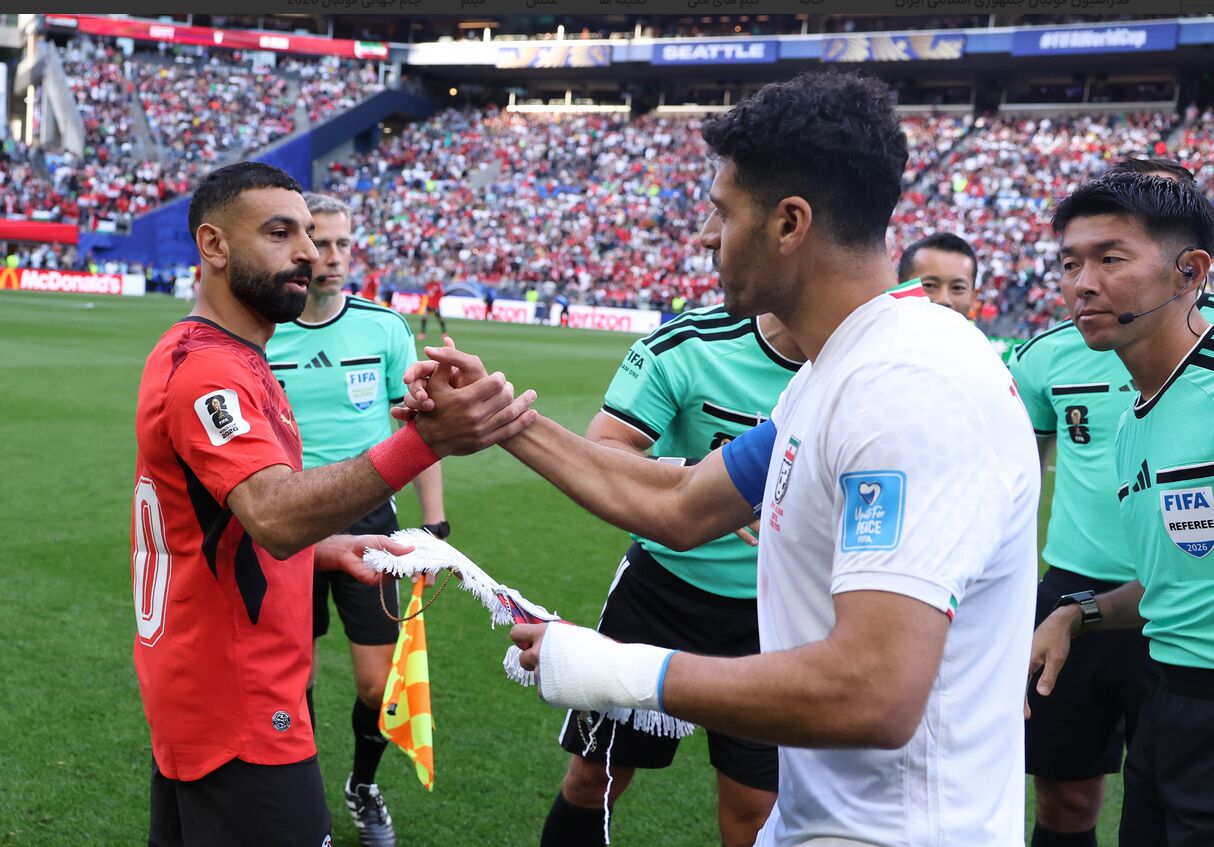
After Iran’s early exit from the group stage of the 2026 FIFA World Cup, social media has been flooded with criticism aimed at both the team and its head coach. Unsurprisingly, however, the official media and the team’s staunch defenders have framed the failure as a remarkable achievement.
The Minister of Sport, who had previously advocated for Iran’s withdrawal from the World Cup in response to American hostility, has now suddenly praised the team’s performance and fighting spirit. Meanwhile, IRIB commentators have consistently highlighted the positives—pointing out that Iran remained undefeated in all three matches—as if that alone were a triumph, conveniently ignoring the fact that a country with such a rich footballing pedigree has not advanced past the group stage since 1978.
Politics and the antagonistic treatment of Team Melli by the U.S. aside, the squad’s overall performance, coaching standards, leadership, and mentality left much to be desired. The team lacked a winning mindset, often faltered in crucial moments, and was, on the whole, mediocre and inconsistent. Technically and emotionally, Team Melli ranked low compared to its rivals.
Among the many critics is former national team coach Jalal Cheraghpour. Reflecting on Iran’s opening match, he said: “Caution was understandable for our first game, but we were overly cautious against a New Zealand side that grew in confidence precisely because of our passive approach. While it made sense to be wary of an unknown opponent, we took it too far. Every goal we conceded only deepened our fear. After that match, with the strategy apparently set on securing two draws in the remaining games, I knew we wouldn’t progress.”
He continued: “We should have played with more courage and fighting spirit in the next two matches. Moreover, the squad’s high average age meant we lacked the energy needed at this level of competition. On the other hand, if either Egypt or Belgium had won their match, our path would have been easier—but the draw complicated things. Qualification became a matter of ‘ifs’ and ‘buts.’ On the final matchday, none of the three possible scenarios that could have sent us through materialized, and we left the tournament empty-handed.”
Addressing the team’s defensive frailty—one of Team Melli’s Achilles’ heels throughout the tournament—Cheraghpour observed: “A team needs creative, talented players in attack. That kind of flair is innate; no one teaches Mehdi Taremi or Mehdi Ghaedi how to dribble. But defending is a scientific discipline that demands deeper knowledge and familiarity with modern tactics. Look at our games—when we don’t have the ball, we should press, but we don’t. When the opposition dominates, our job is to cover the spaces they can exploit. We failed to do that. We often had three or more defenders converging on the ball carrier in dangerous areas, yet we left gaps elsewhere because players bunched together. That was our undoing. Crowding an area without covering the spaces is like sending a soldier into battle without ammunition—it achieves nothing.”
He cited New Zealand’s second goal as an example: “In that scene, Chris Woods, the veteran Kiwi player, controls the ball, turns, and delivers a precise short pass completely unpressured—while our players simply watched. These defensive weaknesses, evident in all three games, stem from a lack of simulation and practice in training. Defenders must be able to read the game and anticipate an opponent’s next move. These skills are not being taught to defenders in our football, whether at club or national level. They keep making basic mistakes and tactical errors, with no apparent correction or guidance from the coaching staff.”
When asked what path Iranian football should take to move forward, Cheraghpour replied: “These shortcomings need to be analyzed and studied by the Football Federation’s training committee, and then compiled into training manuals and courses.”
He added: “Iranian football needs a major shake-up. Thirteen or fourteen players from this squad should be moved on. We have to move beyond traditional, direct tactics and embrace modern football—only then will we see real progress.”