
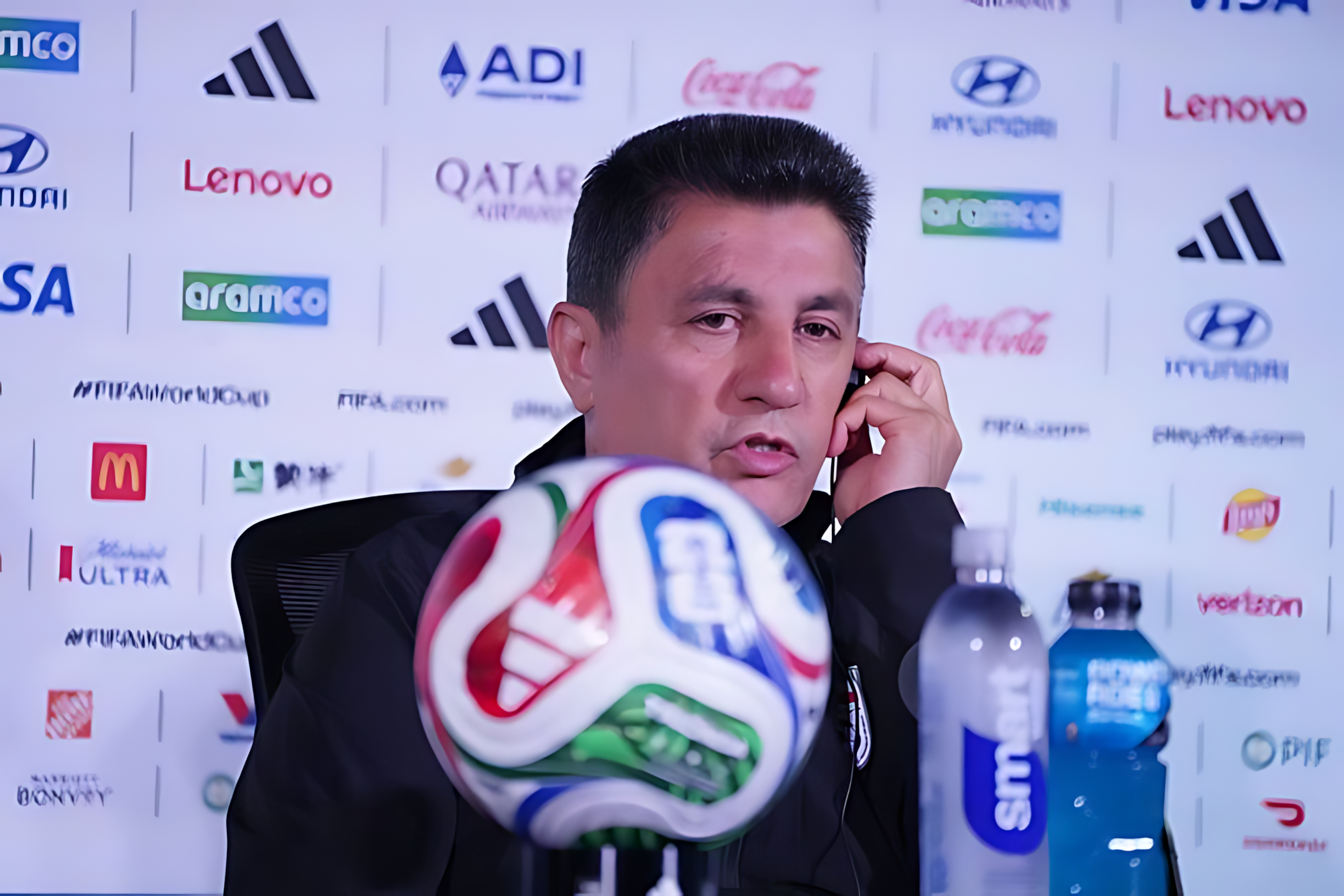
Amir Ghalenoei stepped up to the pre-match press conference ahead of Iran's crucial clash with Belgium with an opportunity to dissect tactics, address defensive frailties, and outline a coherent plan for upsetting one of Europe's traditional powerhouses. Instead, the microphone became a megaphone for frustration, a litany of complaints about inhospitality, inequity, and the systemic disadvantages his team has endured since setting foot on American soil.
Technical analysis took a backseat. Player selection, formation tweaks, and counter-strategies were scarcely mentioned. The dominant refrain was one of protest: Iran, Ghalenoei insisted, is not competing on a level playing field. Team Melli is handicapped by forces far beyond the white lines of the pitch, and he made certain the world heard it.
"Less Than 16 Hours": A Travel Nightmare
Ghalenoei opened his remarks by drawing a stark contrast between Iran's preparation timeline and that of their opponents:
"In the first game, we were in Los Angeles about 24 hours before kickoff, and we had time. Against Belgium, they gave us less than 16 hours. We were forced to conduct our training half-heartedly. This made the situation difficult for us."
He acknowledged FIFA President Gianni Infantino's efforts to alleviate some of the logistical burdens, but quickly pivoted back to the grim reality:
"Although I know the FIFA president tried his best to solve the problems, these problems have only increased. We left the training session incomplete because we simply did not have enough time. That made our job infinitely harder."
The tone was measured but unmistakably bitter, a coach who feels his team has been set up to fail before a ball is even kicked.
Defensive Woes Acknowledged, But Recovery Denied
When pressed about Iran's defensive vulnerabilities, so painfully exposed by New Zealand, Ghalenoei did not shy away from the issue, but framed it within the broader context of logistical sabotage:
"In the previous game, we had problems with individual mistakes and defensive structure. With the little time we had, we were unable to recover properly because we spent more time traveling by air than on the ground. That prevented us from fully covering our defensive problems."
He emphasized that mental and psychological recovery took precedence over tactical drilling—a telling admission that the team's focus has been fragmented by external stressors. Analysis, he noted, came second.
"What was important to me was the mental and psychological issues. Then we worked on the analysis. We will definitely make changes against Belgium, but we have a very difficult task ahead."
Belgium: Respect Without Fear
On the subject of Belgium—a team boasting stars like Lukaku, De Bruyne, and Doku—Ghalenoei offered respect but refused to concede intimidation:
"As you said, Belgium is one of the very good teams in the world. But the reality is that in football, the game starts when the referee blows the whistle. The players are able to implement tactical orders well during the match. We also have very good, quality players who play with their hearts."
It was a brief nod to footballing matters, quickly overshadowed by a broader lament about the conditions his squad has endured.
Gratitude for Mexico, Silence from Others
In a rare moment of warmth, Ghalenoei extended his thanks to Mexico for their hospitality during Iran's training camp in Tijuana:
"I would like to thank them once again for hosting the team. They made up for all the shortcomings of others. I thank all the Mexican fans in the Tijuana camp."
The gratitude, however, only sharpened the contrast with the treatment Iran has received in the United States—a treatment Ghalenoei characterized as unprofessional and deeply unjust.
"I Asked 47 Other Coaches—I Got No Answer"
Perhaps the most striking revelation came when Ghalenoei disclosed his attempts to seek solidarity:
"I asked 47 other coaches who are at the World Cup, but I did not get an answer. We arrived in Los Angeles very late. We wanted two weeks before the tournament to get acquainted with the hosting conditions."
The implication was clear: Iran stands alone in its struggles, isolated not only by logistical barriers but by the indifference of the wider football community.
Executive Absence: A Team Without Its Leadership
Ghalenoei did not stop at travel grievances. He escalated his critique to include the absence of key Iranian football executives:
"The president of the federation, the team manager, the communication manager, and especially the media team are not with us. These behaviors are not at all in the standards of World Cup hosting. How can a team participate in the World Cup but all the executive staff of that team is absent?"
He connected this injustice to a deeper national narrative:
"These behaviors showed how much the Iranian people—especially the martyrs of the homeland—have been hurt by such behaviors. Even if we had spent billions of dollars, we could not have shown the oppression and rightfulness of the Iranian nation like this. But these behaviors have shown how oppressed a country we are."
A Plea for Justice, Not Politics
Ghalenoei was careful to distinguish his protest from political posturing:
"We did not come here for politics. We are protesting the treatment that is being done to us. I did not see the head coaches of other teams to see how they would react, but if I were there and I saw such injustice being done to another team, I would definitely react."
He reiterated his hope that future World Cups would not institutionalize such discriminatory practices:
"I hope the world will be governed in peace and tranquility, and that these behaviors will not be institutionalized in future World Cups."
Infantino's Efforts: Acknowledged but Insufficient
Ghalenoei carefully parsed his words regarding FIFA's involvement:
"I didn't say Infantino has helped. I said he is trying. For example, they told me I could go to America at 6 o'clock yesterday, and I welcomed that—but no matter how long we waited, nothing happened. This injustice was not good for us."
He pointed to a glaring inconsistency:
"They did not give a visa to the president of our federation, who is the father of the team and can solve many issues with his presence."
The Belgian Contrast: A Tale of Two Preparations
The most damning comparison was reserved for Belgium's preparation timeline:
"Belgium arrived in Los Angeles two nights before the game and had the necessary recovery. We arrived 16 hours earlier. They say we can now go to Seattle two days earlier to play with Egypt. If they had done this earlier, we would not have had problems. I wish they had given us the opportunity to come two weeks earlier—to adapt to the conditions of the match venue. I wish they had done justice to football for Iran as well."
He concluded with a pointed challenge:
"FIFA said in the game with Egypt in Seattle that you can implement the method you want. My question is: why did they not issue our visas earlier, and then not let us come here earlier for the games?"
Final Assessment: A Press Conference of Protest, Not Preparation
By the time Ghalenoei stepped away from the microphone, the assembled media had heard far more about travel schedules, visa denials, and perceived injustices than about the tactical battle awaiting Iran against Belgium. The defensive structure, the midfield pivot, the double-teaming of Doku—all the hard tactical questions that fans and analysts craved answers to were either glossed over or buried beneath the weight of legitimate grievances.
Whether Ghalenoei's complaints will galvanize his squad or serve as a distraction remains to be seen. What is certain is that the press conference will be remembered less for its footballing insights and more for its raw, unfiltered indictment of a host nation's treatment of Team Melli.
The world may not have heard a tactical masterclass from the Iranian coach. But they heard something perhaps more important: a coach fighting not just for a result, but for the basic dignity and fairness that every team deserves—yet Iran, once again, has been denied.