
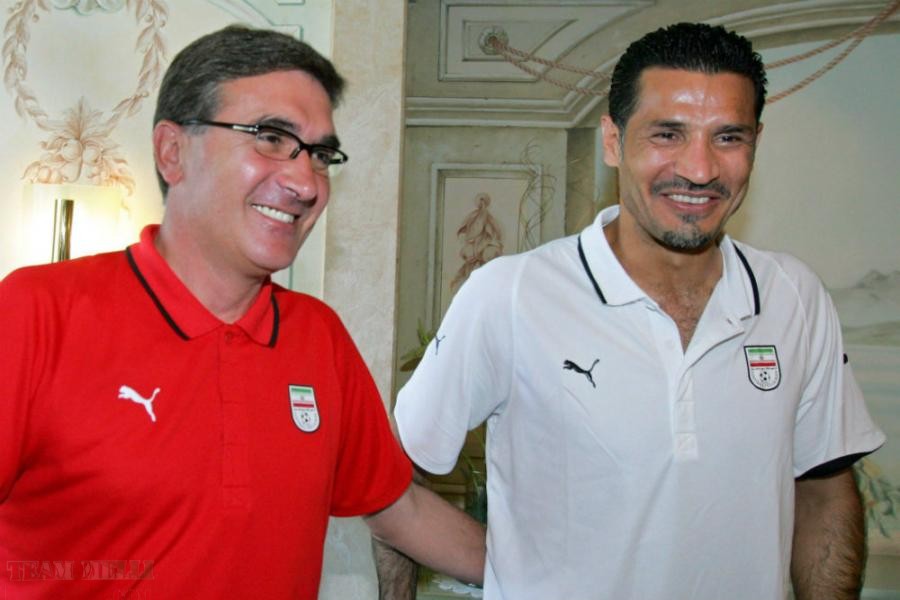
Zagreb, Croatia – According to a report from Croatian sports media outlet Sportklub, Branko Ivanković, one of Croatia's most successful international coaches, has decided to retire after a storied coaching career spanning more than three decades.
The 71-year-old, who will turn 72 soon, recently gathered a group of close colleagues he worked with during his tenures in Oman and China and announced his decision at a luncheon. After years of dedication to the touchline for both clubs and national teams, Ivanković stated it was time to rest and prioritize his personal life.
"Enough is enough," Ivanković told tportal. "These years are no longer the time to travel and wander around the world. Now I want to spend more time with my family, friends, and of course, myself."
A Storied and Peripatetic Career
Ivanković's managerial journey has been both long and illustrious. His career includes leading clubs such as Varteks (now Varaždin), Rijeka, Dinamo Zagreb, Hannover 96 (Germany), Persepolis (Iran), Shandong Luneng (China), Al Ahli, Al Wahda, and Al Ittifaq (Saudi Arabia).
His success was not limited to the club level. He also managed four different national teams, most notably serving as an assistant coach to Miroslav Blažević when Croatia sensationally won the bronze medal at the 1998 FIFA World Cup in France.
His achievements cemented his reputation as a trophy-winner. He secured league titles with Dinamo Zagreb (Croatia), Shandong Luneng (China), and most notably with Iran's Persepolis, where he led the team to five consecutive league championships. This historic feat introduced the term "Gelat" (meaning a quintuple of consecutive titles) into the lexicon of Iranian football.
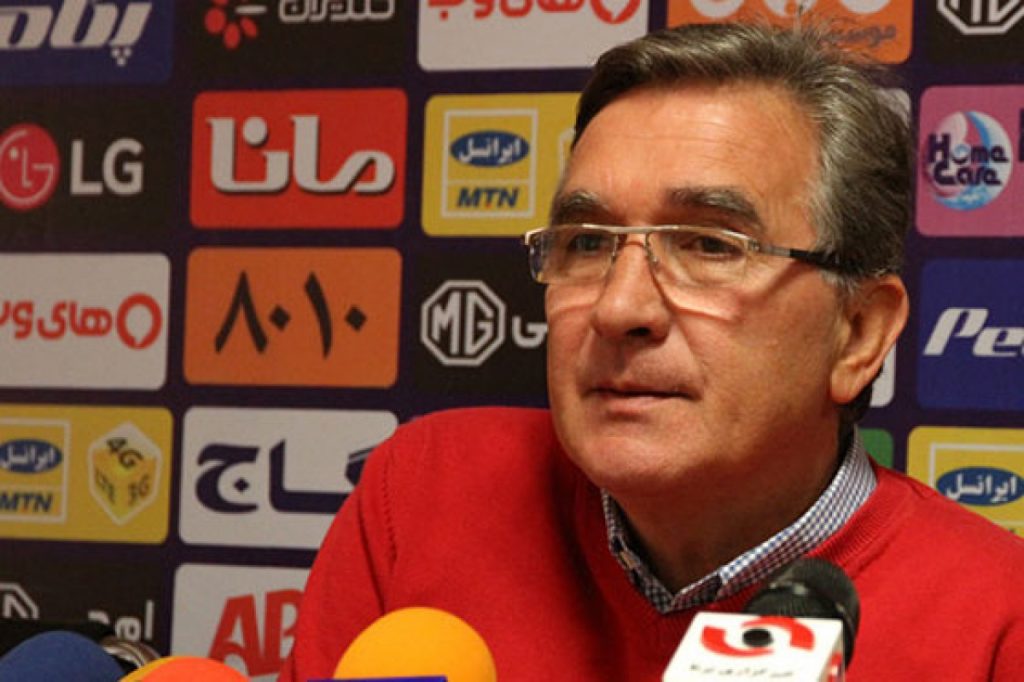
A Gentleman and a Reformer in Iran
Ivanković first arrived in Iran as an assistant to the legendary Croatian coach Miroslav "Ćiro" Blažević. After Blažević's departure, Ivanković was offered the head coach position of Team Melli, a role that would define his legacy.
During his tenure, he was widely respected for his dignified, gentlemanly demeanor. He navigated the complex politics of Iranian football with skill and stood firmly against corrupt elements with grace and integrity. A testament to his principled stance was his refusal to succumb to pressure for favoritism towards the two traditional Tehran giants, Persepolis and Esteghlal. Ivanković insisted on selecting players for the national team based solely on competence and merit.
He is considered the first coach in Iran's modern history to break the duopoly of these two clubs on national team selection. In a landmark shift, the 2004 Asian Cup squad featured more players from Foolad Khuzestan than from any other club—a previously unheard-of practice that underscored his commitment to meritocracy.
In his dealings with the media, he was consistently respectful, maintaining his positions without being controversial or forceful, which further earned him the admiration of fans and journalists alike.
A Lasting Legacy in Iranian Football
Ivanković's connection with Iran is a defining chapter of his career. He was first appointed head coach of the Iranian national team in January 2002, leading the U-23 side to a gold medal at the 2002 Asian Games in Busan later that year.
Despite his popularity, his initial tenure was brief. After being replaced in late 2002, public and media pressure led to his reappointment in October 2003.
Under his leadership, Team Melli flourished:
- He guided Iran to a third-place finish at the 2004 AFC Asian Cup.
- He successfully secured Iran's qualification for the 2006 FIFA World Cup in Germany.
At the 2006 World Cup, Iran faced a tough group. After narrow losses to Mexico and Portugal, they earned a single point in a 1-1 draw with Angola, finishing at the bottom of their group.
Following the tournament, a change in the Iranian Football Federation's leadership led to his replacement. This move, deemed political interference by FIFA, resulted in a temporary suspension for Iran's football federation.
Despite the World Cup exit, his record with Iran remains impressive. Over two spells, he managed 56 games, winning 33, drawing 14, and losing only 9, giving him a remarkable winning percentage of 58.93%.
With his retirement, the football world bids farewell to a true globetrotting coach whose tactical acumen, unwavering principles, and gentlemanly conduct left a lasting mark from Europe to Asia.