
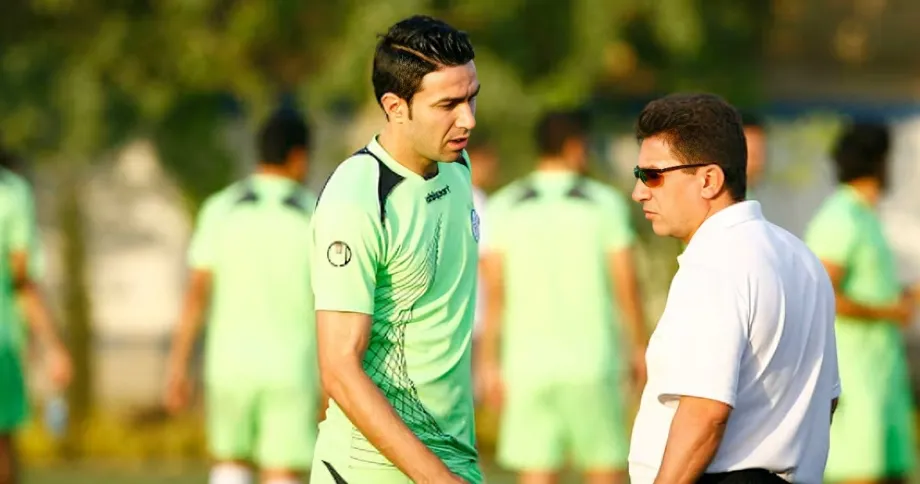
A Federation Without Authority
In most footballing nations, federations appoint coaches based on technical merit. But in Iran, real power lies elsewhere—with IRGC-linked officials, political operatives, and a select group of senior players who act as kingmakers.
The ongoing push to install Javad Nekounam as Iran’s next coach—despite his lack of top-level experience—is just the latest example. According to Shargh newspaper, the same players who orchestrated Dragan Škočić’s ouster before the 2022 World Cup (via backroom meetings with then-President Ebrahim Raisi’s office) are now lobbying for Nekounam’s appointment.
A Controversial Contender: Nekounam's Troubled Track Record
Javad Nekounam, Iran's most-capped player and former national team captain, has proven to be an unstable and divisive figure in his transition to coaching. His brief managerial career—launched without proper qualifications—ended in failure at Esteghlal, leaving his reputation in tatters.
Yet despite:
✔ Zero coaching success – A disastrous stint at Esteghlal with no achievements
✔ Emotional volatility – Public outbursts and erratic decision-making
✔ No recent experience – Over a year unemployed since his sacking
...he has been aggressively lobbying for high-profile roles, leveraging his political connections rather than merit.
Why He’s a Dangerous Choice
- No upgrade on Ghalenoei – Lacks the incumbent’s tactical discipline
- Potentially worse – His instability could fracture the squad further
- Symbols everything wrong with Iranian football – Jobs going to connected insiders over qualified candidates
Observers warn his appointment would be a step backward—proof that in Iranian football, who you know matters more than what you know.
A source inside Iran’s Football Federation (FFIRI) told IranWire that Mehdi Taj has already given verbal assurances to senior players that Amir Ghalenoei will be replaced post-World Cup qualification.
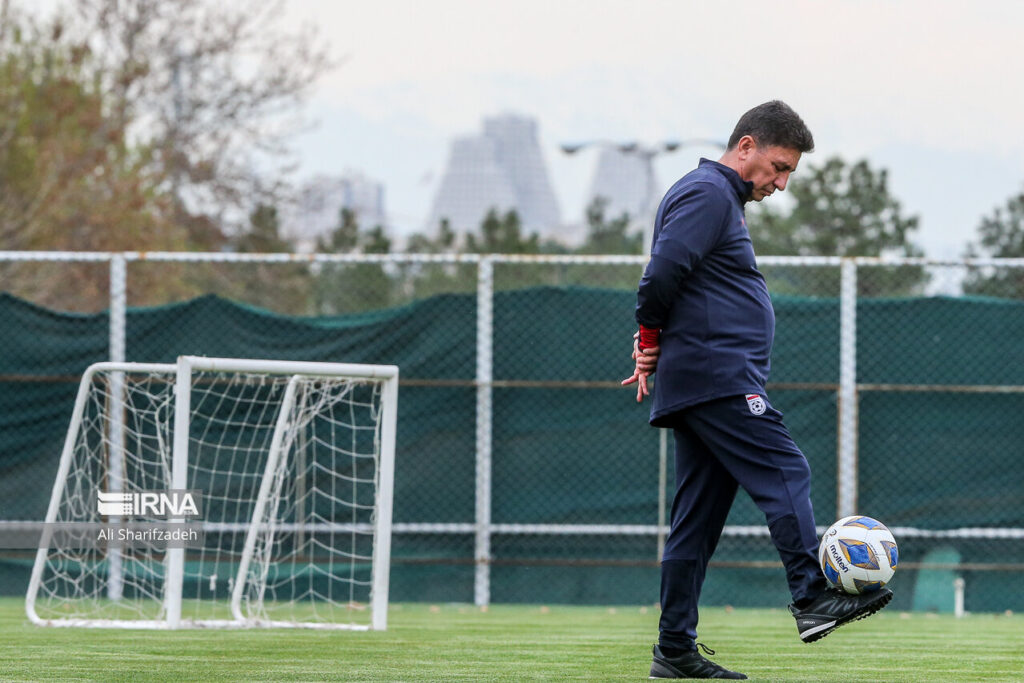
The IRGC’s Shadow Over Team Melli
This is not just about player power—it’s about systemic control. Coaches in Iran must navigate:
- IRGC Influence – Security agencies vet appointments, as seen when Nekounam was forced to write a "letter of repentance" to secure the Esteghlal job.
- Player Politics – Stars like Taremi and Jahanbakhsh leverage political connections to remove uncooperative coaches (e.g., Škočić’s firing after players allegedly sabotaged a match vs. Algeria).
- Financial Interests – Backroom deals often prioritize loyalty over tactics, with agents and officials profiting from managerial chaos.
Ghalenoei’s Survival Strategy—And Its Limits
Ghalenoei learned from Škočić’s mistakes. While the Croat clashed with Taremi over discipline, Ghalenoei has:
- Bowed to player demands (e.g., dropping Ehsan Hajsafi after squad disputes).
- Avoided youth call-ups to appease aging captains.
- Toed the political line, ensuring IRGC-aligned media didn’t turn against him.
Yet, his compliance hasn’t saved him. With Nekounam waiting in the wings—endorsed by both players and regime insiders—Ghalenoei’s days may be numbered.
The Bigger Picture: A Broken System
Iranian football is trapped in a cycle where:
✅ Coaches are chosen for loyalty, not ability – Nekounam’s leaked “repentance letter” proves political obedience trumps tactics.
✅ Players wield unchecked power – Their access to high-ranking officials (e.g., Taremi’s meeting with VP Mokhber) lets them veto coaches.
✅ The federation is a figurehead – Mehdi Taj fears rebellion but lacks authority to resist IRGC or player pressure.
Conclusion: No Hope Without Change
Until Iran’s football system is freed from IRGC interference, player politicking, and financial corruption, the national team will remain:
- A toy for political elites – Where coaches like Nekounam are selected for subservience, not skill.
- A graveyard for ambition – As seen in Jahanbakhsh’s decline and Škočić’s unjust firing.
- A symbol of wasted potential – While Japan and South Korea thrive, Iran’s talent is suffocated by off-field machinations.
The question isn’t who will coach Team Melli next—it’s who will allow them to coach at all.
Amir Ghalenoei's tenure as Team Melli coach until the 2026 World Cup won't be determined by:
✖ Tactical innovation
✖ Player development
✖ Match performance
But rather by:
✔ His ability to navigate Iran's football politics
✔ Keeping powerful players and IRGC-aligned officials content
✔ Avoiding the fate of Škočić through careful appeasement
The bitter reality? In Iran's football:
- A coach's political skills outweigh their technical abilities
- Survival means balancing between player power and regime demands
- Actual football progress remains secondary to backroom maneuvering
Ghalenoei's continued employment will simply prove what we already know - in Iranian football, the best politicians win, not the best coaches.